
Impurezas de Teneligliptin
Solicitar cotação de um conjunto
- Solicitar cotação para este conjunto
Todas as impurezas de nitrosaminas de Teneligliptin
4 produtosVer os 4 produtos
- N-Nitroso 3-MPPP Teneligliptin VE007898
- N-Nitroso N-BOC Piperazine Teneligliptin VE007899
CAS 877177-42-9 - N-Nitroso Teneligliptin VE0010120
- N-Nitroso Teneligliptin R-isomer VE007900


1–22 de 22 resultados22 em estoque


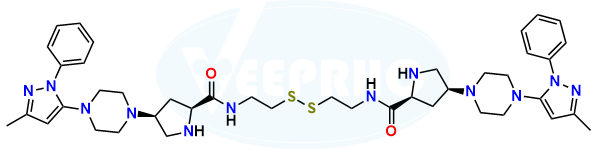
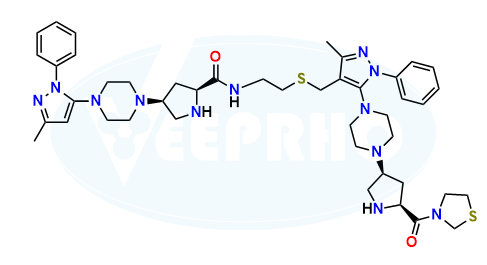

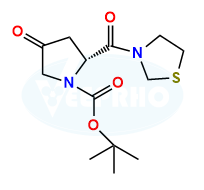
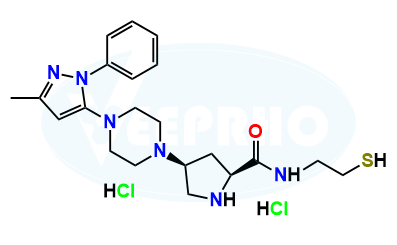
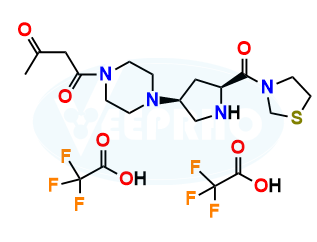
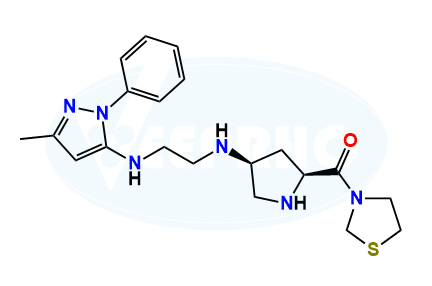
Teneligliptin Related Compound
Impurities in teneligliptin arise from its multi-step chemical synthesis, including thiazolidine ring formation, piperazine coupling, and quinoline derivative incorporation, as well as from degradation under stress conditions such as oxidation or hydrolysis. As a long-term oral medication, impurity control must follow ICH Q3A/B, USP, and EP standards.
Types of Impurities in Teneligliptin
Process-Related Impurities
- Unreacted intermediates such as piperazine derivatives, quinoline aldehydes, or thiazolidine analogs
- By-products from n-alkylation, amide formation, or ring-closure reactions
- Residual solvents like methanol, dimethylformamide (DMF), or dichloromethane
Degradation Impurities
- Hydrolyzed amide bonds or ring-opened products
- Oxidized sulfur or nitrogen moieties
- Des-alkylated forms due to thermal stress
- Photodegradation products under light exposure
Elemental Impurities
- Trace metals such as palladium, copper, or iron from catalysts or equipment
- Controlled under ICH Q3D for chronic oral therapies
Analytical Techniques for Impurity Detection
- High-Performance Liquid Chromatography (HPLC) – for assay and related substance profiling
- LC-MS/MS (Liquid Chromatography–Mass Spectrometry) – for structure elucidation and low-level impurity detection
- Gas Chromatography (GC) – for residual solvents
- ICP-MS – for elemental impurity determination
- Photostability and forced degradation studies – to evaluate stability profile
Perguntas frequentes
What is Teneligliptin used for?
Teneligliptin is used to manage type 2 diabetes mellitus by improving blood glucose control , especially in patients with inadequate control on diet and exercise alone or with other antidiabetic agents .
How does Teneligliptin work?
It inhibits DPP-4 , increasing GLP-1 and GIP levels , which enhance glucose-dependent insulin secretion and suppress glucagon , lowering postprandial and fasting glucose.
What are common side effects of Teneligliptin?
Headache Constipation Hypoglycemia (when used with sulfonylureas or insulin) Rare: Liver enzyme elevation or skin rash
Is Teneligliptin safe for patients with kidney or liver impairment?
It may be used with dose adjustments or caution , depending on severity. Unlike some other DPP-4 inhibitors, teneligliptin has a mixed hepatic and renal route of elimination .
Is Teneligliptin chemically stable?
Yes, but it should be stored in a cool, dry place , protected from light and moisture , as it may degrade under acidic, basic, or oxidative conditions.