
Impurezas de Zolmitriptan
Solicitar cotação de um conjunto
- Solicitar cotação para este conjunto
Todas as impurezas EP de Zolmitriptan
8 produtosVer os 8 produtos
- Zolmitriptan Amine Impurity VL350004
CAS 139264-15-6 - Zolmitriptan EP Impurity B VL350002
CAS 251451-30-6 - Zolmitriptan EP Impurity G VL350003
CAS 139264-35-0 - Zolmitriptan EP Impurity H (Free Base) VE0025526
CAS 2518343-21-8 - Zolmitriptan EP Impurity I VE0019875
CAS 659738-69-9 - Zolmitriptan R-Isomer VL350005
CAS 139264-24-7 - Zolmitriptan Related Compound B VL350007
CAS 139264-69-0 - Zolmitriptan Related Compound G VL350001
CAS 152305-23-2
- Zolmitriptan Amine Impurity VL350004
- Solicitar cotação para este conjunto
Todas as impurezas USP de Zolmitriptan
7 produtosVer os 7 produtos
- Zolmitriptan EP Impurity B VL350002
CAS 251451-30-6 - Zolmitriptan EP Impurity G VL350003
CAS 139264-35-0 - Zolmitriptan R-Isomer VL350005
CAS 139264-24-7 - Zolmitriptan Related Compound B VL350007
CAS 139264-69-0 - Zolmitriptan Related Compound F VL350009
CAS 1350928-05-0 - Zolmitriptan Related Compound G VL350001
CAS 152305-23-2 - Zolmitriptan Related Compound H VL350006
CAS 1116-77-4
- Zolmitriptan EP Impurity B VL350002
- Solicitar cotação para este conjunto
Todas as impurezas de nitrosaminas de Zolmitriptan
4 produtosVer os 4 produtos
- N-Nitroso Zolmitriptan VE0010746
- N-Nitroso Zolmitriptan Impurity 3 VE0024536
- N-Nitroso-N-Desmethyl Zolmitriptan VE007893
CAS 3085658-77-8 - (S)-4-(4-hydrazinylbenzyl)-3-nitrosooxazolidin-2-one VE0023787

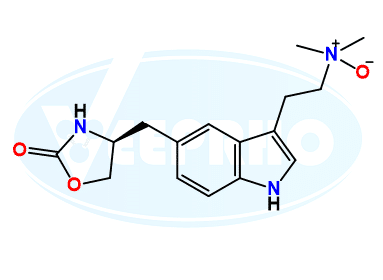
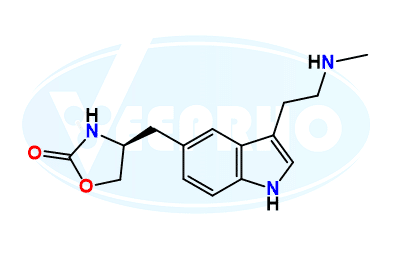


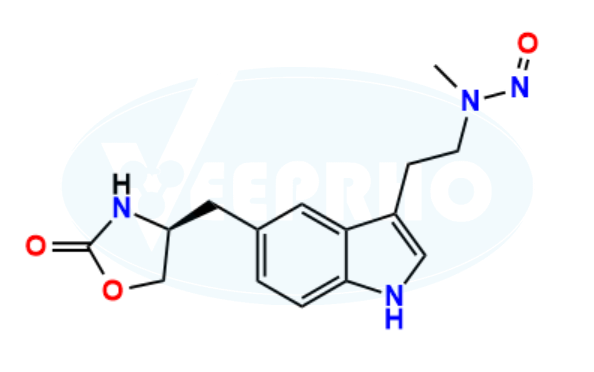
1–29 de 29 resultados25 em estoque
| Estrutura | Nome do produto |
|---|---|
| N-Nitroso ZolmitriptanVE0010746 | |
| N-Nitroso Zolmitriptan Impurity 3VE0024536 · Em estoque | |
| N-Nitroso-N-Desmethyl ZolmitriptanNº CAS 3085658-77-8 · VE007893 · Em estoque | |
| Tryptamine HydrochlorideNº CAS 343-94-2 · VE0010018 · Em estoque | |
 | Zolmitriptan 4-analogVE0020210 · Em estoque |
| Zolmitriptan Amine ImpurityNº CAS 139264-15-6 · VL350004 · Em estoque | |
| Zolmitriptan Aminopropanol ImpurityNº CAS 726134-79-8 · VE008876 · Em estoque | |
| Zolmitriptan EP Impurity BNº CAS 251451-30-6 · VL350002 · Em estoque | |
| Zolmitriptan EP Impurity GNº CAS 139264-35-0 · VL350003 · Em estoque | |
| Zolmitriptan EP Impurity H (Free Base)Nº CAS 2518343-21-8 · VE0025526 · Em estoque | |
| Zolmitriptan EP Impurity INº CAS 659738-69-9 · VE0019875 · Em estoque | |
| Zolmitriptan Hydroxy Ketone AnalogVE006950 · Em estoque | |
| Zolmitriptan Hydroxymethyl Quaternary SaltVE0010739 | |
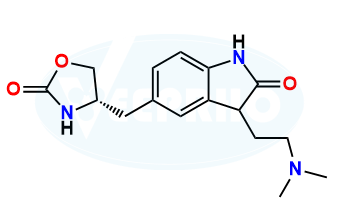 | Zolmitriptan Impurity 2VE0019893 · Em estoque |
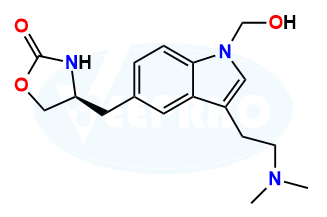 | Zolmitriptan Impurity 5VE0019876 · Em estoque |
| Zolmitriptan Impurity 21Nº CAS 139264-66-7 · VE0025695 · Em estoque | |
| Zolmitriptan Methylene DimerVE0010740 | |
| Zolmitriptan N-methylVL350010 · Em estoque | |
| Zolmitriptan R-IsomerNº CAS 139264-24-7 · VL350005 · Em estoque | |
| Zolmitriptan Related Compound BNº CAS 139264-69-0 · VL350007 · Em estoque | |
| Zolmitriptan Related Compound FNº CAS 1350928-05-0 · VL350009 · Em estoque | |
| Zolmitriptan Related Compound GNº CAS 152305-23-2 · VL350001 · Em estoque | |
| Zolmitriptan Related Compound HNº CAS 1116-77-4 · VL350006 · Em estoque | |
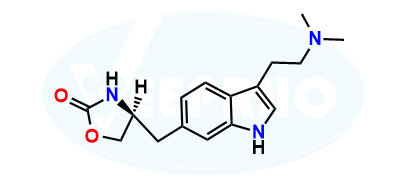 | Zolmitriptan-6 analogVE0020211 |
| (S)-4-(4-hydrazinylbenzyl)-3-nitrosooxazolidin-2-oneVE0023787 · Em estoque | |
| (S)-4-(4-Nitrobenzyl)oxazolidin-2-oneNº CAS 139264-55-4 · VE008880 · Em estoque | |
| (S)-4-Benzyl-2-oxazolidinoneNº CAS 90719-32-7 · VE008576 · Em estoque | |
| (S)-methyl 2-amino-3-(3-methyl-4-nitrophenyl)propanoate hydrochlorideVE0010216 · Em estoque | |
| 4-[4-(1-oxotriazan-2-yl)benzyl]-1,3-oxazolidin-2-oneVE0024178 · Em estoque |
Zolmitriptan Impurities and Related Compound
Typical quality control specifications for zolmitriptan active pharmaceutical ingredient include assay (potency) commonly targeted at about 98.0 to 102.0 percent by validated HPLC, with related-substance limits set to control both known and unknown degradants. Representative impurity limits used by manufacturers are: known related compound N-desmethylzolmitriptan (an active metabolite or potential synthetic impurity) not more than 0.5 percent, N-oxide and other identified oxidative impurities not more than 0.2 to 0.3 percent each, individual unspecified impurities not more than 0.10 to 0.20 percent each, and total impurities typically not to exceed about 1.0 percent. Additional quality limits commonly include residual solvents within ICH class limits (for example methanol and ethyl acetate limits in the low thousands of ppm as applicable), heavy metals below commonly used pharmacopoeial thresholds (for example single digit to low tens of ppm), and water content controlled by Karl Fischer to low percent or subpercent levels. Analytical control is performed by stability-indicating HPLC or LC-MS methods, with structure confirmation by MS and NMR when needed; exact limits and monograph details vary by regulatory filing and manufacturer's specification.
Perguntas frequentes
What is zolmitriptan used for?
Zolmitriptan is used for the acute treatment of migraine attacks with or without aura and for cluster headache episodes in markets where it is approved; it is not intended for migraine prevention but for rapid relief of an established attack.
What is the strongest migraine pill?
There is no single universally strongest migraine pill; effectiveness depends on the drug class, route of administration, dose, and individual patient response. Triptans, injectable options, ditans and gepants can be highly effective for different patients, and treatments judged strongest for one person may be less effective for another.
What does zolmitriptan do to the brain?
Zolmitriptan binds to 5-HT1B and 5-HT1D receptors in cranial blood vessels and trigeminal nerve endings, causing vasoconstriction of dilated cranial vessels and inhibiting release of pro-nociceptive neuropeptides from trigeminal neurons, which together reduce migraine pain and associated symptoms.
Is zolmitriptan stronger than sumatriptan?
Zolmitriptan and sumatriptan are both triptans with broadly similar mechanisms; direct strength comparisons depend on dose, formulation and individual response. Clinical studies show comparable efficacy for many patients, but onset, bioavailability and tolerability profiles differ, so one drug may work better than the other for a given person.