
- 100 % Datengenauigkeit
- Wissenschaftlicher Support rund um die Uhr
- 0 % Toleranz bei der Produktqualität
Lagerstandorte
- New Jersey, USA
- Tschechien, EUAuf Lager
* Bestand vorbehaltlich Verfügbarkeit.
Dokumentation
Enthält: HPLC, MASS/LC-MS, 1H-NMR, FT-IR, Gehalt, Structure Elucidation Report (SER) sowie zusätzliche analytische Daten je nach Produkt.
113994-41-5
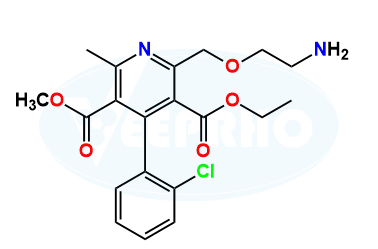
Amlodipine EP Impurity D (Free Base)
● Auf Lager
| Katalog-Nr.: | VL19023 |
|---|---|
| CAS-Nr.: | 113994-41-5 |
| Summenformel: | C20H23ClN2O5 |
| Molare Masse: | 406.86 g/mol |
For laboratory use only: analytical, development and regulatory purposes. Supplied in mg quantities. Not for human or veterinary use.
Angebot für ein Set anfordern
- Angebot für dieses Set anfragen
Alle EP-Verunreinigungen von Amlodipine
17 ProdukteDie 17 Produkte ansehen
- Amlodipine EP Impurity A VL19004
CAS 88150-62-3 - Amlodipine EP Impurity B VL19002
CAS 721958-72-1 - Amlodipine EP Impurity C VL19030
CAS 721958-74-3 - Amlodipine EP Impurity D (Besylate Salt) VL19001
CAS 2733700-89-3 - Amlodipine EP Impurity D (Free Base) VL19023
CAS 113994-41-5 - Amlodipine EP Impurity D (Fumarate salt) VL19024
CAS 2138811-33-1 - Amlodipine EP Impurity D (HCl Salt) VE0012177
CAS 2414962-06-2 - Amlodipine EP Impurity D (Mesylate salt) VE006056
- Amlodipine EP Impurity D (Oxalate Salt) VL19015
CAS 1216406-90-4 (oxalate) - Amlodipine EP Impurity E VL19005
CAS 140171-65-9 - Amlodipine EP Impurity E (Maleate Salt) VE006591
CAS 400024-12-6 - Amlodipine EP Impurity E (Oxalate Salt) VE006552
- Amlodipine EP Impurity F VL19026
CAS 140171-66-0 - Amlodipine EP Impurity F (Maleate Salt) VE0012174
CAS 400024-11-5 - Amlodipine EP Impurity G VL19003
CAS 43067-01-2 - Amlodipine EP Impurity H VL19007
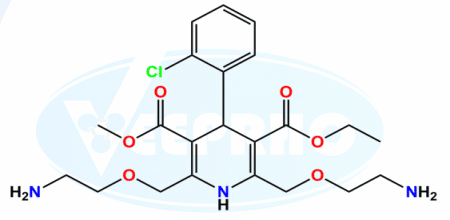
CAS 318465-73-5 - (R)-3-(2-aminoethyl) 5-methyl 2-((2-aminoethoxy)methyl)-4-(2-chlorophenyl)-6-methyl-1,4-dihydropyridine-3,5-dicarboxylate VE0019561
- Amlodipine EP Impurity A VL19004
- Angebot für dieses Set anfragen
Alle USP-Verunreinigungen von Amlodipine
17 ProdukteDie 17 Produkte ansehen
- Amlodipine EP Impurity A VL19004
CAS 88150-62-3 - Amlodipine EP Impurity B VL19002
CAS 721958-72-1 - Amlodipine EP Impurity D (Besylate Salt) VL19001
CAS 2733700-89-3 - Amlodipine EP Impurity D (Free Base) VL19023
CAS 113994-41-5 - Amlodipine EP Impurity D (Fumarate salt) VL19024
CAS 2138811-33-1 - Amlodipine EP Impurity D (HCl Salt) VE0012177
CAS 2414962-06-2 - Amlodipine EP Impurity D (Mesylate salt) VE006056
- Amlodipine EP Impurity D (Oxalate Salt) VL19015
CAS 1216406-90-4 (oxalate) - Amlodipine EP Impurity E VL19005
CAS 140171-65-9 - Amlodipine EP Impurity E (Maleate Salt) VE006591
CAS 400024-12-6 - Amlodipine EP Impurity E (Oxalate Salt) VE006552
- Amlodipine EP Impurity F VL19026
CAS 140171-66-0 - Amlodipine EP Impurity F (Maleate Salt) VE0012174
CAS 400024-11-5 - Amlodipine EP Impurity G VL19003
CAS 43067-01-2 - Amlodipine EP Impurity H VL19007
CAS 318465-73-5 - Amlodipine Related Compound K VL19048
CAS 1621516-91-3 - Hydroxyethyl Phthalyl Amlodipine VE0011837
CAS 3079028-35-3
- Amlodipine EP Impurity A VL19004



Zusätzliche Informationen zu CAS 113994-41-5
| Wirkstoff | Amlodipine |
|---|---|
| Produkttyp | Verunreinigungsstandards |
| IUPAC-Name | 3-ethyl 5-methyl 2-[(2-aminoethoxy)methyl]-4-(2- chlorophenyl)-6-methylpyridine-3,5-dicarboxylate |
| Name im EP | Amlodipine EP Impurity D |
| Name in der USP | Amlodipine Related Compound A |
| SMILES | CCOC(=O)c1c(COCCN)nc(C)c(C(=O)OC)c1-c1ccccc1Cl |
| InChIKey | APZSGEHAFPIYQZ-UHFFFAOYSA-N |
| CHNS-Verhältnis (%) (berechnet) | C 59.04 · H 5.70 · N 6.89 · S 0.00 |
| Referenzen | Sudhakar | P. | et Stoiljkovic | Zora | et al. Investigation of Forced and Total Degradation Products of Amlodipine Besylate by Liquid Chromatography and Liquid Chromatography-Mass Spectrometry.â€Â Chemical Industry and Chemical Engineering Quarterly | vol. 20 | no. 2 | 2014 | pp. 295–304 | https://doi.org/10.2298/ciceq121226011s al. Identification and Characterization of Potential Impurities of Amlodipine Maleate.†Journal of Pharmaceutical and Biomedical Analysis | vol. 40 | no. 3 | Feb. 2006 | pp. 605–13 |
| Beschreibung | Amlodipin EP-Verunreinigung D, auch als Amlodipin Related Compound A oder Dehydro-Amlodipin (Baseform) bezeichnet, CAS 113994-41-5, ist eine oxidierte prozessbezogene Verunreinigung des Calciumkanalblockers Amlodipin. Die Verbindung besitzt die Summenformel C20H23ClN2O5 und eine Molekülmasse von 406,86 g/mol. Strukturell entspricht sie der aromatisierten Pyridin-Analogie des 1,4-Dihydropyridin-Systems, was auf oxidative Degradation während der Herstellung oder Lagerung hinweist. Für die Bestimmung werden üblicherweise stabiliätsindizierende HPLC-Verfahren mit DAD sowie bestätigende LC-MS- oder LC-MS/MS-Analytik eingesetzt. Die Substanz ist für das Verunreinigungsprofil, Zwangsabbaustudien und die pharmakopöische Konformität von Bedeutung. |
Angebot anfordern
"*" kennzeichnet Pflichtfelder
Weitere Produkte zu Amlodipine Verunreinigungen
| Struktur der Verunreinigung | Name der Verunreinigung | Katalog-Nr. |
|---|---|---|
| Amlodipine EP Impurity A | VL19004 | |
| Amlodipine EP Impurity B | VL19002 | |
| Amlodipine EP Impurity C | VL19030 | |
| Amlodipine EP Impurity D (Besylate Salt) | VL19001 | |
| Amlodipine EP Impurity D (Fumarate salt) | VL19024 | |
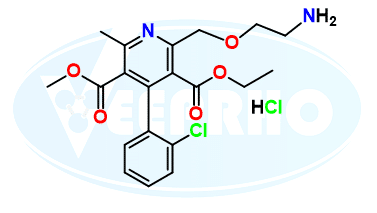 | Amlodipine EP Impurity D (HCl Salt) | VE0012177 |
| Amlodipine EP Impurity D (Mesylate salt) | VE006056 | |
| Amlodipine EP Impurity D (Oxalate Salt) | VL19015 | |
| Amlodipine EP Impurity E | VL19005 | |
 | Amlodipine EP Impurity E (Oxalate Salt) | VE006552 |
| Amlodipine EP Impurity F | VL19026 | |
| Amlodipine EP Impurity F (Maleate Salt) | VE0012174 |
Alle verwandten Produkte zeigen N-Nitroso-Amlodipine-Verunreinigungen (13)