

- 100 % Datengenauigkeit
- Wissenschaftlicher Support rund um die Uhr
- 0 % Toleranz bei der Produktqualität
Lagerstandorte
- New Jersey, USA
- Tschechien, EUAuf Lager
* Bestand vorbehaltlich Verfügbarkeit.
Dokumentation
Enthält: HPLC, MASS/LC-MS, 1H-NMR, FT-IR, Gehalt, Structure Elucidation Report (SER) sowie zusätzliche analytische Daten je nach Produkt.
573691-09-5
Aripiprazole EP Impurity F
● Auf Lager
| Katalog-Nr.: | VL197008 |
|---|---|
| CAS-Nr.: | 573691-09-5 |
| Summenformel: | C23H27Cl2N3O3 |
| Molare Masse: | 464.38 g/mol |
For laboratory use only: analytical, development and regulatory purposes. Supplied in mg quantities. Not for human or veterinary use.
Angebot für ein Set anfordern
- Angebot für dieses Set anfragen
Alle EP-Verunreinigungen von Aripiprazole
9 ProdukteDie 9 Produkte ansehen
- Aripiprazole EP Impurity A VL197010
CAS 22246-18-0 - Aripiprazole EP Impurity B VL197013
CAS 119532-26-2 - Aripiprazole EP Impurity B (Free Base) VE006771
CAS 41202-77-1 - Aripiprazole EP Impurity C VL197012
CAS 203395-81-7 - Aripiprazole EP Impurity D VL197009
CAS 203395-82-8 - Aripiprazole EP Impurity E VL197007
CAS 129722-25-4 - Aripiprazole EP Impurity E (HCl Salt) VE006772
CAS 1008531-60-9 - Aripiprazole EP Impurity F VL197008
CAS 573691-09-5 - Aripiprazole EP Impurity G (Free Base) VL197001
CAS 1797986-18-5
- Aripiprazole EP Impurity A VL197010
- Angebot für dieses Set anfragen
Alle USP-Verunreinigungen von Aripiprazole
12 ProdukteDie 12 Produkte ansehen
- Aripiprazole Chlorobutoxy Quinoline VL197018
- Aripiprazole Diquinoline Butanediol Impurity VL197011
CAS 882880-12-8 - Aripiprazole EP Impurity A VL197010
CAS 22246-18-0 - Aripiprazole EP Impurity B VL197013
CAS 119532-26-2 - Aripiprazole EP Impurity B (Free Base) VE006771
CAS 41202-77-1 - Aripiprazole EP Impurity E VL197007
CAS 129722-25-4 - Aripiprazole EP Impurity E (HCl Salt) VE006772
CAS 1008531-60-9 - Aripiprazole EP Impurity F VL197008
CAS 573691-09-5 - Aripiprazole EP Impurity G (Free Base) VL197001
CAS 1797986-18-5 - Aripiprazole Impurity 7 (HCl Salt) VE0012334
- Aripiprazole Related Compound B VL197014
CAS 889443-20-3 - Aripiprazole Related Compound H VL197015
CAS 1796928-63-6
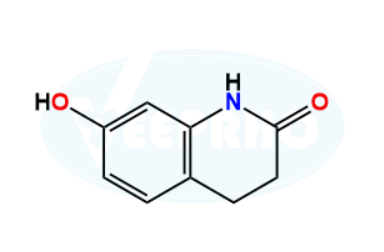


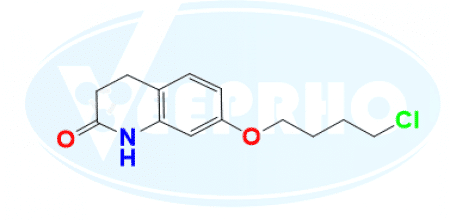

Zusätzliche Informationen zu CAS 573691-09-5
| Wirkstoff | Aripiprazole |
|---|---|
| Produkttyp | Verunreinigungsstandards |
| IUPAC-Name | 4-(2,3-Dichlorophenyl)-1-[4-[(2-oxo-1,2,3,4-tetrahydroquinolin-7-yl)oxy]butyl]piperazine 1-oxide |
| Name im EP | Aripiprazole EP Impurity F |
| Name in der USP | Aripiprazole Related Compound F |
| SMILES | O=C1CCc2ccc(OCCCC[N+]3([O-])CCN(c4cccc(Cl)c4Cl)CC3)cc2N1 |
| InChIKey | ZNYNDJDSFMRJPS-UHFFFAOYSA-N |
| CHNS-Verhältnis (%) (berechnet) | C 59.49 · H 5.86 · N 9.05 · S 0.00 |
| Referenzen | Jordan | Shaun | et al. The Antipsychotic Aripiprazole Is a Potent | Partial Agonist at the Human 5-HT1A Receptor.â€Â European Journal of Pharmacology | vol. 441 | no. 3 | Apr. 2002 | pp. 137–40 | https://doi.org/10.1016/s0014-2999(02)01532-7. |
| Beschreibung | Aripiprazole EP Impurity F, auch Aripiprazole Related Compound F beziehungsweise Aripiprazole N-Oxid, ist das N-oxidierte Derivat des Arylpiperazin-Antipsychotikums Aripiprazol, CAS 573691-09-5. Mit der Summenformel C23H27Cl2N3O3 und einer Molekülmasse von 464.38 g/mol handelt es sich um ein polares Oxidationsprodukt, das während der Herstellung, Lagerung oder unter Einwirkung von Peroxiden und anderen oxidativen Stressoren entstehen kann. Sein Auftreten ist für das Impurity-Profiling und stabilitätsindizierende Untersuchungen relevant. Die Spurendetektion erfordert typischerweise LC-MS/MS, LC-HRMS und orthogonale chromatographische Trennung, da UV-Detektion allein aufgrund nahe verwandter Prozessverunreinigungen und Matrixeffekte oft unzureichend ist. |
Angebot anfordern
"*" kennzeichnet Pflichtfelder