
- 100 % Datengenauigkeit
- Wissenschaftlicher Support rund um die Uhr
- 0 % Toleranz bei der Produktqualität
Lagerstandorte
- New Jersey, USA
- Tschechien, EU
* Bestand vorbehaltlich Verfügbarkeit.
Dokumentation
Enthält: HPLC, MASS/LC-MS, 1H-NMR, FT-IR, Gehalt, Structure Elucidation Report (SER) sowie zusätzliche analytische Daten je nach Produkt.
183198-49-4
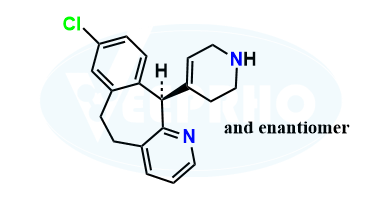
Desloratadine Related Compound B
● In Stock
| Katalog-Nr.: | VL41005 |
|---|---|
| CAS-Nr.: | 183198-49-4 |
| Summenformel: | C19H19ClN2 |
| Molare Masse: | 310.82 g/mol |
For laboratory use only: analytical, development and regulatory purposes. Supplied in mg quantities. Not for human or veterinary use.
Angebot für ein Set anfordern
- Angebot für dieses Set anfragen
Alle EP-Verunreinigungen von Desloratadine
5 ProdukteDie 5 Produkte ansehen
- Desloratadine EP Impurity A (2HCl Salt) VE0016278
- Desloratadine EP Impurity A (Free Base) VL41010
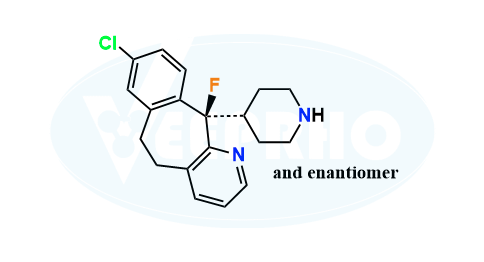
CAS 298220-99-2 - Desloratadine EP Impurity B VE0016274
- Desloratadine EP Impurity C VL41009
CAS 79794-75-5 - Desloratadine Related Compound B VL41005
CAS 183198-49-4
- Angebot für dieses Set anfragen
Alle USP-Verunreinigungen von Desloratadine
5 ProdukteDie 5 Produkte ansehen
- Desloratadine EP Impurity A (Free Base) VL41010
CAS 298220-99-2 - Desloratadine EP Impurity B VE0016274
- Desloratadine Related Compound A VE009921
CAS 117796-50-6 - Desloratadine Related Compound B VL41005
CAS 183198-49-4 - Desloratadine Related Compound F VL41001
CAS 117810-61-4
- Desloratadine EP Impurity A (Free Base) VL41010

Zusätzliche Informationen zu CAS 183198-49-4
| Wirkstoff | Desloratadine |
|---|---|
| Produkttyp | Verunreinigungsstandards |
| IUPAC-Name | 8-Chloro-6,11-dihydro-11-(1,2,3,6-tetrahydro-4-pyridinyl)-5H-benzo [5,6] cyclohepta[1,2-b] pyridine |
| Name im EP | Desloratadine EP Impurity B |
| Name in der USP | Desloratadine Related Compound B |
| SMILES | Clc1ccc2c(c1)CCc1cccnc1C2C1=CCNCC1 |
| InChIKey | ADSCCBORDDPTRQ-UHFFFAOYSA-N |
| CHNS-Verhältnis (%) (berechnet) | C 73.42 · H 6.16 · N 9.01 · S 0.00 |
| Referenzen | El-Enany | Nahed | et al. “Spectrophotometric | Spectrofluorometric and HPLC Determination of Desloratadine in Dosage Forms and Human Plasma.†Chemical and Pharmaceutical Bulletin | vol. 55 | no. 12 | 2007 | pp. 1662–70 | https://doi.org/10.1248/cpb.55.1662. “Pharmacology and Clinical Efficacy of Desloratadine as an Anti-Allergic and Anti-Inflammatory Drug.†Expert Opinion on Investigational Drugs | 2021 | www.tandfonline.com/doi/abs/10.1517/13543784.10.3.547. |
| Beschreibung | Desloratadin EP Verunreinigung B, auch als Desloratadin Related Compound B bezeichnet, ist eine chlorierte, trizyklische, piperidinderivatisierte Prozessverunreinigung, die mit dem Syntheseweg von Desloratadin und möglichen oxidativen oder regiospezifischen Nebenproduktbildungen verbunden ist. Die Substanz mit CAS 183198-49-4 besitzt die Summenformel C19H19ClN2 und eine Molmasse von 310,82 g/mol. Aufgrund der strukturellen Nähe zum Ausgangswirkstoff sind zur Charakterisierung orthogonale Verfahren wie LC-MS/MS, hochauflösende Massenspektrometrie und HPLC mit UV- oder DAD-Detektion erforderlich, häufig ergänzt durch NMR zur Strukturverifikation. Obwohl kein Nitrosamin, ist ihre Überwachung für Arzneibuch-Spezifikationen und das Verunreinigungsprofil relevant. |
Angebot anfordern
"*" kennzeichnet Pflichtfelder
Weitere Produkte zu Desloratadine Verunreinigungen
| Struktur der Verunreinigung | Name der Verunreinigung | Katalog-Nr. |
|---|---|---|
 | Desloratadine EP Impurity A (2HCl Salt) | VE0016278 |
| Desloratadine EP Impurity A (Free Base) | VL41010 | |
 | Desloratadine EP Impurity B | VE0016274 |
| Desloratadine EP Impurity C | VL41009 | |
| Desloratadine Related Compound A | VE009921 | |
| Desloratadine Related Compound F | VL41001 | |
| N-Nitroso Desloratadine EP Impurity A (N-Nitroso 11-Fluoro Desloratadine) | VZA000024 | |
| N-Nitroso Desloratadine EP Impurity B (N-Nitroso Iso Desloratadine) | VZA000025 | |
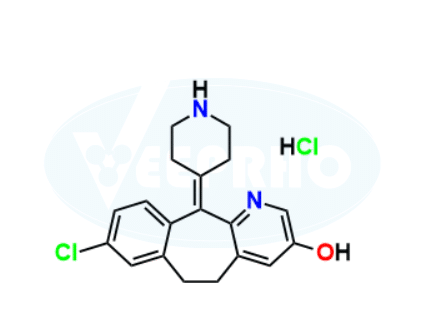 | 3-Hydroxy Desloratadine (HCl Salt) | VE0016280 |
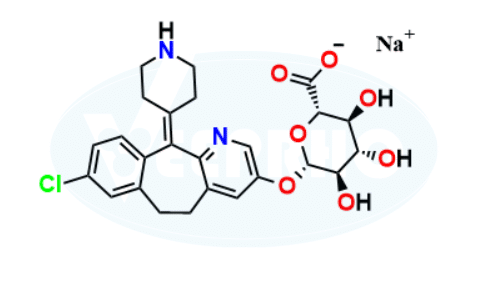 | 3-Hydroxy Desloratadine Glucuronide (Na Salt) | VE0016284 |
| 3-Hydroxy Desloratadine Impurity | VE0016263 | |
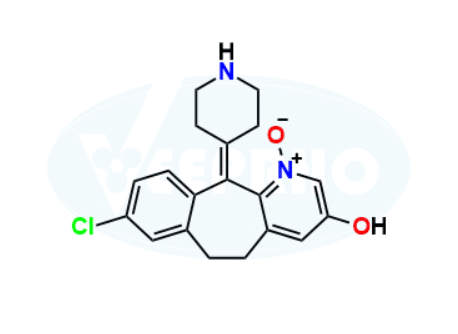 | 3-Hydroxy Desloratadine Pyridine N-oxide | VE0016270 |
Alle verwandten Produkte zeigen N-Nitroso-Desloratadine-Verunreinigungen (3)