
- 100 % Datengenauigkeit
- Wissenschaftlicher Support rund um die Uhr
- 0 % Toleranz bei der Produktqualität
Lagerstandorte
- New Jersey, USA
- Tschechien, EU
* Bestand vorbehaltlich Verfügbarkeit.
Dokumentation
Enthält: HPLC, MASS/LC-MS, 1H-NMR, FT-IR, Gehalt, Structure Elucidation Report (SER) sowie zusätzliche analytische Daten je nach Produkt.
35011-47-3
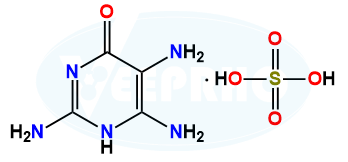
Folic Acid EP Impurity B (Sulfate Salt)
● In Stock
| Katalog-Nr.: | VL3520002 |
|---|---|
| CAS-Nr.: | 35011-47-3 |
| Summenformel: | C4H9N5O5S |
| Molare Masse: | 239.21 g/mol |
For laboratory use only: analytical, development and regulatory purposes. Supplied in mg quantities. Not for human or veterinary use.
Angebot für ein Set anfordern
- Angebot für dieses Set anfragen
Alle EP-Verunreinigungen von Folic Acid
8 ProdukteDie 8 Produkte ansehen
- Folic Acid EP Impurity B (Free Base) VE006816
CAS 1004-75-7 - Folic Acid EP Impurity B (Sulfate Salt) VL3520002
CAS 35011-47-3 - Folic Acid EP Impurity C VL3520003
CAS 47707-78-8 - Folic Acid EP Impurity D VL3520004
CAS 119-24-4 - Folic Acid EP Impurity E VL3520005
CAS 1391068-26-0 - Folic Acid EP Impurity F VL3520006
CAS 1391194-56-1 - Folic Acid Inhouse Impurity H VE008948
CAS 2366274-27-1 - Oxybuprocaine EP Impurity A (Free Base) VL3520007
CAS 150-13-0
- Folic Acid EP Impurity B (Free Base) VE006816

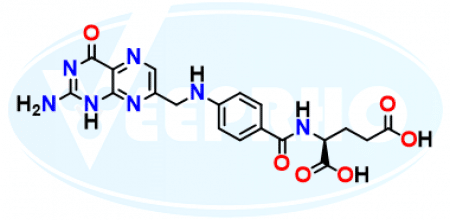
Zusätzliche Informationen zu CAS 35011-47-3
| Wirkstoff | Folic acid |
|---|---|
| Produkttyp | Verunreinigungsstandards |
| IUPAC-Name | 2,5,6-Triaminopyrimidin-4(1H)-one sulphate salt |
| Name im EP | Folic Acid EP Impurity B |
| SMILES | Nc1nc(N)c(N)c(=O)[nH]1.O=S(=O)(O)O |
| InChIKey | RSKNEEODWFLVFF-UHFFFAOYSA-N |
| CHNS-Verhältnis (%) (berechnet) | C 20.08 · H 3.79 · N 29.28 · S 13.40 |
| Versandbedingung | Ambient Temperature |
| Beschreibung | Folic Acid EP Impurity B (Sulfate Salt), CAS 35011-47-3, ist eine definierte sulfataufgeprägte Abbau- oder prozessbedingte Verunreinigung der Folatchemie und kein gewöhnlicher Hilfsstoffbegleiter. Mit der Summenformel C4H9N5O5S und einer Molekülmasse von 239,21 g/mol handelt es sich um eine niedermolekulare, heteroatomreiche Spezies, deren Polarität und ionischer Charakter die Retention in der Umkehrphasen-Chromatographie und die Abhängigkeit vom pH-Wert der mobilen Phase beeinflussen. Für Strukturzuordnung und Gehaltsbestimmung werden üblicherweise LC-MS/MS, LC-HRMS und Ionenchromatographie eingesetzt, ergänzt durch NMR bei verfügbarer Referenzsubstanz. Regulatorisch wird Herkunft und Eintrag in das Verunreinigungsprofil bewertet. |
Angebot anfordern
"*" kennzeichnet Pflichtfelder
Weitere Produkte zu Folic Acid Verunreinigungen
| Struktur der Verunreinigung | Name der Verunreinigung | Katalog-Nr. |
|---|---|---|
| Folic Acid EP Impurity B (Free Base) | VE006816 | |
| Folic Acid EP Impurity C | VL3520003 | |
| Folic Acid EP Impurity D | VL3520004 | |
| Folic Acid EP Impurity E | VL3520005 | |
| Folic Acid EP Impurity F | VL3520006 | |
| Folic Acid EP Impurity G | VE0011870 | |
 | Methyltetrahydrofolate Related Compound 4 | VE008300 |
 | Methyltetrahydrofolate Related Compound 6 | VE008301 |
| Oxybuprocaine EP Impurity A (Free Base) | VL3520007 | |
| (6R)-Mefox | VE0027712 | |
| (6S)-Mefox | VE0027711 | |
| (S)-2-(4-((((S)-2-amino-4-oxo-3,4,5,6,7,8-hexahydropteridin-6-yl)methyl)(nitroso)amino)benzamido)pentanedioic acid | VE0023919 |
Alle verwandten Produkte zeigen N-Nitroso-Folic Acid-Verunreinigungen (3)