

- 100 % Datengenauigkeit
- Wissenschaftlicher Support rund um die Uhr
- 0 % Toleranz bei der Produktqualität
Lagerstandorte
- New Jersey, USA
- Tschechien, EUAuf Lager
* Bestand vorbehaltlich Verfügbarkeit.
Dokumentation
Enthält: HPLC, MASS/LC-MS, 1H-NMR, FT-IR, Gehalt, Structure Elucidation Report (SER) sowie zusätzliche analytische Daten je nach Produkt.
174794-02-6
Olanzapine Related Compound C
● Auf Lager
| Katalog-Nr.: | VL109009 |
|---|---|
| CAS-Nr.: | 174794-02-6 |
| Summenformel: | C17H20N4OS |
| Molare Masse: | 328.43 g/mol |
For laboratory use only: analytical, development and regulatory purposes. Supplied in mg quantities. Not for human or veterinary use.
Angebot für ein Set anfordern
- Angebot für dieses Set anfragen
Alle EP-Verunreinigungen von Olanzapine
5 ProdukteDie 5 Produkte ansehen
- Olanzapine EP Impurity A VL109001
CAS 138564-59-7 - Olanzapine EP Impurity B VL109002
CAS 221176-49-4 - Olanzapine EP Impurity C (Chloride) VL109003
CAS 719300-59-1 - Olanzapine EP Impurity C (Free Base) VE0028926
CAS 735264-27-4 - Olanzapine Related Compound C VL109009
CAS 174794-02-6
- Olanzapine EP Impurity A VL109001
- Angebot für dieses Set anfragen
Alle USP-Verunreinigungen von Olanzapine
4 ProdukteDie 4 Produkte ansehen
- Olanzapine EP Impurity A VL109001
CAS 138564-59-7 - Olanzapine EP Impurity B VL109002
CAS 221176-49-4 - Olanzapine EP Impurity C (Chloride) VL109003
CAS 719300-59-1 - Olanzapine Related Compound C VL109009
CAS 174794-02-6
- Olanzapine EP Impurity A VL109001
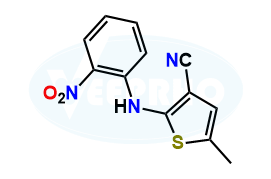

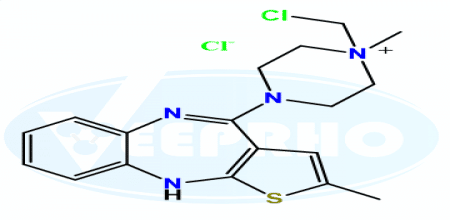
Zusätzliche Informationen zu CAS 174794-02-6
| Wirkstoff | Olanzapine |
|---|---|
| Produkttyp | Verunreinigungsstandards |
| IUPAC-Name | (2-Methyl-4-(4-methylpiperazin-1-yl)-10H-benzo[b]thieno[2,3-e][1,4]diazepine 4′-N-oxide) |
| Name im EP | Olanzapine EP Impurity D |
| Name in der USP | Olanzapine Related Compound C |
| SMILES | Cc1cc2c(s1)Nc1ccccc1N=C2N1CC[N+](C)([O-])CC1 |
| InChIKey | LJVNYCDXBXGQIK-UHFFFAOYSA-N |
| CHNS-Verhältnis (%) (berechnet) | C 62.17 · H 6.14 · N 17.06 · S 9.76 |
| Referenzen | “Synthesis and Characterization of Impurities of an Anti-Psychotic Drug Substance | Olanzapine.†Arkivoc | vol. 2008 | no. 11 | Apr. 2008 | p. 195 | https://doi.org/10.3998/ark.5550190.0009.b19.?Conley | Robert R. | et al. “Olanzapine Response in Treatment-Refractory Schizophrenic Patients with a History of Substance Abuse.†Schizophrenia Research | vol. 33 | no. 1-2 | Sept. 1998 | pp. 95–101 | https://doi.org/10.1016/s0920-9964(98)00062-0.? |
| Beschreibung | Olanzapin Related Compound C, auch bezeichnet als Olanzapin EP-Impurity D, Olanzapin BP-Impurity D und Olanzapin N-Oxid, ist das N-Oxid-Oxidationsprodukt des thienobenzodiazepinischen Antipsychotika-Gerüsts. Mit CAS 174794-02-6, der Formel C17H20N4OS und einem Molekulargewicht von 328,43 g/mol entsteht es typischerweise unter oxidativem Stress während der Synthese, Lagerung oder bei Kontakt mit Peroxiden und Sauerstoff. Die polare N-Oxid-Funktion verändert chromatographische Retention und massenspektrometrisches Verhalten, sodass zur sicheren Identifizierung und Quantifizierung häufig LC-MS/MS, hochauflösende LC-MS und orthogonale HPLC-Methoden erforderlich sind. Es handelt sich um eine prozess- und abbaubedingte Verunreinigung im Rahmen des Impurity Profiles und der Stabilitätsbewertung. |
Angebot anfordern
"*" kennzeichnet Pflichtfelder
Weitere Produkte zu Olanzapine Verunreinigungen
| Struktur der Verunreinigung | Name der Verunreinigung | Katalog-Nr. |
|---|---|---|
| N-Nitroso Olanzapine EP Impurity B | VE0024726 | |
| N-Nitroso Olanzapine EP Impurity C | VE0024745 | |
| N-Nitroso Olanzapine EP Impurity D | VE0024727 | |
| Olanzapine EP Impurity A | VL109001 | |
| Olanzapine EP Impurity B | VL109002 | |
| Olanzapine EP Impurity C (Chloride) | VL109003 | |
| Olanzapine EP Impurity C (Free Base) | VE0028926 | |
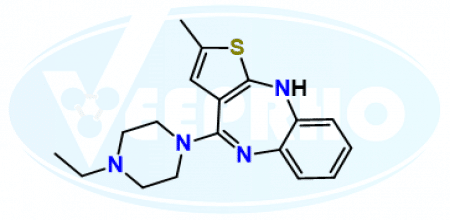 | Olanzapine Related Compound 03 | VL109004 |
| Olanzapine Related Compound 07 | VL109005 | |
 | Olanzapine Related Compound 08 | VL109006 |
| 2-Hydroxymethyl Olanzapine | VE0018343 | |
| 4-Amino-2-methyl-10H-thieno-[2,3-b][1,5]benzodiazepine | VE0021365 |
Alle verwandten Produkte zeigen N-Nitroso-Olanzapine-Verunreinigungen (7)