
- 100 % Datengenauigkeit
- Wissenschaftlicher Support rund um die Uhr
- 0 % Toleranz bei der Produktqualität
Lagerstandorte
- New Jersey, USA
- Tschechien, EU
* Bestand vorbehaltlich Verfügbarkeit.
Dokumentation
Enthält: HPLC, MASS/LC-MS, 1H-NMR, FT-IR, Gehalt, Structure Elucidation Report (SER) sowie zusätzliche analytische Daten je nach Produkt.
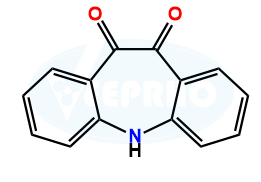
19579-83-0
Oxcarbazepine EP Impurity D
● In Stock
| Katalog-Nr.: | VL1620003 |
|---|---|
| CAS-Nr.: | 19579-83-0 |
| Summenformel: | C14H9NO2 |
| Molare Masse: | 223.23 g/mol |
For laboratory use only: analytical, development and regulatory purposes. Supplied in mg quantities. Not for human or veterinary use.
Angebot für ein Set anfordern
- Angebot für dieses Set anfragen
Alle EP-Verunreinigungen von Oxcarbazepine
11 ProdukteDie 11 Produkte ansehen
- Oxcarbazepine EP Impurity A VL1620011
CAS 298-46-4 - Oxcarbazepine EP Impurity B VL1620007
CAS 28721-09-7 - Oxcarbazepine EP Impurity C VE006487
CAS 21737-58-6 - Oxcarbazepine EP Impurity D VL1620003
CAS 19579-83-0 - Oxcarbazepine EP Impurity F VL1620013
CAS 28721-08-6 - Oxcarbazepine EP Impurity G VL1620008
CAS 15882-79-8 - Oxcarbazepine EP Impurity H VL1620014
CAS 4698-11-7 - Oxcarbazepine EP Impurity I VL1620002
CAS 537693-29-1 - Oxcarbazepine EP Impurity K VL1620004
CAS 1346601-76-0 - Oxcarbazepine EP Impurity L VL1620010
CAS 2642430-28-0 - Oxcarbazepine EP Impurity M VL1620015
CAS 2642430-32-6
- Oxcarbazepine EP Impurity A VL1620011
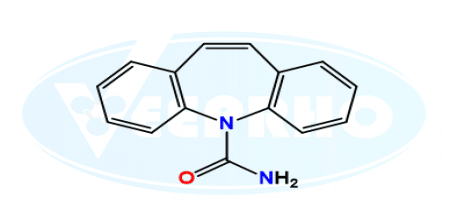


Zusätzliche Informationen zu CAS 19579-83-0
| Wirkstoff | Oxcarbazepine |
|---|---|
| Produkttyp | Verunreinigungsstandards |
| IUPAC-Name | 5H-dibenzo[b,f]azepine-10,11-dione |
| Name im EP | Oxcarbazepine EP Impurity D |
| SMILES | O=c1c(=O)c2ccccc2[nH]c2ccccc12 |
| InChIKey | JDPDFSIEJKKSEC-UHFFFAOYSA-N |
| CHNS-Verhältnis (%) (berechnet) | C 75.33 · H 4.06 · N 6.27 · S 0.00 |
| Beschreibung | Oxcarbazepin EP-Impurity D, auch als Dibenzazepinodion bezeichnet, ist ein oxidiertes Dibenzazepin-Derivat des trizyklischen Antikonvulsivums Oxcarbazepin. CAS 19579-83-0, Summenformel C14H9NO2, Molmasse 223,23 g/mol. Die Verunreinigung wird typischerweise als oxidatives Transformationsprodukt oder prozessbedingtes Nebenprodukt während Synthese und Lagerung betrachtet, nicht als einfacher Hydrolysedegradant. Aufgrund der engen strukturellen und chromatographischen Verwandtschaft zum Ausgangskern erfordert ihre Bestimmung meist LC-MS/MS, hochauflösende LC-MS sowie orthogonale HPLC-UV-Methoden. Sie ist im Rahmen pharmakopöischer Spezifikationen und der ICH-basierten Verunreinigungskontrolle analytisch relevant. |
Angebot anfordern
"*" kennzeichnet Pflichtfelder
Weitere Produkte zu Oxcarbazepine Verunreinigungen
| Struktur der Verunreinigung | Name der Verunreinigung | Katalog-Nr. |
|---|---|---|
| N-Nitroso Oxcarbazepine EP Impurity C | VE0018560 | |
| N-Nitroso Oxcarbazepine EP Impurity D | VE0024737 | |
| Oxcarbazepine EP Impurity A | VL1620011 | |
| Oxcarbazepine EP Impurity B | VL1620007 | |
| Oxcarbazepine EP Impurity C | VE006487 | |
 | Oxcarbazepine EP Impurity F | VL1620013 |
| Oxcarbazepine EP Impurity G | VL1620008 | |
| Oxcarbazepine EP Impurity H | VL1620014 | |
| Oxcarbazepine EP Impurity I | VL1620002 | |
| Oxcarbazepine EP Impurity K | VL1620004 | |
| Oxcarbazepine EP Impurity L | VL1620010 | |
| Oxcarbazepine EP Impurity M | VL1620015 |
Alle verwandten Produkte zeigen N-Nitroso-Oxcarbazepine-Verunreinigungen (3)