
Adenosine-Verunreinigungen
Angebot für ein Set anfordern
- Angebot für dieses Set anfragen
Alle EP-Verunreinigungen von Adenosine
3 ProdukteDie 3 Produkte ansehen
- Adenosine EP Impurity F VE007796
CAS 58-96-8 - Adenosine EP Impurity G VE007797
CAS 58-63-9 - Adenosine EP Impurity H VE007800
CAS 118-00-3
- Adenosine EP Impurity F VE007796
- Angebot für dieses Set anfragen
Alle USP-Verunreinigungen von Adenosine
3 ProdukteDie 3 Produkte ansehen
- Adenosine EP Impurity F VE007796
CAS 58-96-8 - Adenosine EP Impurity G VE007797
CAS 58-63-9 - Adenosine EP Impurity H VE007800
CAS 118-00-3
- Adenosine EP Impurity F VE007796

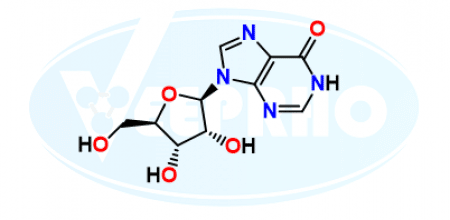

1–24 von 24 Ergebnissen24 auf Lager
| Struktur | Produktname |
|---|---|
| Ademethionine Disulfate TosylateCAS-Nr. 97540-22-2 · VE008336 · Auf Lager | |
| Adenosine 5′-DiphosphateCAS-Nr. 58-64-0 · VL5410004 · Auf Lager | |
| Adenosine 5′-MonophosphateCAS-Nr. 61-19-8 · VL5420003 · Auf Lager | |
| Adenosine 5′-Monophosphate MonohydrateCAS-Nr. 18422-05-4 · VE0020089 · Auf Lager | |
| Adenosine 5′-Monophosphoramidate (Sodium Salt)CAS-Nr. 102029-68-5 · VE0020357 · Auf Lager | |
| Adenosine 5`-Triphosphate Disodium Salt HydrateCAS-Nr. 34369-07-8 · VE0028584 · Auf Lager | |
| Adenosine EP Impurity FCAS-Nr. 58-96-8 · VE007796 · Auf Lager | |
| Adenosine EP Impurity GCAS-Nr. 58-63-9 · VE007797 · Auf Lager | |
| Adenosine EP Impurity HCAS-Nr. 118-00-3 · VE007800 · Auf Lager | |
| Adenosine Impurity 5CAS-Nr. 130-49-4 · VE0012010 · Auf Lager | |
| Adenosine Impurity 6 Disodium SaltCAS-Nr. 4958-39-8 · VE0012013 · Auf Lager | |
| Adenosine Related Compound 1VL5420008 · Auf Lager | |
| Adenosine-3′,5′-cyclic MonophosphateCAS-Nr. 60-92-4 · VL5410003 · Auf Lager | |
| Alfa-AdenosineCAS-Nr. 5682-25-7 · VE0012020 · Auf Lager | |
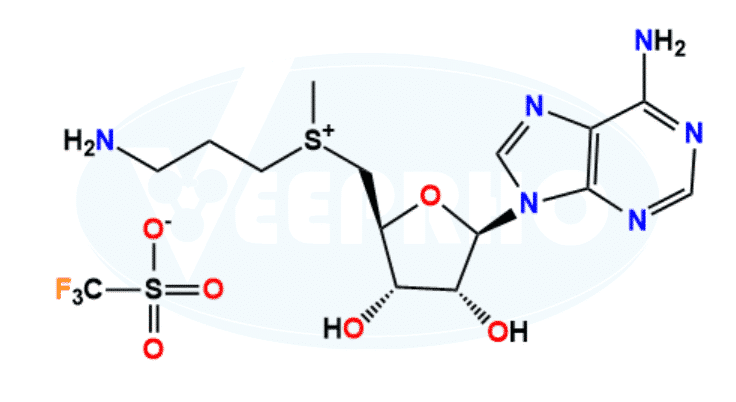 | Decarboxylated (S)-Adenosyl Methionine Trifluoromethanesulfonic AcidVE0014224 · Auf Lager |
| N6-Methyl derivative AdenosineCAS-Nr. 765299-55-6 · VE007799 · Auf Lager | |
| N6-Methyl-N6-Nitroso-AdenosineCAS-Nr. 41286-73-1 · VE0023180 · Auf Lager | |
| 2-Amino-AdenosineCAS-Nr. 2096-10-8 · VE007802 · Auf Lager | |
| 2-Methoxy AdenosineCAS-Nr. 24723-77-1 · VE007801 · Auf Lager | |
| 2,3,5-Tri-O-acetyl α-AdenosineCAS-Nr. 953089-09-3 · VE0022584 · Auf Lager | |
 | 2’-Deoxyadenosine-5’-triphosphate Trisodium SaltCAS-Nr. 54680-12-5 · VL5410002 · Auf Lager |
| 2′-DeoxyadenosineCAS-Nr. 958-09-8 · VL5410001 · Auf Lager | |
 | 8-Amino[1”-(N”-dansyl)-4”-aminobutyl]-5′-(1-aziridinyl)-5′-deoxy adenosineCAS-Nr. 256953-68-1 · VL5420004 · Auf Lager |
| 9-(b-D-Arabinofuranosyl)guanineCAS-Nr. 38819-10-2 · VE007798 · Auf Lager |
Adenosine Related Compound
Impurities in adenosine can arise due to synthetic processes, degradation, or storage conditions, potentially impacting its effectiveness and safety.
Types of Impurities in Adenosine
Related Substances These are structurally similar compounds that may form during chemical synthesis or enzymatic reactions. Proper control of these impurities ensures high purity and stability. Degradation Products Adenosine is prone to degradation, especially when exposed to light, heat, or enzymatic hydrolysis. Degradation can lead to the formation of inosine, hypoxanthine, or adenine, which may impact its therapeutic function. Residual Solvents Trace amounts of solvents used in the manufacturing process may remain in the final formulation. These solvents need to be monitored to comply with regulatory standards for drug safety. Analytical Techniques for Monitoring Impurities Techniques such as High-Performance Liquid Chromatography (HPLC) and Mass Spectrometry (MS) are commonly used to detect and quantify impurities in adenosine formulations.
Häufige Fragen
What does adenosine do?
Adenosine has multiple biological functions. It plays a crucial role in energy transfer (as ATP), neurotransmission, and vasodilation . Medically, it is used to slow down the heart rate in supraventricular tachycardia (SVT) .
What would you give adenosine for?
Adenosine is primarily used to treat paroxysmal supraventricular tachycardia (PSVT) by temporarily slowing conduction through the AV node . It is also used in stress tests for coronary artery disease .
Does adenosine stop the heart for 6 seconds?
Adenosine temporarily blocks AV node conduction , which can lead to a brief period of asystole (no heartbeat) lasting a few seconds before normal heart rhythm resumes. This effect is why adenosine is sometimes described as “stopping the heart” momentarily .
Is adenosine what makes you sleepy?
Yes, adenosine is a neurotransmitter that promotes sleep by inhibiting wake-promoting neurons in the brain . Caffeine blocks adenosine receptors, preventing its sleep-inducing effects and increasing alertness.