
Betahistine-Verunreinigungen
Angebot für ein Set anfordern
- Angebot für dieses Set anfragen
Alle EP-Verunreinigungen von Betahistine
4 ProdukteDie 4 Produkte ansehen
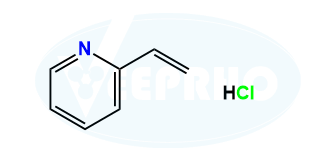
- Betahistine EP Impurity A (HCl Salt) VE0019992
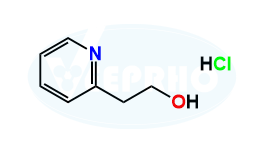
CAS 2479-59-6 - Betahistine EP Impurity B (HCl Salt) VE0020572
CAS 101948-60-1 - Betahistine EP Impurity C VL178001
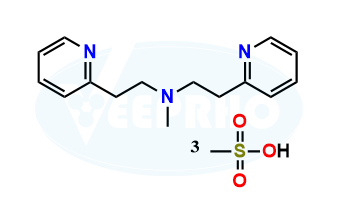
CAS 2095467-43-7 - Betahistine EP Impurity C Trimesilate VE0012720
CAS 2731369-07-4
- Betahistine EP Impurity A (HCl Salt) VE0019992
- Angebot für dieses Set anfragen
Alle USP-Verunreinigungen von Betahistine
3 ProdukteDie 3 Produkte ansehen
- Betahistine EP Impurity A (HCl Salt) VE0019992
CAS 2479-59-6 - Betahistine EP Impurity B (HCl Salt) VE0020572
CAS 101948-60-1 - Betahistine EP Impurity C Trimesilate VE0012720
CAS 2731369-07-4
- Betahistine EP Impurity A (HCl Salt) VE0019992
- Angebot für dieses Set anfragen
Alle Nitrosamin-Verunreinigungen von Betahistine
2 ProdukteDie 2 Produkte ansehen
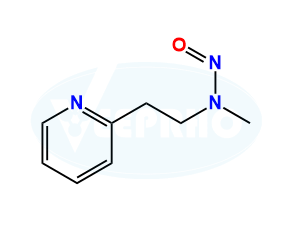
- N-Nitroso Betahistine VE007663
CAS 32635-81-7 - N-Nitroso Betahistine EP Impurity C VE0010864
- N-Nitroso Betahistine VE007663

1–14 von 14 Ergebnissen14 auf Lager
| Struktur | Produktname |
|---|---|
| Betahistine EP Impurity ACAS-Nr. 100-69-6 · VL178002 · Auf Lager | |
| Betahistine EP Impurity A (HCl Salt)CAS-Nr. 2479-59-6 · VE0019992 · Auf Lager | |
| Betahistine EP Impurity BCAS-Nr. 103-74-2 · VL178003 · Auf Lager | |
| Betahistine EP Impurity B (HCl Salt)CAS-Nr. 101948-60-1 · VE0020572 · Auf Lager | |
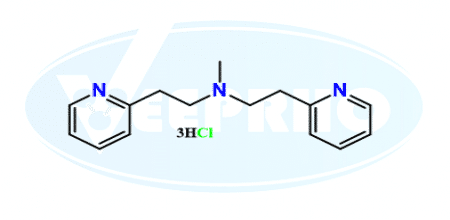 | Betahistine EP Impurity CCAS-Nr. 2095467-43-7 · VL178001 · Auf Lager |
| Betahistine EP Impurity C TrimesilateCAS-Nr. 2731369-07-4 · VE0012720 · Auf Lager | |
| Betahistine Impurity 3CAS-Nr. 13585-92-7 · VE0012721 · Auf Lager | |
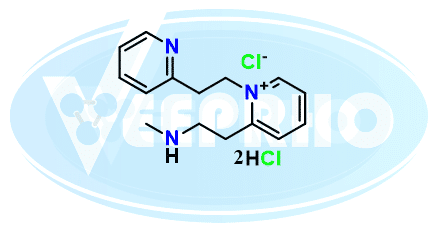 | Betahistine Impurity 6 Chloride (2HCl Salt)VE0012712 · Auf Lager |
| Betahistine Impurity 8CAS-Nr. 88780-61-4 · VE0012719 · Auf Lager | |
| Betahistine Impurity 9CAS-Nr. 6304-27-4 · VE0012176 · Auf Lager | |
| Betahistine Lactose adduct ImpurityVE0028995 · Auf Lager | |
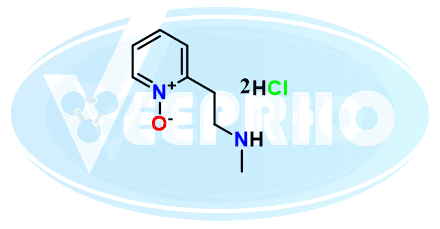 | Betahistine N-Oxide (2HCl Salt)VE0012711 · Auf Lager |
| N-Nitroso BetahistineCAS-Nr. 32635-81-7 · VE007663 · Auf Lager | |
| N-Nitroso Betahistine EP Impurity CVE0010864 · Auf Lager |
Betahistine Related Compound
Impurities in Betahistine can arise due to synthesis processes, degradation, and storage conditions. These impurities are monitored based on ICH Q3A/Q3B guidelines.
Types of Impurities in Betahistine
- Process-Related Impurities
- Residual solvents (e.g., methanol, ethanol, acetone)
- Unreacted intermediates from synthesis
- By-products of chemical reactions
- Degradation Impurities
- Oxidation products (exposure to oxygen or moisture)
- Hydrolysis products (breakdown in humid conditions)
- Isomerization products (structural modifications over time)
- Elemental Impurities
- Heavy metals (e.g., lead, cadmium, arsenic) from raw materials
Analytical Techniques for Impurity Detection
- High-Performance Liquid Chromatography (HPLC)
- Mass Spectrometry (MS)
- Fourier-Transform Infrared Spectroscopy (FT-IR)
- Gas Chromatography (GC)
Häufige Fragen
Why was betahistine banned?
Betahistine is not banned globally, but its effectiveness is debated in some countries. It was withdrawn in the U.S. due to insufficient clinical evidence but remains widely used in Europe and other regions .
What to avoid when taking betahistine?
Avoid alcohol as it can worsen dizziness. Caution with antihistamines , as they may reduce betahistine’s effectiveness . Avoid taking it on an empty stomach to prevent mild gastrointestinal discomfort.
Is betahistine a strong antihistamine?
No, betahistine is not a traditional antihistamine . It acts as a histamine H1 agonist and H3 antagonist , improving blood flow in the inner ear. Unlike typical antihistamines, it does not cause drowsiness .
Can I take betahistine every day?
Yes, betahistine is typically taken daily for Ménière’s disease . Dosage is usually 8 mg to 48 mg per day, divided into doses . It may take a few weeks to notice improvements. Always follow a doctor’s advice on dosage and duration.