
- 100 % Datengenauigkeit
- Wissenschaftlicher Support rund um die Uhr
- 0 % Toleranz bei der Produktqualität
Lagerstandorte
- New Jersey, USA
- Tschechien, EUAuf Lager
* Bestand vorbehaltlich Verfügbarkeit.
Dokumentation
Enthält: HPLC, MASS/LC-MS, 1H-NMR, FT-IR, Gehalt, Structure Elucidation Report (SER) sowie zusätzliche analytische Daten je nach Produkt.
101948-60-1
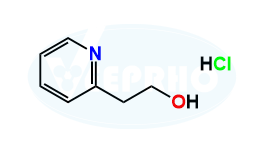
Betahistine EP Impurity B (HCl Salt)
● Auf Lager
| Katalog-Nr.: | VE0020572 |
|---|---|
| CAS-Nr.: | 101948-60-1 |
| Summenformel: | C7H10ClNO |
| Molare Masse: | 159.61 g/mol |
For laboratory use only: analytical, development and regulatory purposes. Supplied in mg quantities. Not for human or veterinary use.
Angebot für ein Set anfordern
- Angebot für dieses Set anfragen
Alle EP-Verunreinigungen von Betahistine
4 ProdukteDie 4 Produkte ansehen
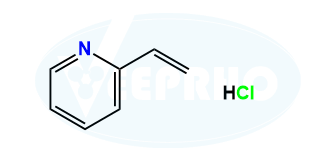
- Betahistine EP Impurity A (HCl Salt) VE0019992
CAS 2479-59-6 - Betahistine EP Impurity B (HCl Salt) VE0020572
CAS 101948-60-1 - Betahistine EP Impurity C VL178001
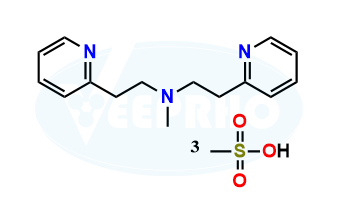
CAS 2095467-43-7 - Betahistine EP Impurity C Trimesilate VE0012720
CAS 2731369-07-4
- Betahistine EP Impurity A (HCl Salt) VE0019992
- Angebot für dieses Set anfragen
Alle USP-Verunreinigungen von Betahistine
3 ProdukteDie 3 Produkte ansehen
- Betahistine EP Impurity A (HCl Salt) VE0019992
CAS 2479-59-6 - Betahistine EP Impurity B (HCl Salt) VE0020572
CAS 101948-60-1 - Betahistine EP Impurity C Trimesilate VE0012720
CAS 2731369-07-4
- Betahistine EP Impurity A (HCl Salt) VE0019992
Zusätzliche Informationen zu CAS 101948-60-1
| Wirkstoff | Betahistine |
|---|---|
| Produkttyp | Verunreinigungsstandards |
| IUPAC-Name | 2-(pyridin-2-yl)ethanol hydrochloride |
| Name im EP | Betahistine EP Impurity B |
| Name in der USP | 2-(2-Hydroxyethyl)pyridine (HCl Salt) |
| SMILES | Cl.OCCc1ccccn1 |
| InChIKey | LYFVKJPPHXWXSA-UHFFFAOYSA-N |
| CHNS-Verhältnis (%) (berechnet) | C 52.68 · H 6.32 · N 8.78 · S 0.00 |
| Referenzen | - |
| Beschreibung | Betahistin EP-Verunreinigung B, identifiziert als 2-(2-Hydroxyethyl)pyridinhydrochlorid (CAS 101948-60-1), ist eine pyridinabgeleitete prozessbezogene Verunreinigung des Betahistin-Synthesewegs, die typischerweise aus Nebenreaktionen oder unvollständiger Quaternierung hervorgeht. Die Summenformel lautet C7H10ClNO bei einer Molekülmasse von 159.61 g/mol. Als protoniertes heteroaromatisches Salz kann sie das Verunreinigungsprofil durch ionische Wechselwirkungen und chromatographisches Tailing beeinflussen. Die Quantifizierung erfordert gewöhnlich orthogonale Charakterisierung mittels LC-MS, LC-MS/MS und, sofern flüchtige oder derivatisierte Spezies vorliegen, GC-MS; für die routinemäßige Trennung wird HPLC-UV eingesetzt. Es handelt sich nicht um ein Nitrosamin, ist jedoch für Spezifikationsgrenzen und pharmakopöische Kontrolle relevant. |
Angebot anfordern
"*" kennzeichnet Pflichtfelder
Weitere Produkte zu Betahistine Verunreinigungen
| Struktur der Verunreinigung | Name der Verunreinigung | Katalog-Nr. |
|---|---|---|
| Betahistine EP Impurity A | VL178002 | |
| Betahistine EP Impurity A (HCl Salt) | VE0019992 | |
| Betahistine EP Impurity B | VL178003 | |
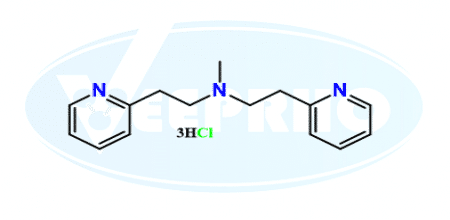 | Betahistine EP Impurity C | VL178001 |
| Betahistine EP Impurity C Trimesilate | VE0012720 | |
| N-Nitroso Betahistine EP Impurity C | VE0010864 | |
| Betahistine Impurity 3 | VE0012721 | |
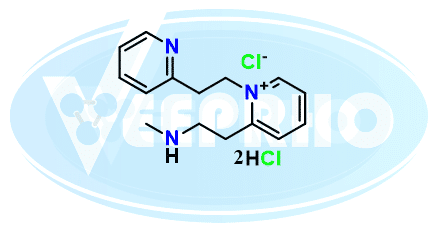 | Betahistine Impurity 6 Chloride (2HCl Salt) | VE0012712 |
| Betahistine Impurity 8 | VE0012719 | |
| Betahistine Impurity 9 | VE0012176 | |
| Betahistine Lactose adduct Impurity | VE0028995 | |
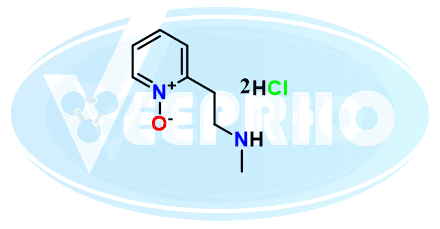 | Betahistine N-Oxide (2HCl Salt) | VE0012711 |
Alle verwandten Produkte zeigen N-Nitroso-Betahistine-Verunreinigungen (2)