
Ranitidine-Verunreinigungen
Angebot für ein Set anfordern
- Angebot für dieses Set anfragen
Alle EP-Verunreinigungen von Ranitidine
14 ProdukteDie 14 Produkte ansehen
- Ranitidine EP Impurity A VL220001
CAS 72126-78-4 - Ranitidine EP Impurity B VL220003
CAS 72545-66-5 - Ranitidine EP Impurity B(Fumarate Salt) VE0022924
CAS 256948-32-0 - Ranitidine EP Impurity C VL220002
CAS 73851-70-4 - Ranitidine EP Impurity D VL220009
CAS 117846-02-3 - Ranitidine EP Impurity D (HCl) VE0017882
- Ranitidine EP Impurity D (Sodium Salt) VE0022806
CAS 112251-56-6 - Ranitidine EP Impurity E VL220008
CAS 73857-20-2 - Ranitidine EP Impurity F VL220010
CAS 81074-81-9 - Ranitidine EP Impurity G VL220011
CAS 112233-23-5 - Ranitidine EP Impurity H VL220012
CAS 72078-82-1 - Ranitidine EP impurity I VL220013
CAS 207592-21-0 - Ranitidine EP Impurity J VE006184
CAS 1331637-48-9 - Ranitidine EP Impurity K VL220015
CAS 61832-41-5
- Ranitidine EP Impurity A VL220001
- Angebot für dieses Set anfragen
Alle USP-Verunreinigungen von Ranitidine
10 ProdukteDie 10 Produkte ansehen
- Ranitidine BP Impurity B VE006670
CAS 66356-53-4 - Ranitidine EP Impurity A VL220001
CAS 72126-78-4 - Ranitidine EP Impurity B VL220003
CAS 72545-66-5 - Ranitidine EP Impurity B(Fumarate Salt) VE0022924
CAS 256948-32-0 - Ranitidine EP Impurity C VL220002
CAS 73851-70-4 - Ranitidine EP Impurity E VL220008
CAS 73857-20-2 - Ranitidine EP Impurity F VL220010
CAS 81074-81-9 - Ranitidine EP Impurity G VL220011
CAS 112233-23-5 - Ranitidine EP Impurity H VL220012
CAS 72078-82-1 - Ranitidine EP impurity I VL220013
CAS 207592-21-0
- Ranitidine BP Impurity B VE006670
- Angebot für dieses Set anfragen
Alle Nitrosamin-Verunreinigungen von Ranitidine
3 ProdukteDie 3 Produkte ansehen
- N-Nitroso Desmethyl Ranitidine VE0015916
- N-Nitroso Ranitidine-1 VE0014169
- N-Nitroso Ranitidine-2 VE0027208
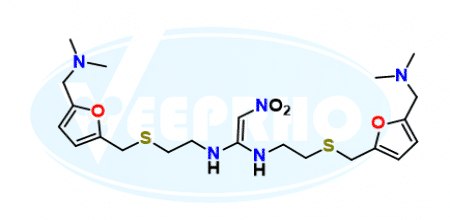
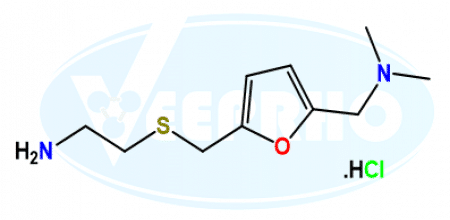
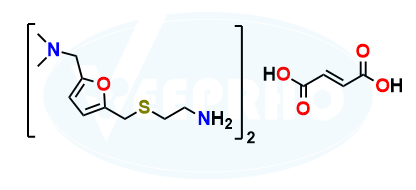
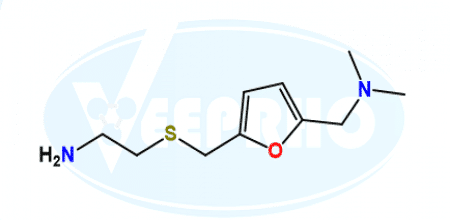


1–20 von 20 Ergebnissen17 auf Lager
| Struktur | Produktname |
|---|---|
| N-Nitroso Desmethyl RanitidineVE0015916 | |
| N-Nitroso Ranitidine-1VE0014169 | |
| N-Nitroso Ranitidine-2VE0027208 | |
![Struktur von N,N-Dimethyl-5-[[[2-[[1-(methylthio)-2-nitroethenyl]amino]ethyl]thio]methyl]-2-furanmethanamine](https://veeprho.com/wp-content/uploads/2022/07/N-N-Dimethyl-5-5B5B5B2-5B5B1-methylthio-2-nitroethenyl5Damino5Dethyl5Dthio5Dmethyl5D-2-furanmethanamine.png) | N,N-Dimethyl-5-[[[2-[[1-(methylthio)-2-nitroethenyl]amino]ethyl]thio]methyl]-2-furanmethanamineCAS-Nr. 72115-14-1 · VE008963 · Auf Lager |
| Ranitidine 1,1-Bis(methylthio)-2-nitroethyleneCAS-Nr. 13623-94-4 · VE006579 · Auf Lager | |
| Ranitidine BP Impurity BCAS-Nr. 66356-53-4 · VE006670 · Auf Lager | |
| Ranitidine EP Impurity ACAS-Nr. 72126-78-4 · VL220001 · Auf Lager | |
| Ranitidine EP Impurity BCAS-Nr. 72545-66-5 · VL220003 · Auf Lager | |
| Ranitidine EP Impurity B(Fumarate Salt)CAS-Nr. 256948-32-0 · VE0022924 · Auf Lager | |
| Ranitidine EP Impurity CCAS-Nr. 73851-70-4 · VL220002 · Auf Lager | |
| Ranitidine EP Impurity DCAS-Nr. 117846-02-3 · VL220009 · Auf Lager | |
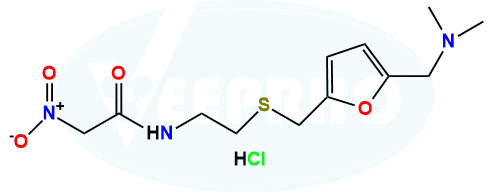 | Ranitidine EP Impurity D (HCl)VE0017882 · Auf Lager |
| Ranitidine EP Impurity D (Sodium Salt)CAS-Nr. 112251-56-6 · VE0022806 · Auf Lager | |
| Ranitidine EP Impurity ECAS-Nr. 73857-20-2 · VL220008 · Auf Lager | |
| Ranitidine EP Impurity FCAS-Nr. 81074-81-9 · VL220010 · Auf Lager | |
| Ranitidine EP Impurity GCAS-Nr. 112233-23-5 · VL220011 · Auf Lager | |
| Ranitidine EP Impurity HCAS-Nr. 72078-82-1 · VL220012 · Auf Lager | |
| Ranitidine EP impurity ICAS-Nr. 207592-21-0 · VL220013 · Auf Lager | |
| Ranitidine EP Impurity JCAS-Nr. 1331637-48-9 · VE006184 · Auf Lager | |
| Ranitidine EP Impurity KCAS-Nr. 61832-41-5 · VL220015 · Auf Lager |
Ranitidine Related Compound
Concerns regarding ranitidine primarily stem from the discovery of impurities, specifically NDMA, which can form during manufacturing or storage under certain conditions. Regulatory agencies like the U.S. FDA and EMA have set stringent limits on such impurities to ensure drug safety.
Types of Impurities in Ranitidine
NDMA Contamination NDMA is a probable human carcinogen. It may form in ranitidine products due to instability under heat or during long-term storage. This impurity has led to the withdrawal of ranitidine from many markets worldwide. Related Substances These are chemically related compounds or byproducts formed during the synthesis of ranitidine. Monitoring and controlling these related substances are critical to ensuring product safety. Degradation Products Ranitidine is sensitive to heat and moisture, leading to degradation over time and the potential formation of harmful byproducts like NDMA. Proper storage conditions are essential to minimize degradation. Analytical Techniques for Monitoring Impurities Techniques such as Gas Chromatography-Mass Spectrometry (GC-MS) and High-Performance Liquid Chromatography (HPLC) are used to detect and quantify impurities, ensuring compliance with safety standards.
Häufige Fragen
Why is ranitidine no longer used?
Ranitidine is no longer used because of concerns about contamination with NDMA, a probable human carcinogen. This impurity can form during manufacturing or storage, leading to safety risks. As a result, most ranitidine products have been withdrawn from the market.
Is ranitidine now safe to take?
Ranitidine is not considered safe due to the potential presence of NDMA. Safer alternatives, such as other H2 blockers (e.g., famotidine) or proton pump inhibitors (PPIs), are recommended for managing acid-related conditions. Consult your healthcare provider for the best treatment options.
What is medicine ranitidine used for?
Ranitidine was used to treat indigestion, heartburn, acid reflux, gastroesophageal reflux disease (GERD), and to prevent and manage stomach ulcers. It reduced stomach acid production by blocking histamine action in the stomach lining.
Is ranitidine a PPI or H2 blocker?
Ranitidine is an H2 blocker, not a proton pump inhibitor (PPI). H2 blockers work by blocking histamine receptors in the stomach, reducing acid production. PPIs, on the other hand, inhibit the proton pump, which directly controls acid secretion in the stomach.