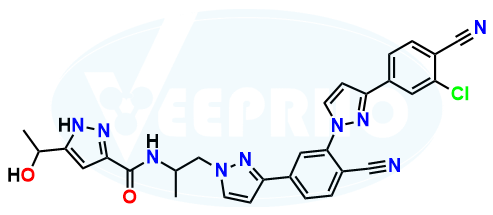
Darolutamide, commercially marketed as Nubeqa, is a potent and efficient non-steroidal antiandrogen medication used predominantly to treat non-metastatic castration-resistant prostate cancer (nmCRPC) in men. The compound operates by specifically binding with the receptor sites of androgens (male hormones) hence blocking their activity, a mechanism that ultimately inhibits the growth and proliferation of cancer cells. Notably, its pharmacokinetic profile is characterized by a half-life of approximately 20 hours and minimal penetration across the blood-brain barrier, reducing the likelihood of central nervous system side effects.

Parent: Darolutamide

Parent: Darolutamide

Parent: Darolutamide

Parent: Darolutamide

Parent: Darolutamide

Parent: Darolutamide

Parent: Darolutamide

Parent: Darolutamide

Parent: Darolutamide

Parent: Darolutamide

Parent: Darolutamide

Parent: Darolutamide
Darolutamide drug substance contains related compounds such as impurities. These are residual or transformation compounds that occur as minor fractions during the preparation processes. They can include solvents, intermediates, transformation products, or degradation products. The acceptable level for Darolutamide impurity is strictly monitored and regulated by international pharmaceutical regulations. It is important to note that although these impurities are generally present in small amounts, a thorough impurity profile is crucial as the presence of substantial amounts can affect drug efficacy and safety.
Darolutamide is typically used for the treatment of non-metastatic castration-resistant prostate cancer (nmCRPC) in men. This type of cancer has progressed despite the patient undergoing treatment to lower testosterone levels in their body, which is what darolutamide specifically targets.
Both Abiraterone and Darolutamide are medications used to treat prostate cancer, but they function differently. Abiraterone works by inhibiting the production of androgen in the body, which fuels the growth of prostate cancer cells. On the other hand, Darolutamide works by binding to the androgen receptors and blocking their activity, thereby preventing the cancer cells from proliferating.
Life expectancy for patients on darolutamide varies and depends on various factors including the stage of cancer, overall health of the patient, and how well the cancer responds to the treatment. However, studies suggest that the use of darolutamide can significantly reduce the risk of death or metastasis by up to 31%.
In CRPC, or Castration-Resistant Prostate Cancer, darolutamide is a type of medication used to treat non-metastatic variants of the disease. The cancer in this state has shown resistance to standard treatments that lower testosterone levels. Darolutamide counteracts this by directly inhibiting the activities of androgen receptors, thereby suppressing the growth and proliferation of the cancer cells.