Impurezas de Plerixafor

Plerixafor, sold under the brand name Mozobil, is an immunostimulant medication used to mobilize hematopoietic stem cells in cancer patients. It works by promoting the release of stem cells from the bone marrow into the bloodstream, allowing these cells to be collected through apheresis and later transplanted back into the patient. Plerixafor is commonly used in patients undergoing autologous stem cell transplantation for conditions such as lymphoma and multiple myeloma. Developed by AnorMED and later acquired by Genzyme, plerixafor has become a key component in stem cell mobilization protocols, particularly for patients who have insufficient stem cell counts using standard mobilization therapies.

Solicitar cotización de un conjunto

1–21 de 21 resultados19 en stock
EstructuraNombre del productoN.º CASN.º de cat.Disponibilidad
HONNHNHHNCyclam impurity PlerixaforC₁₈H₃₂N₄ON.º CAS 176252-20-3 · VL4740001 · En stock176252-20-3VL4740001En stock
ClHHONNHNHHNCyclam Impurity-Plerixafor (HCl Salt)Sinónimos: Plerixafor Benzyl AlcoholC18H33ClN4OVE0022558 · En stockVE0022558En stock
ONNHNNNNHHNNHNHN-Nitroso Plerixafor Impurity 3C28H53N9OVE0014189VE0014189Under Development
Estructura de Plerixafor Impurity 1 (4HCl Salt)Plerixafor Impurity 1 (4HCl Salt)C18H32N4O. 4 HClVE0019462 · En stockVE0019462En stock
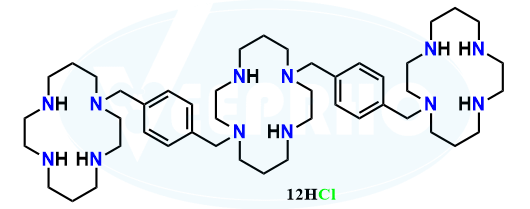
Estructura de Plerixafor Impurity 2 (12HCl Salt)Plerixafor Impurity 2 (12HCl Salt)C46H84N12. 12 HClN.º CAS 2173049-85-7 · VE0019469 · En stock2173049-85-7VE0019469En stock
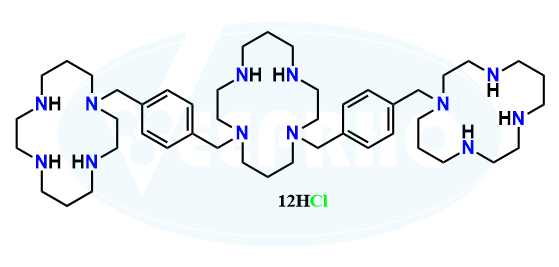
Estructura de Plerixafor Impurity 3 (12HCl Salt)Plerixafor Impurity 3 (12HCl Salt)VE0019468 · En stockVE0019468En stock
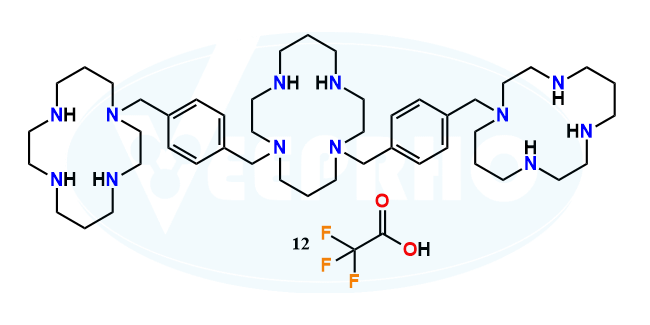
Estructura de Plerixafor Impurity 3 (12TFA Salt)Plerixafor Impurity 3 (12TFA Salt)C46H84N12. 12 C2HF3O2VE0019466 · En stockVE0019466En stock
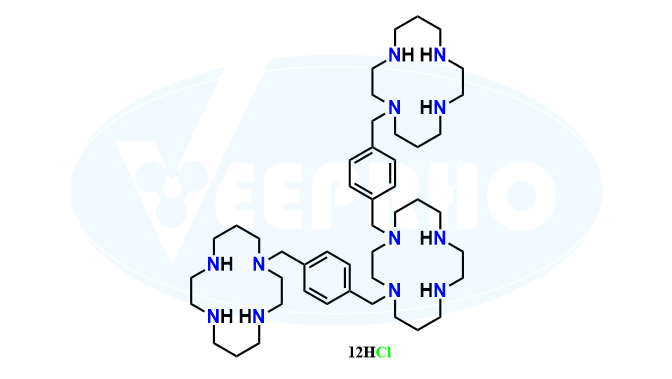
Estructura de Plerixafor Impurity 4 (12HCl Salt)Plerixafor Impurity 4 (12HCl Salt)C46H84N12. 12 HClVE0019470 · En stockVE0019470En stock
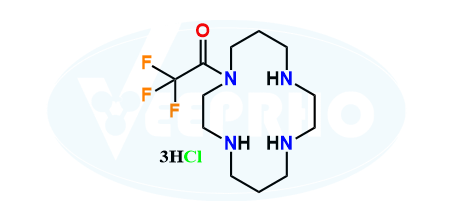
Estructura de Plerixafor Impurity 5 (3HCl Salt)Plerixafor Impurity 5 (3HCl Salt)C12H23F3N4O. 3 HClVE0019473 · En stockVE0019473En stock
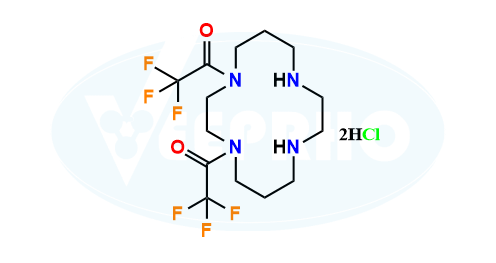
Estructura de Plerixafor Impurity 7 (2HCl Salt)Plerixafor Impurity 7 (2HCl Salt)C14H22F6N4O2. 2 HClVE0019252 · En stockVE0019252En stock
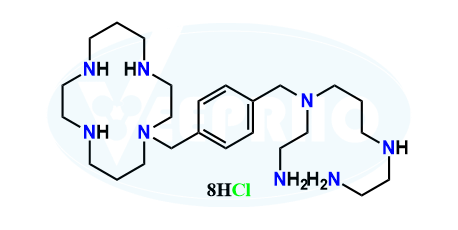
Estructura de Plerixafor Impurity 27 (8HCl Salt)Plerixafor Impurity 27 (8HCl Salt)C25H50N8. 8 HClVE0019475 · En stockVE0019475En stock
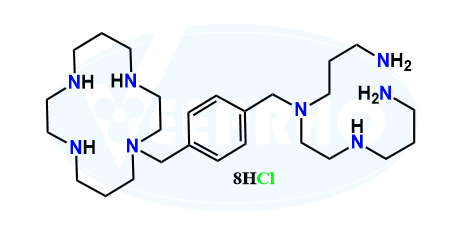
Estructura de Plerixafor Impurity 28 (12HCl Salt)Plerixafor Impurity 28 (12HCl Salt)C26H52N8. 8 HClVE0019477 · En stockVE0019477En stock
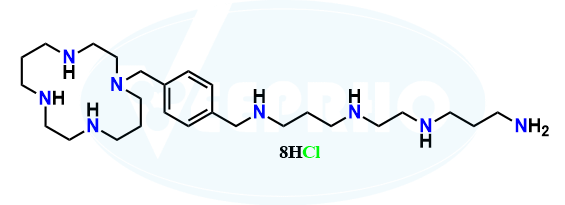
Estructura de Plerixafor Impurity 29 (12HCl Salt)Plerixafor Impurity 29 (12HCl Salt)C26H52N8. 8 HClVE0019478 · En stockVE0019478En stock
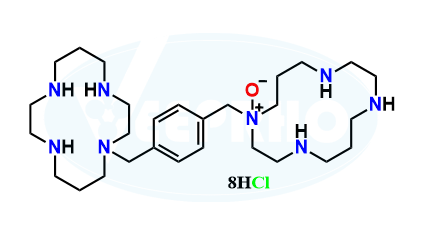
Estructura de Plerixafor N-Oxide (8HCl Salt)Plerixafor N-Oxide (8HCl Salt)C28H54N8O. 8HClVE0019460 · En stockVE0019460En stock
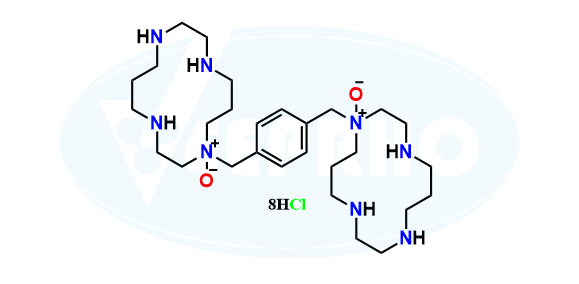
Estructura de Plerixafor N,N-Dioxide (8HCl Salt)Plerixafor N,N-Dioxide (8HCl Salt)C28H54N8O2. 8 HClVE0019464 · En stockVE0019464En stock
ONNNNONNONNNNONNONNOPlerixafor Nitroso Impurity 1C28H48N14O6VE0014187 · En stockVE0014187En stock
ONNNNNHNHNHNHNHPlerixafor Nitroso Impurity 2C28H53N9OVE0014188VE0014188Under Development
ONNHHNHN(1,4,8,11-tetraazacyclotetradecan-1-yl)(p-tolyl)methanoneC18H30N4OVE0029136 · En stockVE0029136En stock
ONNNNONNONNNNONNONNO1-Nitrosopiperidin-3-amine (TFA Salt)Fármaco: LinaglitpinC7H12F3N3O3VE0011771 · En stockVE0011771En stock
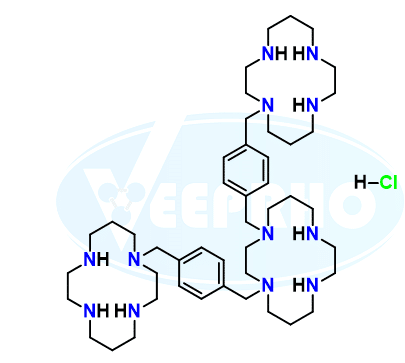
Estructura de 1,4-bis(4-((1,4,8,11-Tetraazacyclotetradecan-1-yl)methyl)benzyl)-1,4,8,11-tetraazacyclotetradecane Hydrochloride1,4-bis(4-((1,4,8,11-Tetraazacyclotetradecan-1-yl)methyl)benzyl)-1,4,8,11-tetraazacyclotetradecane HydrochlorideC46H85ClN12VE0011745 · En stockVE0011745En stock
NNHNNNHNHNHNHNNHHNNH1,8-Bis(4-((1,4,8,11-Tetraazacyclotetradecan-1-yl)methyl)benzyl)-1,4,8,11-tetraazacyclo tetradecaneC46H84N12N.º CAS 414858-02-9 · VE009431 · En stock414858-02-9VE009431En stock

Plerixafor Related Compound

Like all pharmaceutical products, impurities may form in plerixafor during manufacturing, storage, or handling. Regulatory agencies, such as the U.S. FDA and EMA, enforce stringent guidelines to monitor and control impurities, ensuring the safety and efficacy of the medication. Types of Impurities in Plerixafor Related Substances These are chemically similar compounds or byproducts that may form during the synthesis of plerixafor. Monitoring related substances ensures the drug’s purity and therapeutic effectiveness. Degradation Products Plerixafor can degrade over time when exposed to environmental factors such as heat, light, or humidity. Proper storage conditions are essential to prevent the formation of degradation products that may compromise the medication's stability and safety. Residual Solvents Trace amounts of solvents used during the manufacturing process may remain in the final product. Regulatory standards ensure these solvents are within permissible limits to minimize potential risks. Analytical Techniques for Monitoring Impurities Advanced techniques such as High-Performance Liquid Chromatography (HPLC) and Mass Spectrometry (LC-MS) are used to detect and quantify impurities, ensuring plerixafor meets stringent quality and safety requirements.

Preguntas frecuentes

Does plerixafor cause hypersensitivity reactions?

Yes, hypersensitivity reactions, including anaphylaxis, have been reported in patients taking plerixafor. Symptoms may include rash, difficulty breathing, or swelling. If hypersensitivity reactions occur, discontinue the drug immediately and seek medical attention.

What is the half-life of plerixafor?

The half-life of plerixafor is approximately 3 to 5 hours in adults with normal renal function. Patients with impaired kidney function may require dose adjustments, as the drug is primarily excreted through the kidneys.

Is plerixafor FDA approved?

Yes, plerixafor is FDA approved. It was approved in 2008 for use in conjunction with granulocyte-colony stimulating factor (G-CSF) to mobilize hematopoietic stem cells in patients with lymphoma and multiple myeloma undergoing autologous stem cell transplantation.

Is plerixafor a chemotherapy drug?

No, plerixafor is not a chemotherapy drug. It is an immunostimulant that mobilizes stem cells from the bone marrow into the bloodstream for collection and transplantation. It is often used alongside chemotherapy and other treatments but does not directly target cancer cells.