
Impuretés de Bupivacaine
Demander un devis pour un ensemble
- Demander un devis pour ce lot
Bupivacaine : toutes les impuretés Ph. Eur.
9 produitsVoir les 9 produits
- Bupivacaine EP Impurity A VE0013084
CAS 39627-98-0 - Bupivacaine EP Impurity B VE009447
CAS 15883-20-2 - Bupivacaine EP Impurity B (HCl Salt) VE0021397
CAS 65797-42-4 - Bupivacaine EP Impurity C (Free Base) VE0025180
CAS 1797894-80-4 - Bupivacaine EP Impurity D VE0013101
CAS 1037184-07-8 - Bupivacaine EP Impurity E VE0013102
CAS 1330172-81-0 - Bupivacaine EP Impurity E (HCl Salt) VE0022534
- Lidocaine EP Impurity A VL1040001
CAS 87-62-7 - Ropivacaine Related Compound A (HCl salt) VE006435
CAS 21436-98-6
- Bupivacaine EP Impurity A VE0013084
- Demander un devis pour ce lot
Bupivacaine : toutes les impuretés USP
5 produitsVoir les 5 produits
- Bupivacaine EP Impurity B VE009447
CAS 15883-20-2 - Bupivacaine EP Impurity B (HCl Salt) VE0021397
CAS 65797-42-4 - Bupivacaine EP Impurity E (HCl Salt) VE0022534
- Lidocaine EP Impurity A VL1040001
CAS 87-62-7 - Ropivacaine Related Compound A (HCl salt) VE006435
CAS 21436-98-6
- Bupivacaine EP Impurity B VE009447
1–19 sur 19 résultats19 en stock
| Structure | Nom du produit |
|---|---|
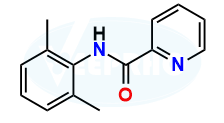
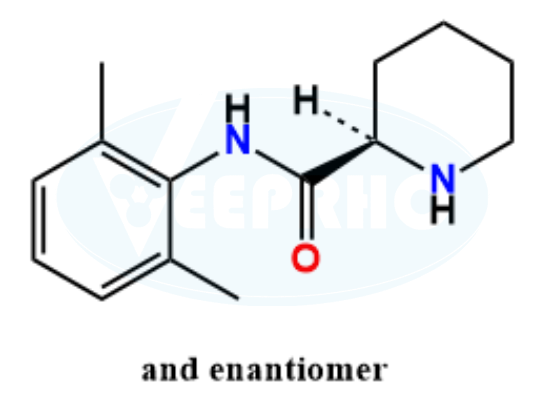
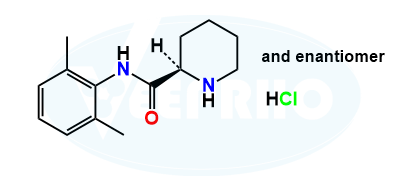
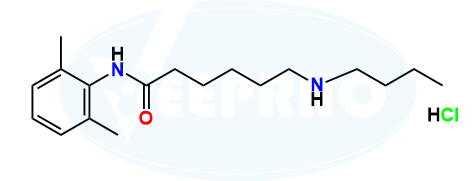
| Bupivacaine EP Impurity AN° CAS 39627-98-0 · VE0013084 · En stock | |
| Bupivacaine EP Impurity BN° CAS 15883-20-2 · VE009447 · En stock | |
| Bupivacaine EP Impurity B (HCl Salt)N° CAS 65797-42-4 · VE0021397 · En stock | |
| Bupivacaine EP Impurity C (Free Base)N° CAS 1797894-80-4 · VE0025180 · En stock | |
| Bupivacaine EP Impurity DN° CAS 1037184-07-8 · VE0013101 · En stock | |
| Bupivacaine EP Impurity EN° CAS 1330172-81-0 · VE0013102 · En stock | |
| Bupivacaine EP Impurity E (HCl Salt)VE0022534 · En stock | |
| Bupivacaine Impurity 3N° CAS 51989-48-1 · VE0013083 · En stock | |
| Bupivacaine Impurity 10N° CAS 2180-94-1 · VE0026373 · En stock | |
| Bupivacaine Impurity 12N° CAS 2125994-25-2 · VE0026374 · En stock | |
| Bupivacaine Impurity 29VE0026372 · En stock | |
| Bupivacaine N-OxideN° CAS 1346597-81-6 · VE0012990 · En stock | |
| Bupivacaine N-Oxide (HCl Salt)N° CAS 1796927-05-3 · VE0011299 · En stock | |
| Lidocaine EP Impurity AN° CAS 87-62-7 · VL1040001 · En stock | |
| Ropivacaine Related Compound A (HCl salt)N° CAS 21436-98-6 · VE006435 · En stock | |
| 1-butyl-N-(2,4-dimethylphenyl)piperidine-2-carboxamideN° CAS 2774312-11-5 · VE0026383 · En stock | |
| 1-butyl-N-(2,6-dimethylphenyl)piperidine-3-carboxamide HydrochlorideVE0026381 · En stock | |
| 1-butyl-N-(2,6-dimethylphenyl)piperidine-4-carboxamide HydrochlorideVE0026382 · En stock | |
| 1-butylpiperidine-2-carboxylic acidN° CAS 856838-98-7 · VE0012115 · En stock |
Bupivacaine Impurities and Related Compound
Typical quality control for bupivacaine injection monitors related substances, enantiomeric composition where relevant, assay of active ingredient, and limits for residual solvents and microbial contaminants according to pharmacopeial standards. Commonly listed related compounds include the S-enantiomer (levobupivacaine) when enantiomeric purity is relevant, N-dealkylated and hydroxylated metabolites, and structurally related aminoamide anesthetics such as ropivacaine, mepivacaine and lidocaine which can appear as process- or degradation-related impurities. In finished injection products, typical specification limits used in release testing are: individual unspecified impurities not greater than 0.2 percent w/w and total impurities not greater than 0.5 percent w/w; assay of active bupivacaine is usually specified around 98.5 to 101.5 percent of the labeled amount. Specific limits and the list of identified impurities depend on the manufacturer and applicable pharmacopeial monograph.
Questions fréquentes
What's the difference between bupivacaine and lidocaine?
Bupivacaine and lidocaine are both amino amide local anesthetics but differ in potency, duration, onset and safety profile. Bupivacaine is more lipophilic and more potent, produces a longer duration of sensory and motor block and has higher plasma protein binding. Lidocaine has a faster onset but shorter duration. Clinically lidocaine is preferred for shorter procedures or when rapid onset is needed; bupivacaine is used when prolonged anesthesia or postoperative analgesia is required. Bupivacaine carries a higher risk of cardiotoxicity at comparable systemic concentrations, so dosing and administration must account for that.
What is the mechanism of action of bupivacaine heavy?
Bupivacaine heavy refers to a hyperbaric spinal solution, usually bupivacaine mixed with a dextrose carrier to increase solution density relative to cerebrospinal fluid. Mechanistically the active drug blocks voltage gated sodium channels in nerve membranes, stabilizing the inactivated state and preventing propagation of action potentials. The heavy formulation does not change the molecular blockade mechanism but alters the intrathecal distribution of the solution in the subarachnoid space; gravity dependent spread can be used to control the dermatomal level of block after patient positioning.
How long does it take for bupivacaine to wear off?
Onset and duration depend on dose, concentration, route and formulation. Onset after peripheral nerve block is usually within 5 to 15 minutes for surgical anesthesia; surgical sensory block may last from about 4 to 12 hours for single injection peripheral nerve blocks. Spinal bupivacaine typically provides dense sensory block for roughly 90 to 240 minutes depending on dose and baricity. Continuous epidural infusion or extended release formulations can provide analgesia for 24 to 72 hours. Recovery times vary by patient factors, site of injection and concomitant drugs.
Is bupivacaine an opioid?
No. Bupivacaine is not an opioid. It is a local anesthetic that works by blocking voltage gated sodium channels in nerve fibers. It does not bind opioid receptors and does not produce opioid type analgesia or typical opioid adverse effects such as respiratory depression via opioid receptor activation.