
- 100% accuracy of data
- 24/7 scientific support
- 0% tolerance in quality of product
Stock Locations
- New Jersey, USA
- Czech Republic, EU
* Stock subject to availability.
Documentation
Includes: HPLC, MASS/LC-MS, 1H NMR, FT-IR, Potency, Structure Elucidation Report (SER), and additional analytical data depending on the product.
1797894-80-4
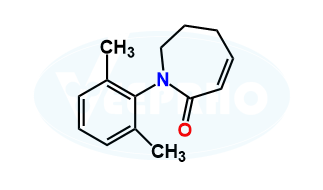
Bupivacaine EP Impurity C (Free Base)
● In Stock
| Catalogue No.: | VE0025180 |
|---|---|
| CAS No.: | 1797894-80-4 |
| Mol. Formula: | C14H17NO |
| Mol. Weight: | 215.2 g/mol |
For laboratory use only: analytical, development and regulatory purposes. Supplied in mg quantities. Not for human or veterinary use.
Request a quote for a set
- Request quote for this set
All EP impurities of Bupivacaine
9 productsSee the 9 products
- Bupivacaine EP Impurity A VE0013084
CAS 39627-98-0 - Bupivacaine EP Impurity B VE009447
CAS 15883-20-2 - Bupivacaine EP Impurity B (HCl Salt) VE0021397
CAS 65797-42-4 - Bupivacaine EP Impurity C (Free Base) VE0025180
CAS 1797894-80-4 - Bupivacaine EP Impurity D VE0013101
CAS 1037184-07-8 - Bupivacaine EP Impurity E VE0013102
CAS 1330172-81-0 - Bupivacaine EP Impurity E (HCl Salt) VE0022534
- Lidocaine EP Impurity A VL1040001
CAS 87-62-7 - Ropivacaine Related Compound A (HCl salt) VE006435
CAS 21436-98-6
- Bupivacaine EP Impurity A VE0013084
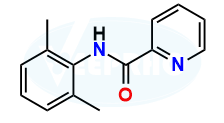
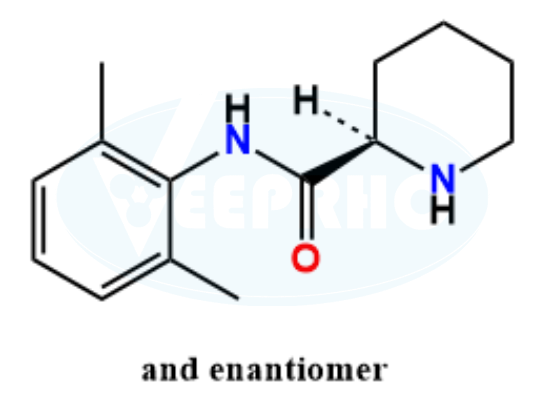
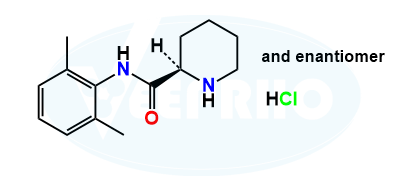
Additional information on CAS 1797894-80-4
| Parent drug | Bupivacaine |
|---|---|
| Product type | Impurity standards |
| IUPAC name | 1-(2,6-Dimethylphenyl)-1,5,6,7-tetrahydro-2H-azepin-2-one |
| EP name | Bupivacaine EP Impurity C |
| SMILES | Cc1cccc(C)c1N1CCCC=CC1=O |
| InChIKey | MOZRUAQMNSSBSM-UHFFFAOYSA-N |
| CHNS Ratio (%) (calculated) | C 78.10 · H 7.96 · N 6.51 · S 0.00 |
| Description | Bupivacaine EP Impurity C (Free Base) (CAS 1797894-80-4) is a low level basic byproduct encountered in manufacturing and stability studies of bupivacaine. Identified as a positional or N-alkyl variant of the active substance | it can form during alkylation steps or via hydrolytic degradation pathways and displays greater lipophilicity compared with the hydrochloride salt. Control strategies emphasize synthetic route optimization and enhanced purification | supported by routine quantitative monitoring using validated HPLC with UV detection and confirmatory LC-MS. Characterization covers accurate mass | retention behavior and impurity profiling to satisfy ICH and pharmacopeial expectations and to define specification limits for drug substance quality. |
Request a Quote
"*" indicates required fields