
Impuretés de Dalbavancin
Demander un devis pour un ensemble
- Demander un devis pour ce lot
Dalbavancin : toutes les impuretés nitrosamines
22 produitsVoir les 22 produits
- N-Nitroso Dalbavancin VE0019472
- N-Nitroso Desmethyl Dalbavancin A0 Impurity 1 VE0026883
- N-Nitroso Desmethyl Dalbavancin A0 Impurity 2 VE0026885
- N-Nitroso Desmethyl Dalbavancin A0 Impurity 3 VE0026887
- N-Nitroso Desmethyl Dalbavancin A0 Impurity 4 VE0026890
- N-Nitroso Desmethyl Dalbavancin A1 Impurity 1 VE0026881
- N-Nitroso Desmethyl Dalbavancin A1 Impurity 2 VE0026884
- N-Nitroso Desmethyl Dalbavancin A1 Impurity 3 VE0026889
- N-Nitroso Desmethyl Dalbavancin A1 Impurity 4 VE0026891
- N-Nitroso Desmethyl Dalbavancin B1 Impurity 1 VE0026876
- N-Nitroso Desmethyl Dalbavancin B1 Impurity 2 VE0026877
- N-Nitroso Desmethyl Dalbavancin B1 Impurity 3 VE0026878
- N-Nitroso Desmethyl Dalbavancin B1 Impurity 4 VE0026879
- N-Nitroso Desmethyl Dalbavancin B2 Impurity 1 VE0026893
- N-Nitroso Desmethyl Dalbavancin B2 Impurity 2 VE0026895
- N-Nitroso Desmethyl Dalbavancin B2 Impurity 3 VE0026897
- N-Nitroso Desmethyl Dalbavancin B2 Impurity 4 VE0026902
- N-Nitroso Desmethyl Dalbavancin Impurity 1 VE0026894
- N-Nitroso Desmethyl Dalbavancin Impurity 2 VE0026898
- N-Nitroso Desmethyl Dalbavancin Impurity 3 VE0026900
- N-Nitroso-Desmethyl-Dalbavancin Impurity VE0024905
- N-Nitroso-Desmethyl-Dalbavancin: Synthesis Attempts and Failure Report (NAP Test) VE0024912
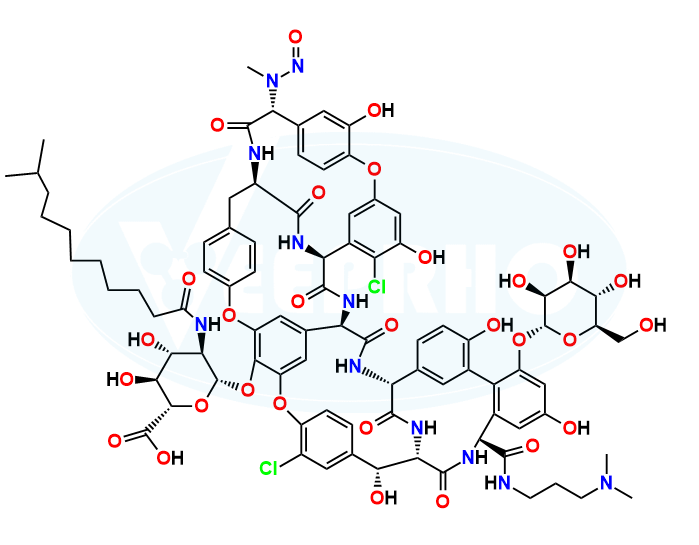
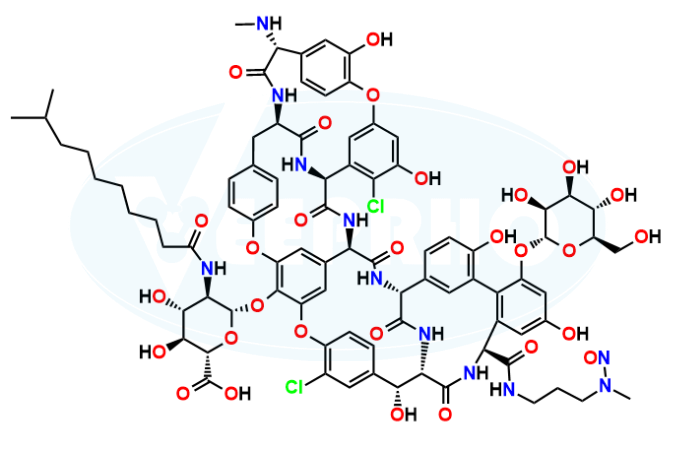
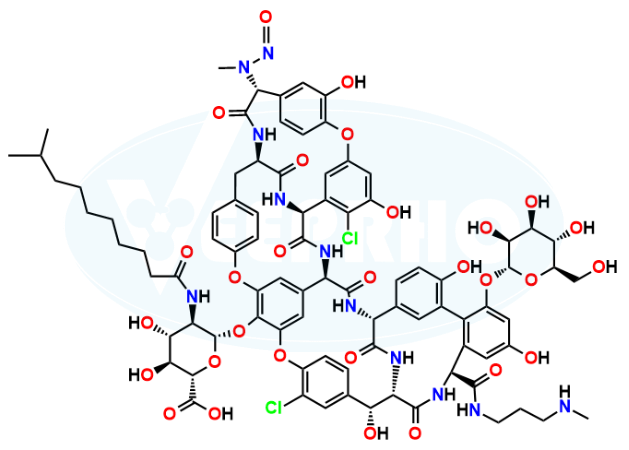
1–30 sur 30 résultats5 en stock
Dalbavancin Related Compound
Impurities in dalbavancin arise from its fermentation-based production and semi-synthetic modification of glycopeptide structures, as well as from degradation under stress conditions. As a parenteral antibiotic used in critical infections, impurity levels must be strictly controlled according to ICH Q3A/B, USP, EP, and injectable drug regulations.
Types of Impurities in Dalbavancin
Process-Related Impurities
- Residual by-products from fermentation (e.g., vancomycin-like glycopeptide analogs)
- Incomplete lipidation intermediates
- Synthetic by-products from acylation, alkylation, or protecting group removal
- Residual solvents such as acetone, methanol, or dimethylformamide (DMF)
Degradation Impurities
- Hydrolyzed forms of dalbavancin under acidic or enzymatic conditions
- Oxidation products at aromatic or aliphatic sites
- Epimerization or rearrangement of peptide bonds
- Light- and heat-sensitive cleavage products of the lipid tail or sugar moieties
Elemental Impurities
- Trace metals such as iron, copper, or zinc from fermentation vessels or synthesis steps
- Regulated under ICH Q3D, with parenteral exposure limits
Analytical Techniques for Impurity Detection
- High-Performance Liquid Chromatography (HPLC) – primary method for impurity profiling and assay
- LC-MS/MS (Liquid Chromatography–Tandem Mass Spectrometry) – for trace-level impurity identification and confirmation
- Gas Chromatography (GC) – for detecting residual solvents
- ICP-MS – for elemental impurity detection
- Peptide mapping and UV-Vis spectroscopy – for structural integrity and purity checks
Questions fréquentes
What is Dalbavancin used for?
Dalbavancin is used for treating serious skin and soft tissue infections caused by Gram-positive bacteria , including MRSA .
How does Dalbavancin work?
It binds to peptidoglycan precursors in the bacterial cell wall, inhibiting cross-linking , which leads to cell lysis and death .
What are common side effects of Dalbavancin?
Nausea Headache Diarrhea Rash or infusion-related reactions Rare: Liver enzyme elevation or hypersensitivity
What is the advantage of Dalbavancin's long half-life?
It allows for once-weekly IV dosing , reducing hospital stays and improving convenience for outpatient parenteral antibiotic therapy (OPAT) .
Is Dalbavancin chemically stable?
Dalbavancin is relatively stable but should be stored refrigerated (2–8°C) and protected from light and moisture . Reconstituted solutions should be used within specified timeframes per manufacturer instructions.