
- 100% accuracy of data
- 24/7 scientific support
- 0% tolerance in quality of product
Mutagenicity assessment (ICH M7)
Potentially mutagenic impurity (ICH M7 Class 1–3).
N-nitroso compound: ICH M7 cohort of concern.Stock Locations
- New Jersey, USA
- Czech Republic, EU
* Stock subject to availability.
Documentation
Includes: HPLC, MASS/LC-MS, 1H NMR, FT-IR, Potency, Structure Elucidation Report (SER), and additional analytical data depending on the product.
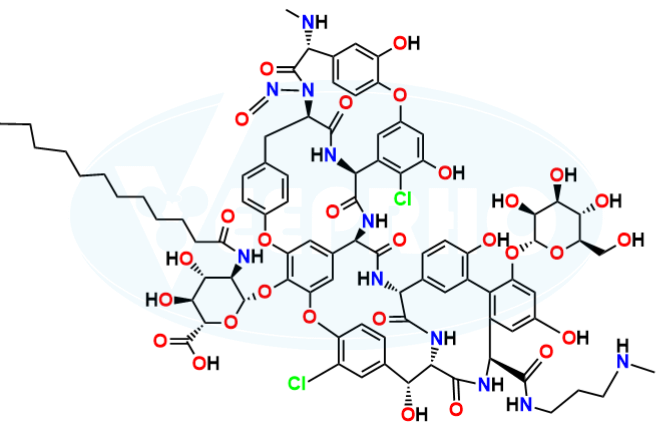
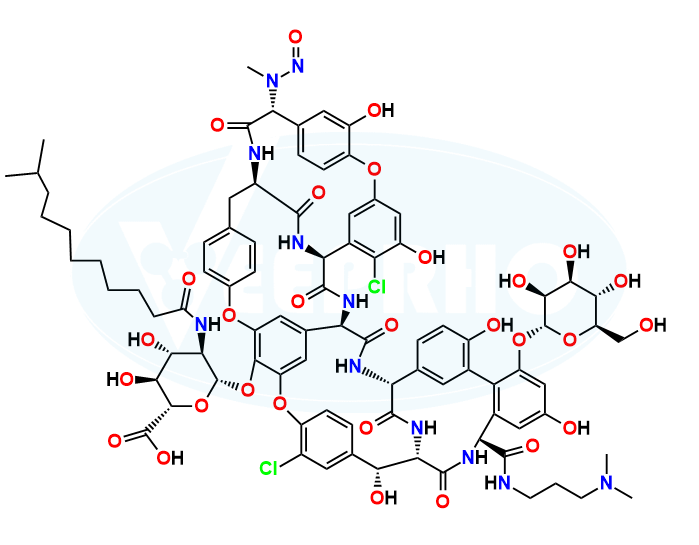
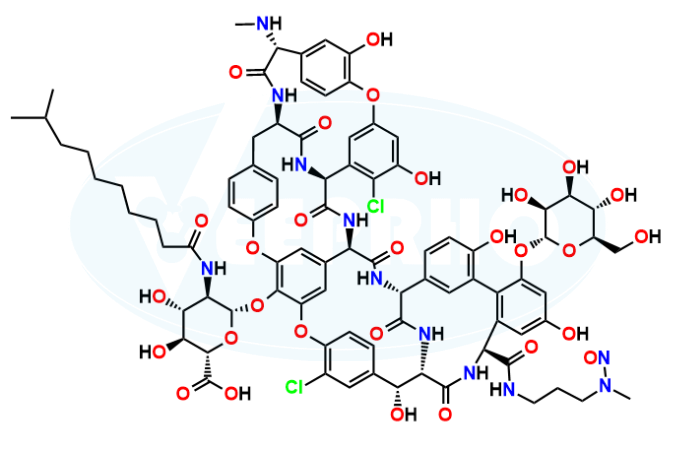
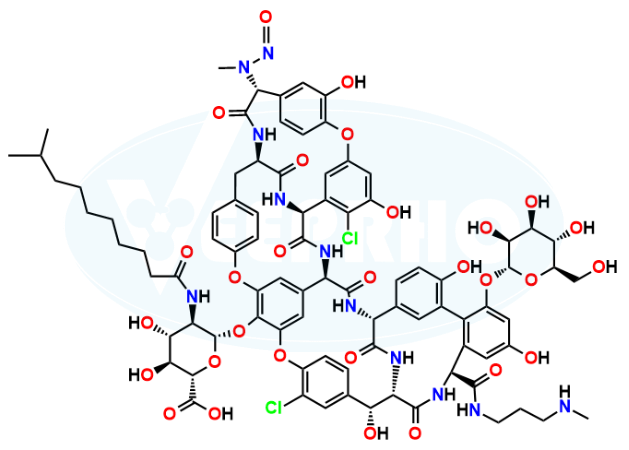
N-Nitroso Desmethyl Dalbavancin B1 Impurity 4
● Under Development
| Catalogue No.: | VE0026879 |
|---|---|
| CAS No.: | N/A |
| Mol. Formula: | C87H97Cl2N11O29 |
| Mol. Weight: | 1831.68 g/mol |
For laboratory use only: analytical, development and regulatory purposes. Supplied in mg quantities. Not for human or veterinary use.
Request a quote for a set
- Request quote for this set
All nitrosamine impurities of Dalbavancin
22 productsSee the 22 products
- N-Nitroso Dalbavancin VE0019472
- N-Nitroso Desmethyl Dalbavancin A0 Impurity 1 VE0026883
- N-Nitroso Desmethyl Dalbavancin A0 Impurity 2 VE0026885
- N-Nitroso Desmethyl Dalbavancin A0 Impurity 3 VE0026887
- N-Nitroso Desmethyl Dalbavancin A0 Impurity 4 VE0026890
- N-Nitroso Desmethyl Dalbavancin A1 Impurity 1 VE0026881
- N-Nitroso Desmethyl Dalbavancin A1 Impurity 2 VE0026884
- N-Nitroso Desmethyl Dalbavancin A1 Impurity 3 VE0026889
- N-Nitroso Desmethyl Dalbavancin A1 Impurity 4 VE0026891
- N-Nitroso Desmethyl Dalbavancin B1 Impurity 1 VE0026876
- N-Nitroso Desmethyl Dalbavancin B1 Impurity 2 VE0026877
- N-Nitroso Desmethyl Dalbavancin B1 Impurity 3 VE0026878
- N-Nitroso Desmethyl Dalbavancin B1 Impurity 4 VE0026879
- N-Nitroso Desmethyl Dalbavancin B2 Impurity 1 VE0026893
- N-Nitroso Desmethyl Dalbavancin B2 Impurity 2 VE0026895
- N-Nitroso Desmethyl Dalbavancin B2 Impurity 3 VE0026897
- N-Nitroso Desmethyl Dalbavancin B2 Impurity 4 VE0026902
- N-Nitroso Desmethyl Dalbavancin Impurity 1 VE0026894
- N-Nitroso Desmethyl Dalbavancin Impurity 2 VE0026898
- N-Nitroso Desmethyl Dalbavancin Impurity 3 VE0026900
- N-Nitroso-Desmethyl-Dalbavancin Impurity VE0024905
- N-Nitroso-Desmethyl-Dalbavancin: Synthesis Attempts and Failure Report (NAP Test) VE0024912
Additional information on N-Nitroso Desmethyl Dalbavancin B1 Impurity 4
| Parent drug | Dalbavancin |
|---|---|
| Product type | Impurity standards |
| IUPAC name | N-Nitroso Desmethyl Dalbavancin B1 Impurity 4 |
| SMILES | CN[C@@H](C(N(N=O)[C@H](CC1=CC=C(OC2=C(O[C@H]3[C@H](NC(CCCCCCCCCCC)=O)[C@@H](O)[C@H](O)[C@@H](C(O)=O)O3)C(OC4=C(Cl)C=C5C=C4)=CC([C@@H]6C(N[C@@H](C(N[C@H](C(N7)=O)[C@@H]5O)=O)C8=CC(C9=C([C@H]7C(NCCCNC)=O)C=C(O)C=C9O[C@H]%10O[C@H](CO)[C@@H](O)[C@H](O)[C@@H]%10O)=C(O)C=C8)=O)=C2)C=C1)C(N[C@@H]%11C(N6)=O)=O)=O)C%12=CC=C(OC%13=CC%11=C(Cl)C(O)=C%13)C(O)=C%12 |
| InChI | InChI=1S/C87H97Cl2N11O29/c1-4-5-6-7-8-9-10-11-12-14-60(106)93-69-72(109)74(111)77(85(120)121)129-86(69)128-76-57-31-42-32-58(76)125-54-23-19-41(29-49(54)88)70(107)68-83(118)97-66(79(114)92-26-13-25-90-2)47-33-43(102)34-56(126-87-75(112)73(110)71(108)59(37-101)127-87)61(47)46-28-39(17-22-51(46)103)63(80(115)98-68)94-81(116)64(42)95-82(117)67-48-35-45(36-53(105)62(48)89)124-55-24-18-40(30-52(55)104)65(91-3)84(119)100(99-122)50(78(113)96-67)27-38-15-20-44(123-57)21-16-38/h15-24,28-36,50,59,63-75,77,86-87,90-91,101-105,107-112H,4-14,25-27,37H2,1-3H3,(H,92,114)(H,93,106)(H,94,116)(H,95,117)(H,96,113)(H,97,118)(H,98,115)(H,120,121)/t50-,59-,63-,64-,65-,66+,67+,68+,69-,70-,71-,72-,73+,74+,75+,77+,86-,87+/m1/s1 |
| InChIKey | WPNLZKYKPRUVGV-FEQCXGSMSA-N |
| CHNS Ratio (%) (calculated) | C 57.05 · H 5.34 · N 8.41 · S 0.00 |
| Description | N-Desmethyl N-Nitroso Dalbavancin B1 Impurity 4 is a N-nitroso containing degradation product observed during dalbavancin synthesis and storage. Its structural features, including loss of an N-methyl moiety and formation of a nitrosamine function, warrant targeted impurity profiling due to potential genotoxicity concerns. Detection and quantification are typically performed by LC-MS and high resolution HPLC with validated methods and sensitivity to low ppm levels. Stability studies, forced degradation and manufacturing route assessment help identify formation pathways and control points. Risk assessment should follow ICH Q3A and Q3C principles with established specification limits, qualification strategies and appropriate reference material for regulatory compliance. |
Request a Quote
"*" indicates required fields