
Impuretés de Etofenamate
Demander un devis pour un ensemble
- Demander un devis pour ce lot
Etofenamate : toutes les impuretés Ph. Eur.
7 produitsVoir les 7 produits
- Etofenamate EP Impurity A (Free Base) VE0025787
CAS 530-78-9 - Etofenamate EP Impurity B VE0020070
CAS 67330-25-0 - Etofenamate EP Impurity C (Free Base) VE0025788
CAS 101-23-5 - Etofenamate EP Impurity D (Free Base) VE0025789
CAS 64352-84-7 - Etofenamate EP Impurity E (Free Base) VE0025790
CAS 2200281-00-9 - Etofenamate EP Impurity F VE0018044
CAS 111-46-6 - Etofenamate EP Impurity G VE0022423
CAS 32508-98-8
- Etofenamate EP Impurity A (Free Base) VE0025787
- Demander un devis pour ce lot
Etofenamate : toutes les impuretés nitrosamines
2 produitsVoir les 2 produits
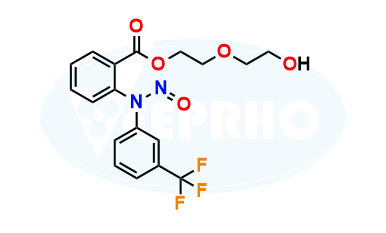
- N-Nitroso Etofenamate VE0024440
- N-Nitroso Fluphenazine Impurity 3 VE0015703



1–10 sur 10 résultats10 en stock
| Structure | Nom du produit |
|---|---|
| Etofenamate EP Impurity A (Free Base)N° CAS 530-78-9 · VE0025787 · En stock | |
| Etofenamate EP Impurity BN° CAS 67330-25-0 · VE0020070 · En stock | |
| Etofenamate EP Impurity C (Free Base)N° CAS 101-23-5 · VE0025788 · En stock | |
| Etofenamate EP Impurity D (Free Base)N° CAS 64352-84-7 · VE0025789 · En stock | |
| Etofenamate EP Impurity E (Free Base)N° CAS 2200281-00-9 · VE0025790 · En stock | |
| Etofenamate EP Impurity FN° CAS 111-46-6 · VE0018044 · En stock | |
| Etofenamate EP Impurity GN° CAS 32508-98-8 · VE0022423 · En stock | |
| Etofenamate StearateN° CAS 81427-97-6 · VE0022459 · En stock | |
| N-Nitroso EtofenamateVE0024440 · En stock | |
| N-Nitroso Fluphenazine Impurity 3VE0015703 · En stock |
Etofenamate Related Compound
Impurities in etofenamate can arise from manufacturing, degradation, or excipients used in formulations.
Types of Impurities in Etofenamate
Related Substances These are structurally related compounds formed during synthesis or storage, including:
- Ester hydrolysis products
- Oxidized degradation products
- Unreacted intermediates from synthesis
Degradation Products Etofenamate may degrade under heat, light, or moisture, forming impurities such as:
- Hydrolyzed etofenamate derivatives
- Oxidative degradation products
Residual Solvents Solvents like ethanol, methanol, and acetone used in the production process must be controlled per ICH Q3C guidelines. Elemental Impurities Heavy metals such as lead, arsenic, and cadmium must be monitored per ICH Q3D guidelines to ensure safety. Analytical Techniques for Impurity Detection The following methods are used for impurity identification and quantification:
- High-Performance Liquid Chromatography (HPLC)
- Gas Chromatography (GC)
- Mass Spectrometry (MS)
- Fourier Transform Infrared Spectroscopy (FT-IR)
Questions fréquentes
What is etofenamate used for?
Etofenamate is used for the topical treatment of joint and muscle pain . It is commonly prescribed for arthritis, sprains, strains, and inflammation-related conditions .
Is etofenamate gel better than diclofenac gel?
Etofenamate and diclofenac are both NSAIDs used for pain relief . Some studies suggest that etofenamate penetrates deeper into tissues , providing longer-lasting relief , whereas diclofenac may be better for surface-level inflammation . The choice depends on the type of pain and inflammation .
Is etofenamate better than ketoprofen?
Both etofenamate and ketoprofen are topical NSAIDs , but etofenamate has higher tissue penetration , making it more effective for deep-seated inflammation . Ketoprofen may be preferred for surface-level pain relief .
Is Etoflam gel a steroid?
No, Etoflam gel contains etofenamate , which is an NSAID , not a steroid. It works by reducing inflammation and pain without the side effects associated with corticosteroids.