
- 100% accuracy of data
- 24/7 scientific support
- 0% tolerance in quality of product
Stock Locations
- New Jersey, USA
- Czech Republic, EUIn stock
* Stock subject to availability.
Documentation
Includes: HPLC, MASS/LC-MS, 1H NMR, FT-IR, Potency, Structure Elucidation Report (SER), and additional analytical data depending on the product.
1476-52-4
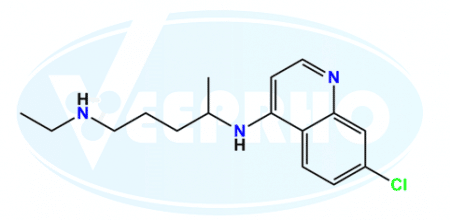
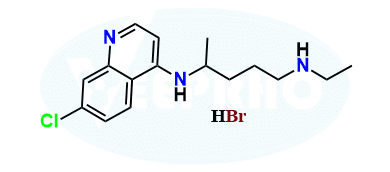
Hydroxychloroquine EP Impurity D
● In Stock
| Catalogue No.: | VE005940 |
|---|---|
| CAS No.: | 1476-52-4 |
| Mol. Formula: | C16H22ClN3 |
| Mol. Weight: | 291.82 g/mol |
For laboratory use only: analytical, development and regulatory purposes. Supplied in mg quantities. Not for human or veterinary use.
Request a quote for a set
- Request quote for this set
All EP impurities of Hydroxychloroquine
12 productsSee the 12 products
- Hydroxychloroquine EP Impurity A VE005938
CAS 1449223-88-4 - Hydroxychloroquine EP Impurity B VE0014930
- Hydroxychloroquine EP Impurity B (Free Base) VE005945
CAS 103152-84-7 - Hydroxychloroquine EP Impurity B (Na Salt) VL3670002
- Hydroxychloroquine EP Impurity C VE005939
CAS 4298-15-1 - Hydroxychloroquine EP Impurity D VE005940
CAS 1476-52-4 - Hydroxychloroquine EP Impurity D VE0014931
- Hydroxychloroquine EP Impurity D VE0014934
CAS 15912-96-6 - Hydroxychloroquine EP Impurity D VE0014935
- Hydroxychloroquine EP Impurity E VE005942
CAS 10500-64-8 - Hydroxychloroquine EP Impurity F VE005943
CAS 6281-58-9 - Hydroxychloroquine EP Impurity G VE005944
CAS 86-98-6
- Hydroxychloroquine EP Impurity A VE005938
- Request quote for this set
All USP impurities of Hydroxychloroquine
5 productsSee the 5 products
- Hydroxychloroquine EP Impurity D VE005940
CAS 1476-52-4 - Hydroxychloroquine EP Impurity D VE0014931
- Hydroxychloroquine EP Impurity D VE0014934
CAS 15912-96-6 - Hydroxychloroquine EP Impurity D VE0014935
- Hydroxychloroquine EP Impurity G VE005944
CAS 86-98-6
- Hydroxychloroquine EP Impurity D VE005940


Additional information on CAS 1476-52-4
| Parent drug | Hydroxychloroquine / Chloroquine |
|---|---|
| Product type | Impurity standards |
| IUPAC name | (4RS)-N4-(7-Chloroquinolin-4-yl)-N1-ethylpentane-1,4-diamine |
| EP name | Hydroxychloroquine EP Impurity D |
| USP name | Chloroquine Related Compound D |
| SMILES | CCNCCCC(C)Nc1ccnc2cc(Cl)ccc12 |
| InChIKey | MCYUUUTUAAGOOT-UHFFFAOYSA-N |
| CHNS Ratio (%) (calculated) | C 65.85 · H 7.60 · N 14.40 · S 0.00 |
| References | Dongre, Vaijanath G., et al. “Identification and Characterization of Process Related Impurities in Chloroquine and Hydroxychloroquine by LC/IT/MS, LC/TOF/MS and NMR.” Journal of Pharmaceutical and Biomedical Analysis, vol. 49, no. 4, May 2009, pp. 873–79, https://doi.org/10.1016/j.jpba.2009.01.013. |
| Description | Hydroxychloroquine EP Impurity D, also designated desethyl chloroquine or chloroquine related compound D, is a basic quinoline aminoalkyl derivative with molecular formula C16H22ClN3 and molecular weight 291.82 g/mol; CAS 1476-52-4. It represents a mono-deethylated metabolite and synthetic impurity associated with chloroquine and hydroxychloroquine manufacture, arising from incomplete N-ethylation or metabolic dealkylation. Its structural similarity to the parent antimalarial complicates chromatographic selectivity and necessitates LC-MS/MS, high-resolution LC-MS, and occasionally GC-MS after derivatization for trace-level characterization. Because such alkylamino impurities may influence toxicological assessment, they are typically evaluated within impurity control strategies aligned with pharmacopeial and ICH expectations. |
Request a Quote
"*" indicates required fields
Other products related to Hydroxychloroquine impurities
| Impurity structure | Name of Impurity | Catalogue No. |
|---|---|---|
| Hydroxychloroquine EP Impurity A | VE005938 | |
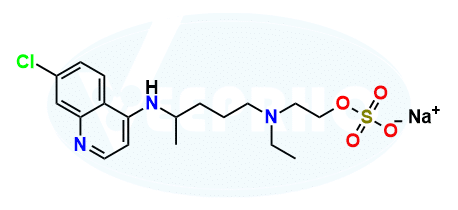 | Hydroxychloroquine EP Impurity B | VE0014930 |
| Hydroxychloroquine EP Impurity B (Free Base) | VE005945 | |
 | Hydroxychloroquine EP Impurity B (Na Salt) | VL3670002 |
| Hydroxychloroquine EP Impurity C | VE005939 | |
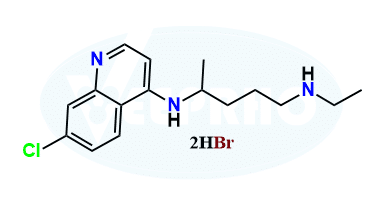 | Hydroxychloroquine EP Impurity D | VE0014931 |
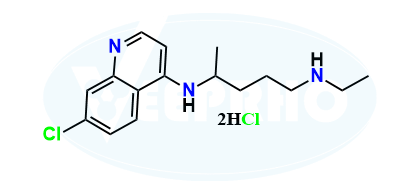 | Hydroxychloroquine EP Impurity D | VE0014934 |
 | Hydroxychloroquine EP Impurity D | VE0014935 |
| Hydroxychloroquine EP Impurity E | VE005942 | |
| Hydroxychloroquine EP Impurity F | VE005943 | |
| Hydroxychloroquine EP Impurity G | VE005944 | |
| N-Nitroso Hydroxychloroquine EP Impurity B | VE0024797 |
Show all related products N-Nitroso Hydroxychloroquine impurities (5)