

- 100% accuracy of data
- 24/7 scientific support
- 0% tolerance in quality of product
Stock Locations
- New Jersey, USA
- Czech Republic, EU
* Stock subject to availability.
Documentation
Includes: HPLC, MASS/LC-MS, 1H NMR, FT-IR, Potency, Structure Elucidation Report (SER), and additional analytical data depending on the product.
104-52-9
Alverine EP Impurity A
● In Stock
| Catalogue No.: | VL5960009 |
|---|---|
| CAS No.: | 104-52-9 |
| Mol. Formula: | C9H11Cl |
| Mol. Weight: | 154.64 g/mol |
For laboratory use only: analytical, development and regulatory purposes. Supplied in mg quantities. Not for human or veterinary use.
Request a quote for a set
- Request quote for this set
All EP impurities of Alverine
8 productsSee the 8 products
- Alverine EP Impurity A VL5960009
CAS 104-52-9 - Alverine EP Impurity B VL5960010
CAS 122-97-4 - Alverine EP Impurity C VL5960011
CAS 13125-62-7 - Alverine EP Impurity C HCl VE0012122
CAS 13125-63-8 - Alverine EP Impurity D VE007864
CAS 2732347-30-5 - Alverine EP Impurity D HCl VE0012120
CAS 2732347-31-6 - Alverine EP Impurity E VE007917
CAS 408309-07-9 - Alverine EP Impurity E HCl VE0012119
CAS 878784-75-9
- Alverine EP Impurity A VL5960009


Additional information on CAS 104-52-9
| Parent drug | Alverine |
|---|---|
| Product type | Impurity standards |
| IUPAC name | 1-Choro-3-phenylpropane |
| EP name | Alverine EP Impurity A |
| SMILES | ClCCCc1ccccc1 |
| InChIKey | XZBXAYCCBFTQHH-UHFFFAOYSA-N |
| CHNS Ratio (%) (calculated) | C 69.91 · H 7.17 · N 0.00 · S 0.00 |
| References | Barclay | L. R. C. | and E. C. Sanford. “Friedel–Crafts Rearrangements. III. Deuterium Tracer Studies of the Mechanism of Cyclialkylation of Phenylalkyl Chlorides.â€Â Canadian Journal of Chemistry | vol. 46 | no. 21 | Nov. 1968 | pp. 3315–23 | https://doi.org/10.1139/v68-548. |
| Description | Alverine EP Impurity A, CAS 104-52-9, corresponds to chlorobenzene, a volatile aromatic organochloride with formula C9H11Cl and molecular weight 154.64 g/mol. In the impurity profile of alverine-related materials, this species is consistent with a low-mass synthetic residual or process-derived aromatic fragment rather than a metabolite. Its nonpolar character and moderate volatility favor headspace GC-MS, GC-MS/MS, and confirmatory LC-MS methods after suitable derivatization or enrichment. From a regulatory perspective, the compound is not a nitrosamine, but its halogenated aromatic structure warrants control as a specified impurity when present above established thresholds, particularly in source-material characterization and stability studies. |
Request a Quote
"*" indicates required fields
Other products related to Alverine impurities
| Impurity structure | Name of Impurity | Catalogue No. |
|---|---|---|
| Alverine EP Impurity B | VL5960010 | |
| Alverine EP Impurity C | VL5960011 | |
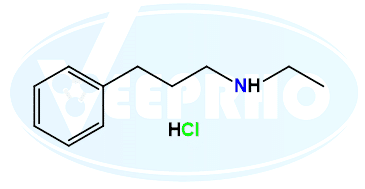 | Alverine EP Impurity C HCl | VE0012122 |
| Alverine EP Impurity D | VE007864 | |
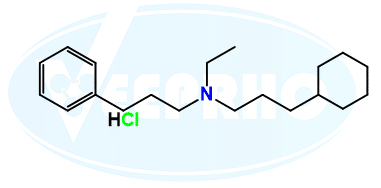 | Alverine EP Impurity D HCl | VE0012120 |
| Alverine EP Impurity E | VE007917 | |
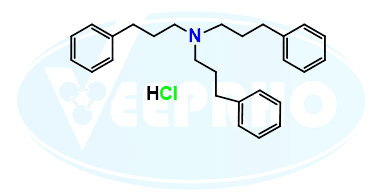 | Alverine EP Impurity E HCl | VE0012119 |
| N-Nitroso Alverine EP Impurity C | VE0023024 | |
 | 4-Hydroxy Alverine Glucuronide | VL5960005 |
| 4-Hydroxy Alverine HCl | VL5960006 | |
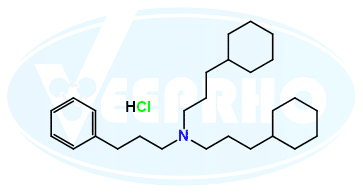 | Alverine Impurity 1 (HCl) | VE0012121 |
| N-Desethyl Alverine HCl | VL5960008 |