

- 100% accuracy of data
- 24/7 scientific support
- 0% tolerance in quality of product
Stock Locations
- New Jersey, USA
- Czech Republic, EU
* Stock subject to availability.
Documentation
Includes: HPLC, MASS/LC-MS, 1H NMR, FT-IR, Potency, Structure Elucidation Report (SER), and additional analytical data depending on the product.
57415-36-8
Flecainide EP Impurity E
● In Stock
| Catalogue No.: | VL1140005 |
|---|---|
| CAS No.: | 57415-36-8 |
| Mol. Formula: | C17H14F6N2O3 |
| Mol. Weight: | 408.3 g/mol |
For laboratory use only: analytical, development and regulatory purposes. Supplied in mg quantities. Not for human or veterinary use.
Request a quote for a set
- Request quote for this set
All EP impurities of Flecainide
6 productsSee the 6 products
- Flecainide EP Impurity A VE0020929
- Flecainide EP Impurity A (HCl Salt) VL1140001
- Flecainide EP Impurity B VL1140002
CAS 22990-77-8 - Flecainide EP Impurity C VL1140003
CAS 152171-74-9 - Flecainide EP Impurity D VL1140004
CAS 35480-52-5 - Flecainide EP Impurity E VL1140005
CAS 57415-36-8


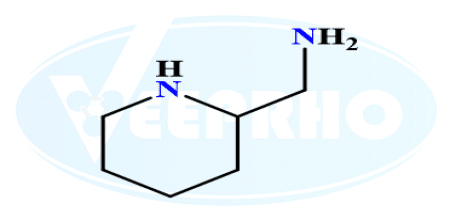
Additional information on CAS 57415-36-8
| Parent drug | Flecainide |
|---|---|
| Product type | Impurity standards |
| IUPAC name | N-(pyridin-2-ylmethyl)-2,5-bis(2,2,2-trifluoroethoxy) benzamide |
| EP name | Flecainide EP Impurity E |
| SMILES | O=C(NCc1ccccn1)c1cc(OCC(F)(F)F)ccc1OCC(F)(F)F |
| InChIKey | YCKWLOJVFNPJAW-UHFFFAOYSA-N |
| CHNS Ratio (%) (calculated) | C 50.01 · H 3.46 · N 6.86 · S 0.00 |
| Description | Flecainide EP Impurity E, also designated Flecainide Acetate Impurity E, CAS 57415-36-8, is a defined process-related impurity associated with the flecainide acetate synthesis and salt handling sequence. With molecular formula C17H14F6N2O3 and molecular weight 408.3 g/mol, it reflects a fluorinated aromatic amide ether derivative rather than a simple degradation product. Its structural features warrant close consideration in impurity profiling because trace-level discrimination may require LC-MS/MS, high-resolution LC-MS, and complementary HPLC with UV or ELSD detection. In a regulatory context, such impurity standards support assignment, relative response evaluation, and investigation of synthetic byproducts under pharmacopeial and ICH-based specifications. |
Request a Quote
"*" indicates required fields