
- 100% accuracy of data
- 24/7 scientific support
- 0% tolerance in quality of product
Stock Locations
- New Jersey, USA
- Czech Republic, EUIn stock
* Stock subject to availability.
Documentation
Includes: HPLC, MASS/LC-MS, 1H NMR, FT-IR, Potency, Structure Elucidation Report (SER), and additional analytical data depending on the product.
50890-83-0
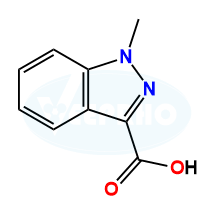
Granisetron EP Impurity D
● In Stock
| Catalogue No.: | VE006256 |
|---|---|
| CAS No.: | 50890-83-0 |
| Mol. Formula: | C9H8N2O2 |
| Mol. Weight: | 176.17 g/mol |
For laboratory use only: analytical, development and regulatory purposes. Supplied in mg quantities. Not for human or veterinary use.
Request a quote for a set
- Request quote for this set
All EP impurities of Granisetron
11 productsSee the 11 products
- Granisetron EP Impurity A VE008126
CAS 127472-42-8 - Granisetron EP Impurity B VE006254
CAS 107007-95-4 - Granisetron EP Impurity C VE0015436
CAS 160177-67-3 - Granisetron EP Impurity C (HCl Salt) VE006255
CAS 141136-01-8 - Granisetron EP Impurity D VE006256
CAS 50890-83-0 - Granisetron EP Impurity E VE008127
CAS 1174751-61-1 - Granisetron EP Impurity E (Free Base) VE0021076
CAS 76272-56-5 - Granisetron EP Impurity F VE0014766
CAS 1364914-39-5 - Granisetron EP Impurity G VL4210001
CAS 34252-44-3 - Granisetron EP Impurity H VL4210002
CAS 4498-67-3 - Granisetron EP Impurity I VE0014767
CAS 1363173-34-5
- Granisetron EP Impurity A VE008126
- Request quote for this set
All USP impurities of Granisetron
7 productsSee the 7 products
- Granisetron EP Impurity A VE008126
CAS 127472-42-8 - Granisetron EP Impurity B VE006254
CAS 107007-95-4 - Granisetron EP Impurity C VE0015436
CAS 160177-67-3 - Granisetron EP Impurity C (HCl Salt) VE006255
CAS 141136-01-8 - Granisetron EP Impurity D VE006256
CAS 50890-83-0 - Granisetron EP Impurity E VE008127
CAS 1174751-61-1 - Granisetron EP Impurity E (Free Base) VE0021076
CAS 76272-56-5
- Granisetron EP Impurity A VE008126

Additional information on CAS 50890-83-0
| Parent drug | Granisetron |
|---|---|
| Product type | Impurity standards |
| IUPAC name | 1-Methyl-1H-indazole-3-carboxylic acid |
| EP name | Granisetron EP Impurity D |
| USP name | Granisetron Related Compound D |
| Pharmacopeial synonyms | Granisetron Related Compound D |
| Other Synonyms | N-Methyl-indazole-3-carboxylic acid;1-methyl-3-indazolylcarboxylic acid;3-CARBOXY-1-METHYLINDAZOLE |
| SMILES | O=C(C1=NN(C)C2=C1C=CC=C2)O |
| InChI | InChI=1S/C9H8N2O2/c1-11-7-5-3-2-4-6(7)8(10-11)9(12)13/h2-5H,1H3,(H,12,13) |
| InChIKey | OVVDFORZEGKEJM-UHFFFAOYSA-N |
| CHNS Ratio (%) (calculated) | C 61.36 · H 4.58 · N 15.90 · S 0.00 |
| Shipping condition | Ambient Temperature |
| Description | Granisetron EP Impurity D, also designated Granisetron Related Compound D, is identified as N-methyl-indazole-3-carboxylic acid, CAS 50890-83-0, with molecular formula C9H8N2O2 and molecular weight 176.17 g/mol. This heteroaromatic carboxylic acid is structurally distinct from the active pharmaceutical ingredient and may arise as a synthetic intermediate carryover or side-product associated with indazole chemistry. Its aromatic, weakly acidic character generally requires reversed-phase LC separation with UV or MS detection, and definitive characterization often relies on LC-MS/MS, HRMS, and NMR spectroscopy. The compound is relevant in impurity profiling because structurally related heterocycles can persist through process impurities and degradation studies. |
Request a Quote
"*" indicates required fields