
- 100% accuracy of data
- 24/7 scientific support
- 0% tolerance in quality of product
Stock Locations
- New Jersey, USA
- Czech Republic, EU
* Stock subject to availability.
Documentation
Includes: HPLC, MASS/LC-MS, 1H NMR, FT-IR, Potency, Structure Elucidation Report (SER), and additional analytical data depending on the product.
55314-16-4
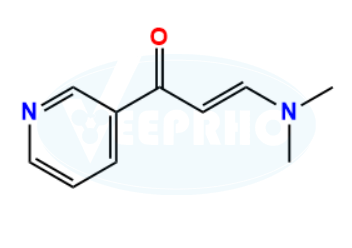
Imatinib EP Impurity A
● In Stock
| Catalogue No.: | VL272007 |
|---|---|
| CAS No.: | 55314-16-4 |
| Mol. Formula: | C10H12N2O |
| Mol. Weight: | 176.22 |
For laboratory use only: analytical, development and regulatory purposes. Supplied in mg quantities. Not for human or veterinary use.
Request a quote for a set
- Request quote for this set
All EP impurities of Imatinib
12 productsSee the 12 products
- Imatinib EP Impurity A VL272007
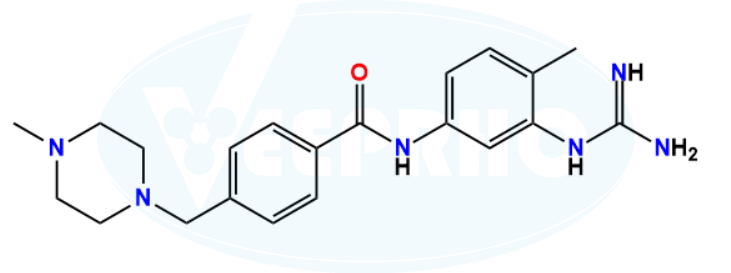
CAS 55314-16-4 - Imatinib EP Impurity B VL272003
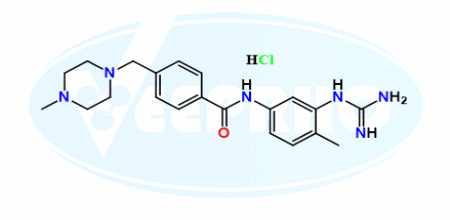
CAS 581076-65-5 - Imatinib EP Impurity B(HCl Salt) VE008330
CAS 581076-67-7 - Imatinib EP impurity C VL272004
CAS 404844-02-6 - Imatinib EP Impurity C (HCl Salt) VE008632
CAS 1820893-54-6 - Imatinib EP Impurity C (Mesylate Salt) VE0021203
CAS 404844-03-7 - Imatinib EP Impurity D VL272002
CAS 1821122-73-9 - Imatinib EP Impurity D (Free Base) VE0023463
- Imatinib EP Impurity F VL272008
CAS 152460-10-1 - Imatinib EP Impurity G (Diydrochloride Salt) VE0021202
CAS 34352-59-5 - Imatinib EP Impurity H VL272005
CAS 350-03-8 - Imatinib Impurity J VL272009
CAS 571186-91-9
- Imatinib EP Impurity A VL272007
Additional information on CAS 55314-16-4
| Parent drug | Imatinib |
|---|---|
| Product type | Impurity standards |
| IUPAC name | (2E)-3-(Dimethylamino)-1-(pyridin-3-yl)-2-propen-1-one ; |
| EP name | Imatinib EP Impurity A |
| SMILES | CN(C)/C=C/C(=O)c1cccnc1 |
| InChIKey | MZLRFUCMBQWLNV-FNORWQNLSA-N |
| CHNS Ratio (%) (calculated) | C 68.16 · H 6.86 · N 15.90 · S 0.00 |
| Description | Imatinib EP Impurity A, also referred to as Imatinib Dimethylamino Impurity, CAS 55314-16-4, is a defined process-related organic impurity associated with the imatinib synthetic sequence and side-chain amination chemistry. Its molecular formula, C10H12N2O, and molecular weight, 176.22, are consistent with a small heteroatom-rich aromatic amide precursor or transformation product rather than the parent kinase inhibitor. In regulatory characterization, such impurities are evaluated under ICH Q3A and, where structural alerts are present, ICH M7 concepts. Trace-level determination generally requires LC-MS/MS or LC-HRMS, with orthogonal confirmation by NMR and, when volatile derivatization is feasible, GC-MS. |
Request a Quote
"*" indicates required fields
Other products related to Imatinib impurities
| Impurity structure | Name of Impurity | Catalogue No. |
|---|---|---|
| Imatinib EP Impurity B | VL272003 | |
| Imatinib EP Impurity B(HCl Salt) | VE008330 | |
| Imatinib EP impurity C | VL272004 | |
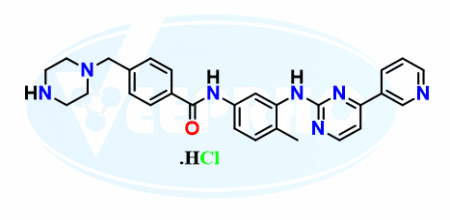 | Imatinib EP Impurity C (HCl Salt) | VE008632 |
| Imatinib EP Impurity C (Mesylate Salt) | VE0021203 | |
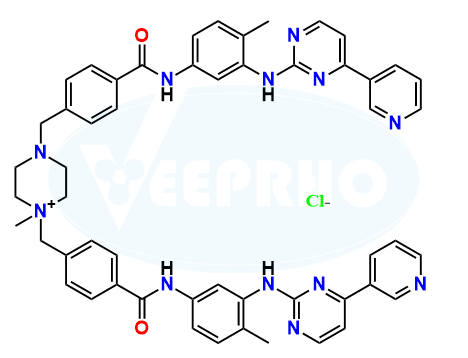 | Imatinib EP Impurity D | VL272002 |
| Imatinib EP Impurity D (Free Base) | VE0023463 | |
| Imatinib EP Impurity F | VL272008 | |
| Imatinib EP Impurity G (Diydrochloride Salt) | VE0021202 | |
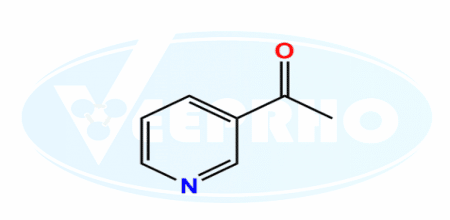 | Imatinib EP Impurity H | VL272005 |
| N-Nitroso Imatinib EP Impurity C | VE0015092 | |
| 1,3-Bis(4-methyl-3-(4-(pyridin-3-yl)pyrimidin-2-ylamino)phenyl)urea | VE0021982 |