

- 100% accuracy of data
- 24/7 scientific support
- 0% tolerance in quality of product
Stock Locations
- New Jersey, USA
- Czech Republic, EU
* Stock subject to availability.
Documentation
Includes: HPLC, MASS/LC-MS, 1H NMR, FT-IR, Potency, Structure Elucidation Report (SER), and additional analytical data depending on the product.
93-07-2
Mebeverine EP Impurity D
● In Stock
| Catalogue No.: | VE006189 |
|---|---|
| CAS No.: | 93-07-2 |
| Mol. Formula: | C9H10O4 |
| Mol. Weight: | 182.17 g/mol |
For laboratory use only: analytical, development and regulatory purposes. Supplied in mg quantities. Not for human or veterinary use.
Request a quote for a set
- Request quote for this set
All EP impurities of Mebeverine
11 productsSee the 11 products
- Mebeverine EP Impurity A VE009603
CAS 122-84-9 - Mebeverine EP Impurity C VE0017213
- Mebeverine EP Impurity D VE006189
CAS 93-07-2 - Mebeverine EP Impurity E VE009604
CAS 69788-75-6 - Mebeverine EP Impurity F VE009606
CAS 69788-70-1 - Mebeverine EP Impurity I VE0025044
- Mebeverine EP Impurity J (2HCl Salt) VE0017328
- Mebeverine EP Impurity J (Free Base) VE0018756
CAS 2758628-55-4 - Mebeverine EP Impurity K (Free Base) VE0025856
- Mebeverine EP Impurity N (Free Base) VE0025857
- Mebeverine EP Impurity O VE0025045
CAS 2512206-37-8
- Mebeverine EP Impurity A VE009603

Additional information on CAS 93-07-2
| Parent drug | Itopride / Mebeverine |
|---|---|
| Product type | Impurity standards |
| IUPAC name | 3,4-Dimethoxybenzoic Acid |
| EP name | Mebeverine EP Impurity D |
| SMILES | COc1ccc(C(=O)O)cc1OC |
| InChIKey | DAUAQNGYDSHRET-UHFFFAOYSA-N |
| CHNS Ratio (%) (calculated) | C 59.34 · H 5.53 · N 0.00 · S 0.00 |
| Shipping condition | Ambient Temperature |
| References | - |
| Description | 3,4-Dimethoxybenzoic acid, CAS 93-07-2, is an aromatic methoxybenzoic acid that serves as a structurally defined related substance for mebeverine and related synthetic intermediates, including veratric acid nomenclature variants. With molecular formula C9H10O4 and molecular weight 182.17 g/mol, it contains two electron-donating methoxy substituents and a benzoic acid function, consistent with an oxidatively stable, nonvolatile acidic impurity profile. It may arise from anisole-derived precursor carryover, demethylation, or incomplete esterification routes. Quantification commonly requires LC-MS/MS or HPLC with diode-array detection, while identity confirmation may use NMR and high-resolution mass spectrometry. |
Request a Quote
"*" indicates required fields
Other products related to Mebeverine impurities
| Impurity structure | Name of Impurity | Catalogue No. |
|---|---|---|
| Mebeverine EP Impurity A | VE009603 | |
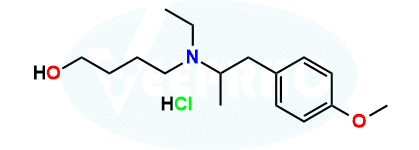 | Mebeverine EP Impurity C | VE0017213 |
| Mebeverine EP Impurity E | VE009604 | |
| Mebeverine EP Impurity F | VE009606 | |
| Mebeverine EP Impurity G | VE009605 | |
| Mebeverine EP Impurity H | VE0025043 | |
| Mebeverine EP Impurity I | VE0025044 | |
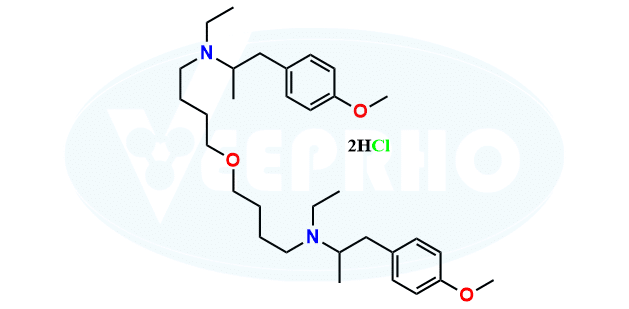 | Mebeverine EP Impurity J (2HCl Salt) | VE0017328 |
| Mebeverine EP Impurity J (Free Base) | VE0018756 | |
| Mebeverine EP Impurity K (Free Base) | VE0025856 | |
| Mebeverine EP Impurity N (Free Base) | VE0025857 | |
| Mebeverine EP Impurity O | VE0025045 |
Show all related products N-Nitroso Mebeverine impurities (2)