
- 100% accuracy of data
- 24/7 scientific support
- 0% tolerance in quality of product
Stock Locations
- New Jersey, USA
- Czech Republic, EU
* Stock subject to availability.
Documentation
Includes: HPLC, MASS/LC-MS, 1H NMR, FT-IR, Potency, Structure Elucidation Report (SER), and additional analytical data depending on the product.
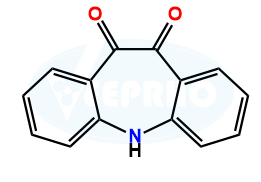
19579-83-0
Oxcarbazepine EP Impurity D
● In Stock
| Catalogue No.: | VL1620003 |
|---|---|
| CAS No.: | 19579-83-0 |
| Mol. Formula: | C14H9NO2 |
| Mol. Weight: | 223.23 g/mol |
For laboratory use only: analytical, development and regulatory purposes. Supplied in mg quantities. Not for human or veterinary use.
Request a quote for a set
- Request quote for this set
All EP impurities of Oxcarbazepine
11 productsSee the 11 products
- Oxcarbazepine EP Impurity A VL1620011
CAS 298-46-4 - Oxcarbazepine EP Impurity B VL1620007
CAS 28721-09-7 - Oxcarbazepine EP Impurity C VE006487
CAS 21737-58-6 - Oxcarbazepine EP Impurity D VL1620003
CAS 19579-83-0 - Oxcarbazepine EP Impurity F VL1620013
CAS 28721-08-6 - Oxcarbazepine EP Impurity G VL1620008
CAS 15882-79-8 - Oxcarbazepine EP Impurity H VL1620014
CAS 4698-11-7 - Oxcarbazepine EP Impurity I VL1620002
CAS 537693-29-1 - Oxcarbazepine EP Impurity K VL1620004
CAS 1346601-76-0 - Oxcarbazepine EP Impurity L VL1620010
CAS 2642430-28-0 - Oxcarbazepine EP Impurity M VL1620015
CAS 2642430-32-6
- Oxcarbazepine EP Impurity A VL1620011


Additional information on CAS 19579-83-0
| Parent drug | Oxcarbazepine |
|---|---|
| Product type | Impurity standards |
| IUPAC name | 5H-dibenzo[b,f]azepine-10,11-dione |
| EP name | Oxcarbazepine EP Impurity D |
| SMILES | O=c1c(=O)c2ccccc2[nH]c2ccccc12 |
| InChIKey | JDPDFSIEJKKSEC-UHFFFAOYSA-N |
| CHNS Ratio (%) (calculated) | C 75.33 · H 4.06 · N 6.27 · S 0.00 |
| Description | Oxcarbazepine EP Impurity D, also designated dibenzazepinodione, is the oxidized dibenzazepine lactam-lactim derivative associated with the tricyclic anticonvulsant scaffold of oxcarbazepine. CAS 19579-83-0, formula C14H9NO2, molecular weight 223.23 g/mol. The impurity is typically attributed to oxidative transformation or process-related byproduct formation during synthesis and storage, rather than a simple hydrolytic degradant. Because its chromophore and polarity closely resemble the parent nucleus, selective monitoring often requires LC-MS/MS, high-resolution LC-MS, and orthogonal HPLC-UV methods. It is relevant to impurity profiling under pharmacopeial and ICH impurity control expectations. |
Request a Quote
"*" indicates required fields
Other products related to Oxcarbazepine impurities
| Impurity structure | Name of Impurity | Catalogue No. |
|---|---|---|
| N-Nitroso Oxcarbazepine EP Impurity C | VE0018560 | |
| N-Nitroso Oxcarbazepine EP Impurity D | VE0024737 | |
| Oxcarbazepine EP Impurity A | VL1620011 | |
| Oxcarbazepine EP Impurity B | VL1620007 | |
| Oxcarbazepine EP Impurity C | VE006487 | |
 | Oxcarbazepine EP Impurity F | VL1620013 |
| Oxcarbazepine EP Impurity G | VL1620008 | |
| Oxcarbazepine EP Impurity H | VL1620014 | |
| Oxcarbazepine EP Impurity I | VL1620002 | |
| Oxcarbazepine EP Impurity K | VL1620004 | |
| Oxcarbazepine EP Impurity L | VL1620010 | |
| Oxcarbazepine EP Impurity M | VL1620015 |
Show all related products N-Nitroso Oxcarbazepine impurities (3)