
- 100% accuracy of data
- 24/7 scientific support
- 0% tolerance in quality of product
Stock Locations
- New Jersey, USA
- Czech Republic, EU
* Stock subject to availability.
Documentation
The batch COA includes HPLC, MASS/LC-MS, 1H NMR, FT-IR, Potency, and Structure Elucidation Report (SER)..
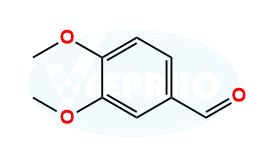
120-14-9
Verapamil EP Impurity G
● In Stock
| Catalogue No.: | VL2330009 |
|---|---|
| CAS No.: | 120-14-9 |
| Mol. Formula: | C9H10O3 |
| Mol. Weight: | 166.17 g/mol |
For laboratory use only: analytical, development and regulatory purposes. Supplied in mg quantities. Not for human or veterinary use.
Request a quote for a set
- Request quote for this set
All EP impurities of Verapamil
24 productsSee the 24 products
- Verapamil EP Impurity A (Free Base) VE0020906
CAS 141991-88-0 - Verapamil EP Impurity A DiHCl VL2330002
CAS 63434-11-7 - Verapamil EP Impurity C HCl VL2330004
CAS 51012-67-0 - Verapamil EP Impurity D VL2330005
CAS 36770-74-8 - Verapamil EP Impurity D (HCl salt) VE008275
CAS 36770-75-9 - Verapamil EP Impurity E VL2330006
CAS 93-03-8 - Verapamil EP Impurity F VL2330011
CAS 67775-97-7 - Verapamil EP Impurity F (Free Base) VE0022250
CAS 34245-14-2 - Verapamil EP Impurity G VL2330009
CAS 120-14-9 - Verapamil EP Impurity H (Free Base) VE008486
CAS 67018-83-1 - Verapamil EP Impurity H (HCl Salt) VE0019864
- Verapamil EP Impurity I VE006869
CAS 1794-55-4 - Verapamil EP Impurity I (Free Base) VE0022189
CAS 2893-91-6 - Verapamil EP Impurity J VE0020907
CAS 67018-85-3 - Verapamil EP Impurity J (HCl Salt) VL2330007
CAS 67812-42-4 - Verapamil EP Impurity J (Maleic Acid) VE0022252
- Verapamil EP Impurity K VL2330008
CAS 20850-49-1 - Verapamil EP Impurity L VL2330010
CAS 14046-55-0 - Verapamil EP Impurity M VL2330001
CAS 141991-89-1 - Verapamil EP Impurity M (HCl Salt) VE0019757
CAS 190850-50-1 - Verapamil EP Impurity N (Free Base) VE008488
CAS 2086274-75-9 - Verapamil EP Impurity N (Hydrochloride Salt) VE0022247
CAS 2726492-31-3 - Verapamil EP Impurity O (Free Base) VE008487
CAS 959011-16-6 - Verapamil EP Impurity P VE008498
CAS 2086275-13-8
- Verapamil EP Impurity A (Free Base) VE0020906
- Request quote for this set
All USP impurities of Verapamil
7 productsSee the 7 products
- Verapamil EP Impurity E VL2330006
CAS 93-03-8 - Verapamil EP Impurity F VL2330011
CAS 67775-97-7 - Verapamil EP Impurity G VL2330009
CAS 120-14-9 - Verapamil EP Impurity I VE006869
CAS 1794-55-4 - Verapamil EP Impurity I (Free Base) VE0022189
CAS 2893-91-6 - Verapamil EP Impurity M VL2330001
CAS 141991-89-1 - Verapamil EP Impurity M (HCl Salt) VE0019757
CAS 190850-50-1
- Verapamil EP Impurity E VL2330006
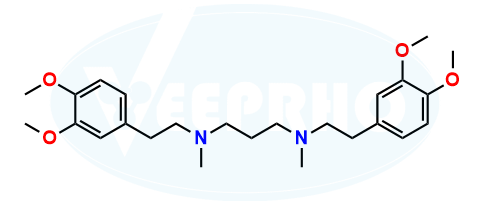
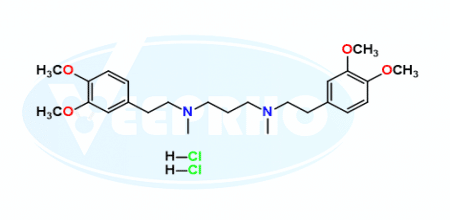
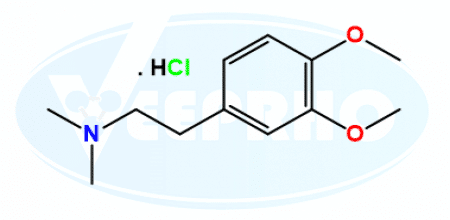
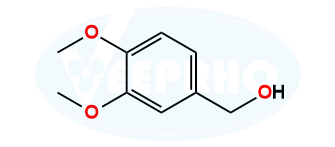
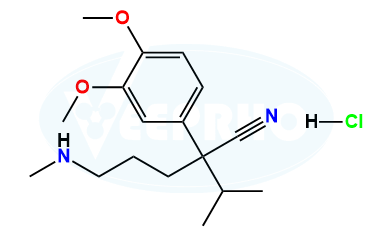
Additional information on CAS 120-14-9
| Parent drug | Verapamil |
|---|---|
| Product type | Impurity standards |
| IUPAC name | 3,4-Dimethoxybenzaldehyde |
| EP name | Verapamil EP Impurity G |
| USP name | Verapamil Related Compound E |
| Pharmacopeial synonyms | Verapamil Related Compound E |
| Other Synonyms | 4-O-Methylvanillin; Methylvanillin; Protocatechualdehyde Dimethyl Ether; Protocatechuic Aldehyde Dimethyl Ether |
| SMILES | COc1ccc(C=O)cc1OC |
| InChI | InChI=1S/C9H10O3/c1-11-8-4-3-7(6-10)5-9(8)12-2/h3-6H,1-2H3 |
| InChIKey | WJUFSDZVCOTFON-UHFFFAOYSA-N |
| CHNS Ratio (%) (calculated) | C 65.05 · H 6.07 · N 0.00 · S 0.00 |
| Shipping condition | Ambient Temperature |
| Additional characterisation data | QNMR, D2O Exchange, 13C NMR, 13C APT, COSY NMR, NOESY NMR, 15N NMR, HSQC NMR, HMQC NMR, and HMBC NMR. These are available upon request and may be free or subject to additional charges. |
| Description | Verapamil EP Impurity G, also known as Verapamil Related Compound E (CAS 120-14-9) and listed under synonyms such as 4-O-Methylvanillin and Protocatechualdehyde Dimethyl Ether, is an aromatic O-methylated aldehyde impurity observed in verapamil drug substance and intermediates. As a process and degradation impurity it exhibits distinct chromatographic retention and UV absorbance, facilitating identification by HPLC with UV detection and confirmation by LC-MS and NMR. Control and specification of this impurity are critical for verapamil quality, with stability studies guiding acceptable limits and mitigation strategies to prevent formation during synthesis, purification, and storage. |
Request a Quote
"*" indicates required fields
Other products related to Verapamil impurities
| Impurity structure | Name of Impurity | Catalogue No. |
|---|---|---|
| Verapamil EP Impurity A (Free Base) | VE0020906 | |
| Verapamil EP Impurity A DiHCl | VL2330002 | |
| Verapamil EP Impurity C (Free Base) | VE0022249 | |
| Verapamil EP Impurity C HCl | VL2330004 | |
| Verapamil EP Impurity D | VL2330005 | |
| Verapamil EP Impurity D (HCl salt) | VE008275 | |
| Verapamil EP Impurity E | VL2330006 | |
| Verapamil EP Impurity F | VL2330011 | |
| Verapamil EP Impurity F (Free Base) | VE0022250 | |
| Verapamil EP Impurity H (Free Base) | VE008486 | |
 | Verapamil EP Impurity H (HCl Salt) | VE0019864 |
| Verapamil EP Impurity I | VE006869 |
Show all related products N-Nitroso Verapamil impurities (4)