Aescin, also spelled escin, is a standardized mixture of triterpenoid saponins with anti-inflammatory, vasoconstrictor and vasoprotective effects found in Aesculus hippocastanum (the horse chestnut). Chemically these saponins are predominantly oleanane-type glycosides derived from protoaescigenin and related aglycones; the principal pharmacologically active fraction is often referred to as beta-aescin. Mechanisms demonstrated in preclinical and clinical studies include reduction of capillary permeability, inhibition of inflammatory mediator release, stabilization of endothelial cell junctions and improvement of venous tone and lymphatic drainage. For pharmaceutical use the raw seed extract is typically produced by alcoholic extraction and further fractionation, then standardized by HPLC or HPLC-MS to a defined aescin content; the material is sparingly soluble in water but dispersible in aqueous formulations with appropriate excipients and is formulated for oral, topical and parenteral dosage forms under controlled stability and storage conditions.
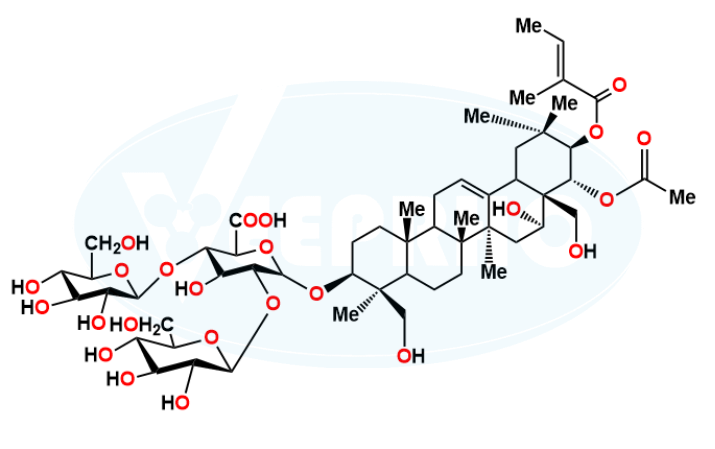
Parent: Aescin
Pharmaceutical grade aescin extracts are specified and controlled for total aescin content and for related substances. Typical industry specifications standardize total aescin to approximately 16 to 22 percent w/w, commonly 20 percent, with beta-aescin representing the main component of that fraction. Related triterpenic saponins and aglycone derivatives occur as closely related compounds and are usually present at low levels, commonly in the 1 to 8 percent w/w range combined, depending on the degree of purification. Uncharacterized plant matrix material and minor degradation products are controlled by specification limits and assays such as HPLC-UV, HPLC-MS and TLC, with unspecified impurities generally limited to low single-digit percent values by weight. Residual solvents, microbiological counts and heavy metals are monitored and must comply with applicable pharmacopeial and ICH limits for safe use.
Aescin is used to reduce venous insufficiency symptoms and peripheral edema, to limit inflammatory swelling after trauma or surgery, and in topical or systemic preparations to improve microcirculation and reduce capillary leakage.
Aescin is classified as a natural triterpenoid saponin extract with venotonic, anti-inflammatory and anti-edematous pharmacological properties; it is often described pharmaceutically as a plant-derived venotonic and vascular protector.
