
Carboline Impurities
Request a quote for a set
- Request quote for this set
All nitrosamine impurities of Carboline
2 productsSee the 2 products
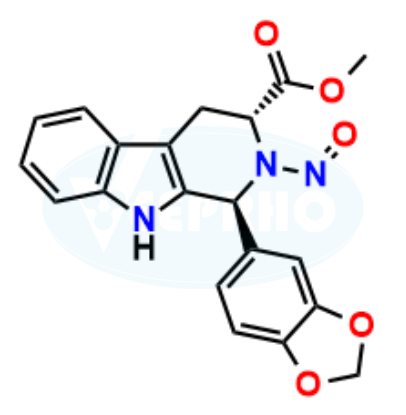
1–1 of 1 results
| Structure | Product Name |
|---|---|
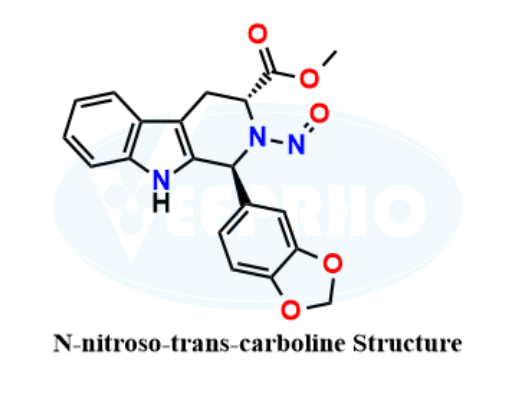
| N-nitroso-trans-carbolineVE0027357 |
Carboline and Related Compound
The term "carboline" (specifically β-carboline, also known as norharman or 9H-pyrido[3,4-b]indole) is the parent chemical structure and prototype compound for a vast class of natural alkaloids and synthetic pharmaceutical drugs. It is biosynthetically derived from tryptophan/tryptamine through a Pictet-Spengler type condensation giving tetrahydro-β-carboline intermediates that are subsequently oxidized to the aromatic β-carboline core. Structurally, β-carbolines are tricyclic heterocycles formed by fusion of an indole and a pyridine ring, with a basic bridgehead nitrogen that modulates electronic distribution and binding properties. Substitution at N9, C1, C3 and the indole ring produces distinct SAR profiles useful for CNS receptor pharmacology, enzyme inhibition, DNA intercalation and redox chemistry. In synthetic contexts β-carbolines serve as versatile scaffolds for medicinal chemistry and as building blocks for cross-coupling, alkylation and oxidation reactions; they exhibit characteristic UV-visible absorption and distinct NMR and MS fingerprints that support identity and purity testing.
FAQ
What are the uses of Carboline?
β-Carbolines and related carboline derivatives are used as research scaffolds in medicinal chemistry, as lead structures in CNS and oncology drug discovery, and as probes in chemical biology. Specific applications include design of enzyme inhibitors, modulators of neurotransmitter receptors and transporters, DNA intercalators for biochemical studies, and synthetic intermediates for further elaboration. In addition, some natural carboline alkaloids are studied for their roles in plant and microbial metabolism and as biomarkers in food chemistry.
What is Carboline?
Carboline refers to a family of tricyclic heterocycles built from an indole fused to a pyridine ring; β-carboline is the canonical member of this family and serves as a core scaffold for numerous natural and synthetic derivatives. The class is defined by its aromatic, electron-rich framework and a nitrogen atom that influences basicity and binding interactions. Carbolines arise in nature via biosynthetic routes from tryptophan derivatives and are readily accessed synthetically through Pictet-Spengler type chemistry followed by oxidation or via modern cross-coupling routes.
What are the medicinal uses of beta-carboline?
Medicinal research on β-carbolines has focused on their CNS activity, including modulation of GABAergic and monoaminergic systems, and on enzyme targets such as monoamine oxidases and kinases. Certain β-carboline derivatives show anxiolytic, anticonvulsant, antidepressant, anticancer and antimicrobial profiles in preclinical studies. Their DNA intercalating and topoisomerase inhibitory properties have prompted exploration as anticancer leads. Clinical use is limited and most β-carboline applications remain in preclinical development or as inspiration for derivative drugs.