Clomipramine is a tricyclic antidepressant (TCA) that primarily exerts therapeutic effects through potent serotonin reuptake inhibition. This medication is FDA-approved to treat obsessive-compulsive disorder (OCD) in patients aged 10 and older. Pharmacologically, clomipramine displays high affinity for the serotonin transporter SERT with weaker inhibition of the norepinephrine transporter NET, and it also interacts with muscarinic, histamine H1, and alpha-1 adrenergic receptors, which contributes to its anticholinergic, sedative, and orthostatic effects. The principal active metabolite is N-desmethylclomipramine, formed by hepatic N-demethylation via cytochrome P450 enzymes including CYP2D6, and both parent and metabolite are subject to enterohepatic considerations and variable clearance in poor CYP2D6 metabolizers. Typical clinical properties include moderate to high oral bioavailability, substantial plasma protein binding, and a multiday effective half-life when steady state is reached. Monitoring considerations include baseline and periodic assessment of cardiac conduction in patients with risk factors, evaluation for anticholinergic adverse effects, and attention to drug interactions that inhibit CYP2D6 or prolong cardiac conduction.
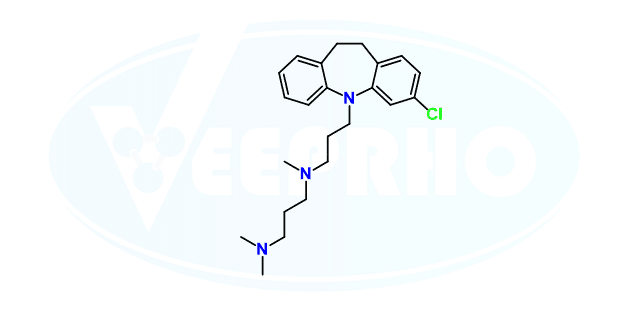
Parent: Clomipramine

Parent: Clomipramine

Parent: Clomipramine

Parent: Clomipramine

Parent: Clomipramine

Parent: Clomipramine

Parent: Clomipramine

Parent: Clomipramine Hydrochloride / Clomipramine

Parent: Clomipramine

Parent: Clomipramine

Parent: Clomipramine

Parent: Clomipramine

Parent: Clomipramine

Parent: Clomipramine

Parent: Clomipramine

Parent: Desipramine/ Clomipramine

Parent: Desipramine/ Clomipramine

Parent: Clomipramine

Parent: Clomipramine

Parent: Clomipramine

Parent: Clomipramine

Parent: clomipramine
API quality control focuses on specified related substances and low levels of unspecified impurities; manufacturers typically limit individual related compounds such as N-desmethylclomipramine, clomipramine N-oxide, dechlorinated and hydroxylated analogs to trace levels, generally controlled at or below about 0.10 to 0.15 percent w/w for a single unspecified impurity and with total impurities typically held below approximately 0.5 to 1.0 percent w/w depending on product specifications and applicable pharmacopeial monographs. Common process- and degradation-related compounds include N-desmethyl derivatives, N-oxides, and minor ring-modified species; residual solvents and elemental impurities are controlled according to ICH Q3C and Q3D guidance. Release and stability testing is routinely performed by validated HPLC-UV and LC-MS methods for related substances, with forced-degradation studies used to characterize likely degradants under heat, light, hydrolytic and oxidative conditions.
Clomipramine is primarily used to treat obsessive-compulsive disorder; it is also prescribed for major depressive disorder and certain anxiety-related conditions and may be used off-label for chronic pain syndromes and some impulsive or compulsive behaviors, always under clinician supervision.
In veterinary practice, clomipramine hydrochloride is used under veterinary prescription to manage separation anxiety and related anxiety disorders in dogs; it is administered with dosing and monitoring guidance from a veterinarian and often in combination with behavioral modification.
Yes, clomipramine can cause gastrointestinal side effects including nausea and diarrhea in some patients due to its serotonergic activity; conversely, its anticholinergic effects can also cause constipation in others, so GI responses vary between individuals.
Clomipramine is neither an SSRI nor an SNRI by classification; it is a tricyclic antidepressant that acts primarily as a potent serotonin reuptake inhibitor with secondary effects on norepinephrine reuptake and multiple receptor systems.


