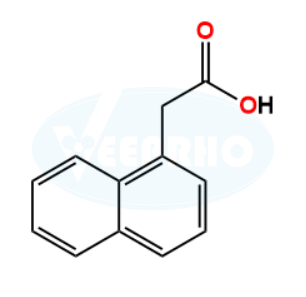
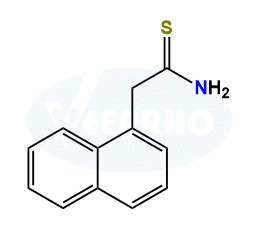
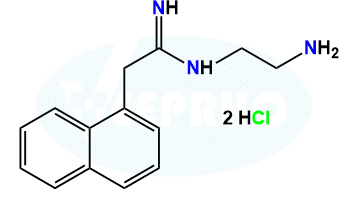
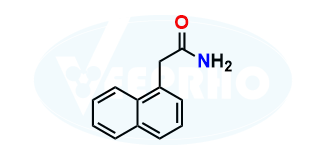
Naphazoline is a medicine used as a decongestant, and a vasoconstrictor added to eye drops to relieve red eye. It has a rapid action in reducing swelling when applied to mucous membranes. Chemically it is an imidazoline derivative commonly supplied as the hydrochloride salt (naphazoline hydrochloride; base formula C14H14N2, MW ~214.27 g mol and MW for the HCl salt ~250.7 g mol). Pharmacologically it is an alpha adrenergic receptor agonist that produces constriction of conjunctival and nasal blood vessels, producing symptomatic relief of hyperemia and edema within minutes with an ophthalmic effect that typically persists several hours. The substance is highly water soluble as the hydrochloride, is stable under typical controlled storage conditions, and is routinely formulated at low ophthalmic concentrations in buffered, isotonic vehicles with appropriate preservatives or supplied in preservative free single use formats for sterility. Clinical and formulation considerations include potential systemic absorption with frequent or excessive use, risk of rebound hyperemia and tachyphylaxis with prolonged use, and contraindication in narrow angle glaucoma or patients on certain monoamine oxidase inhibitors or potent alpha agonists.

Parent: Naphazoline
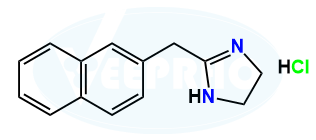
Parent: Naphazoline
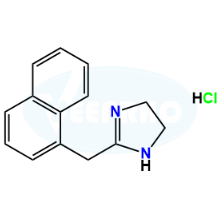
Parent: Naphazoline
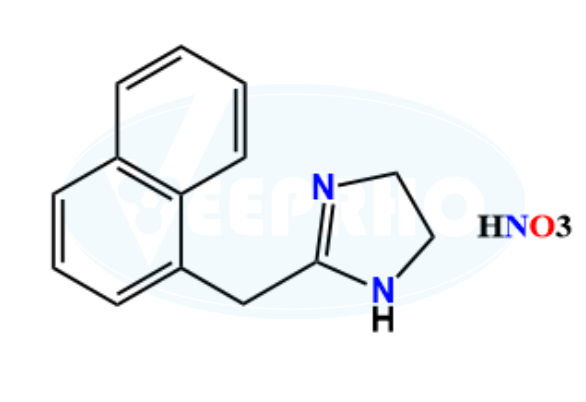
Parent: Naphazoline Nitrate / Naphazoline
Typical quality specifications for naphazoline hydrochloride APIs follow ICH guidance and major pharmacopeial practice and therefore include quantitative limits for assay, related substances, water, residual solvents and elemental impurities; as typical release criteria used by manufacturers, assay is often specified around 98.0 to 102.0 percent w w, water by Karl Fischer generally controlled to a few percent, and heavy metals limited to low parts per million levels (for example at or below 20 ppm) with residual solvents controlled to ICH Q3C class limits. Related substances and process impurities are routinely monitored by validated HPLC and LC MS methods; individual related compounds are commonly limited to 0.2 percent or lower and total related substances to 1.0 percent or lower, with specific identified degradants such as N-oxide derivatives, dealkylated or desalkylated analogs, and ring-modified products monitored at tighter single impurity limits (for example 0.05 to 0.2 percent depending on impurity toxicology and regulatory decision). Analytical control also includes chloride content consistent with the hydrochloride salt, dissolution or solubility checks for formulation use, and sterility or bioburden limits when material is supplied for ophthalmic manufacture.
Naphazoline is an imidazoline class alpha adrenergic agonist used as a topical vasoconstrictor and decongestant.
Ophthalmic use is intended for short term symptomatic relief; products are typically recommended for a few days of intermittent use only because prolonged or frequent use can cause rebound redness and decreased effectiveness.
Both are alpha adrenergic agonists but phenylephrine is a selective alpha 1 agonist often used systemically or topically for mydriasis and nasal decongestion, whereas naphazoline is an imidazoline derivative formulated primarily for topical ocular or nasal vasoconstriction with different potency, duration, and side effect profiles.
Visine is a brand name for certain over the counter ophthalmic redness relievers; some Visine formulations contain naphazoline as the active vasoconstrictor but not all Visine products use naphazoline, so the ingredient content depends on the specific product formulation.