Amidotrizoic acid, also known as Diatrizoic acid, is a radiopaque contrast agent used in medical imaging procedures such as X-rays and CT scans. It enhances the visibility of structures and organs by absorbing X-rays, allowing healthcare providers to diagnose and monitor various medical conditions. Amidotrizoic acid is typically used for imaging the gastrointestinal tract, urinary system, and blood vessels.
Marketed under brand names like Gastrografin, this contrast agent is commonly administered orally or intravenously, depending on the specific imaging requirement.

Parent: Amidotrizoic Acid/ Amidotrizoate / Diatrizoic Acid
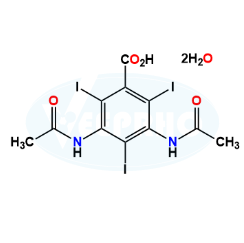
Parent: Amidotrizoic Acid

Parent: Amidotrizoic Acid/ Amidotrizoate

Parent: Amidotrizoic Acid/ Amidotrizoate
As with all pharmaceutical compounds, impurities may develop in amidotrizoic acid during its manufacturing, storage, or handling. Regulatory authorities like the U.S. FDA and EMA enforce stringent guidelines to monitor and control these impurities to ensure the medication’s safety, efficacy, and quality.
Related Substances
These are chemically related compounds or byproducts formed during the synthesis of amidotrizoic acid. Monitoring related substances ensures the drug’s purity and therapeutic effectiveness.
Degradation Products
Amidotrizoic acid may degrade over time due to environmental factors such as heat, light, or moisture. Proper storage conditions are critical to minimize degradation and maintain stability.
Residual Solvents
Trace amounts of solvents used during manufacturing may remain in the final product. Regulatory standards ensure these solvents are within permissible limits to reduce risks to patients.
Analytical Techniques for Monitoring Impurities
Techniques like High-Performance Liquid Chromatography (HPLC) and Mass Spectrometry (LC-MS) are commonly used to detect and quantify impurities, ensuring amidotrizoic acid meets stringent safety and quality standards.
Amidotrizoate is used as a radiopaque contrast agent for X-ray and CT imaging procedures. It is administered to enhance the visibility of structures such as the gastrointestinal tract, urinary system, and blood vessels, aiding in diagnosis and medical evaluations.
Diatrizoic acid, another name for amidotrizoic acid, is used in medical imaging to improve contrast during X-rays and CT scans. It helps visualize internal organs and systems, making abnormalities easier to detect.
Gastrografin is the trade name for a water-soluble contrast agent containing amidotrizoic acid. It is commonly used for imaging the gastrointestinal tract in diagnostic procedures.
Diatrizoate sodium, a salt form of Diatrizoic acid, is used as a contrast agent for imaging the urinary tract, blood vessels, and gastrointestinal system. It improves visualization in radiographic and fluoroscopic procedures.
