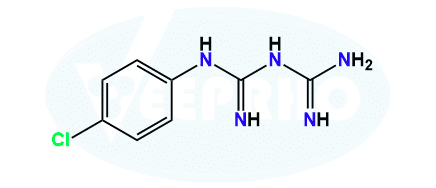
Chlorhexidine is a disinfectant and antiseptic with the molecular formula C₂₂H₃₀Cl₂N₁₀, commonly used for skin disinfection before surgery and to sterilize surgical instruments. It is effective against a broad range of bacteria, viruses, and fungi, making it a key component in antiseptic solutions, mouthwashes, and wound care products. Chlorhexidine is available in multiple formulations, including solutions, gels, wipes, and oral rinses.
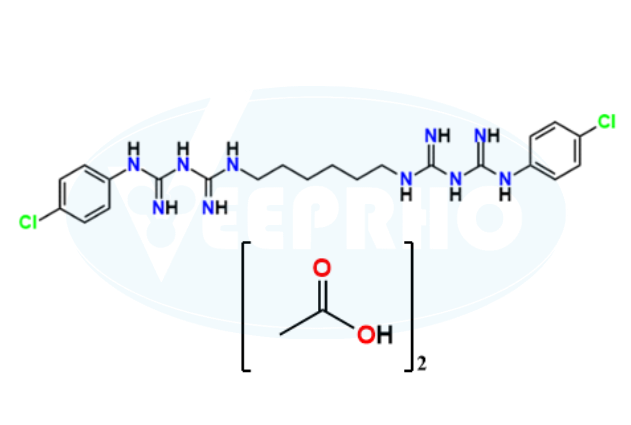
Parent: Chlorhexidine Acetate / Chlorhexidine

Parent: Chlorhexidine

Parent: Chlorhexidine

Parent: Chlorhexidine

Parent: Chlorhexidine

Parent: Chlorhexidine

Parent: Chlorhexidine/ Chlorhexidine Digluconate

Parent: Chlorhexidine

Parent: Chlorhexidine

Parent: Chlorhexidine

Parent: Chlorhexidine

Parent: Chlorhexidine

Parent: Chlorhexidine

Parent: Chlorhexidine

Parent: Chlorhexidine

Parent: Chlorhexidine

Parent: Chlorhexidine

Parent: Proguanil / Chlorhexidine
Impurities in Chlorhexidine can arise due to chemical synthesis, degradation, or improper storage conditions. Regulatory agencies such as the FDA, EMA, and ICH enforce impurity limits to ensure drug safety and efficacy.
Process-Related Impurities
Degradation Impurities
Elemental Impurities
Analytical Techniques for Impurity Detection
Fourier-Transform Infrared Spectroscopy (FT-IR)
Chlorhexidine is primarily used for:
Chlorhexidine is still widely used, but its use has been reconsidered in some cases due to:
No, but Chlorhexidine is an active ingredient in some mouthwashes used to treat gingivitis and oral infections. While it is a powerful antiseptic, regular mouthwashes (e.g., Listerine, fluoride rinses) primarily freshen breath and do not provide the same antibacterial benefits as prescription-strength Chlorhexidine mouthwashes.
Yes, Chlorhexidine is generally safe for human skin when used as directed. However: