
Impurezas de Dicloxacillin Sodium
Solicitar cotação de um conjunto
- Solicitar cotação para este conjunto
Todas as impurezas EP de Dicloxacillin Sodium
3 produtosVer os 3 produtos
- Dicloxacillin EP Impurity A VE0020735
CAS 42947-69-3 - Dicloxacillin EP Impurity B VE0020736
CAS 89353-77-5 - Dicloxacillin EP Impurity D VE0020737
CAS 3919-76-4
- Dicloxacillin EP Impurity A VE0020735
- Solicitar cotação para este conjunto
Todas as impurezas de nitrosaminas de Dicloxacillin Sodium
2 produtosVer os 2 produtos
- N-Nitroso-Dicloxacillin Penicilloic Acid VE0026071
- N-Nitroso-Dicloxacillin Penilloic Acid VE0026073

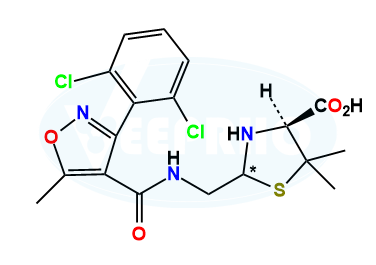
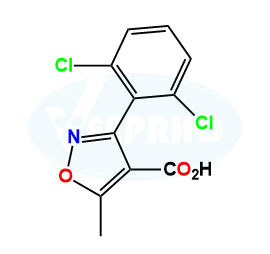
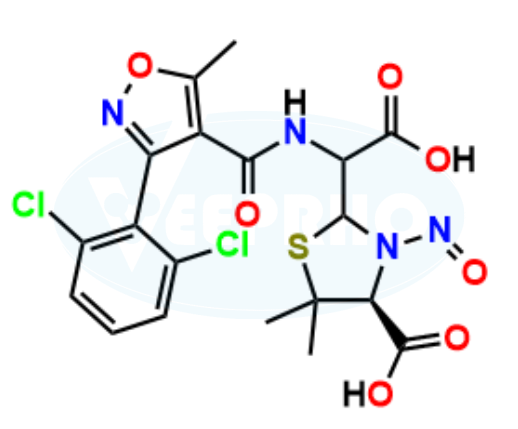
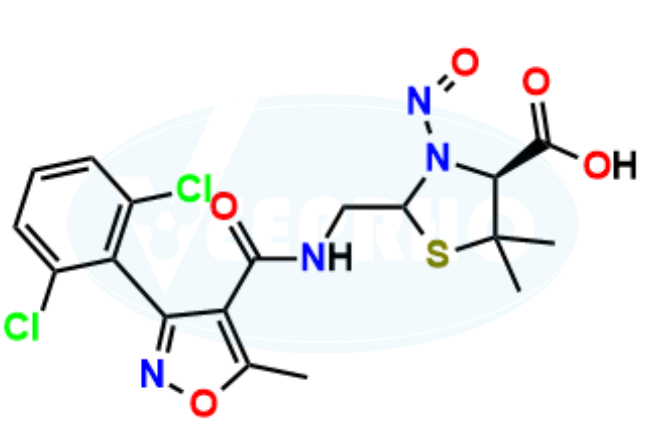
1–5 de 5 resultados5 em estoque
| Estrutura | Nome do produto |
|---|---|
| Dicloxacillin EP Impurity ANº CAS 42947-69-3 · VE0020735 · Em estoque | |
| Dicloxacillin EP Impurity BNº CAS 89353-77-5 · VE0020736 · Em estoque | |
| Dicloxacillin EP Impurity DNº CAS 3919-76-4 · VE0020737 · Em estoque | |
| N-Nitroso-Dicloxacillin Penicilloic AcidVE0026071 · Em estoque | |
| N-Nitroso-Dicloxacillin Penilloic AcidVE0026073 · Em estoque |
Dicloxacillin Sodium Related Compound
Impurities in Dicloxacillin Sodium can arise due to synthesis processes, degradation, or storage conditions. Regulatory authorities like the FDA, ICH, and EMA enforce strict impurity limits to ensure the drug’s safety and efficacy.
Types of Impurities in Dicloxacillin Sodium
Process-Related Impurities
- Unreacted intermediates from chemical synthesis
- Residual solvents (e.g., methanol, ethanol, dichloromethane)
- By-products from synthetic reactions
Degradation Impurities
- Oxidation by-products due to exposure to oxygen or light
- Hydrolysis impurities from moisture exposure
- Thermal degradation products under high temperatures
Elemental Impurities
- Heavy metals from catalysts used in synthesis
- Trace levels of lead, arsenic, cadmium, mercury
Analytical Techniques for Impurity Detection
- High-Performance Liquid Chromatography (HPLC)
- Gas Chromatography (GC)
- Mass Spectrometry (MS)
- Fourier-Transform Infrared Spectroscopy (FT-IR)
Perguntas frequentes
What is dicloxacillin sodium used for?
Dicloxacillin Sodium is used to treat bacterial infections, particularly those caused by penicillinase-producing staphylococci. Common infections treated include skin infections, respiratory tract infections, and bone infections.
Why can't you lay down after taking dicloxacillin?
It is recommended not to lie down immediately after taking dicloxacillin to prevent the risk of esophageal irritation or reflux. Waiting at least 30 minutes helps ensure the medication passes smoothly into the stomach.
What is doxycycline sodium used for?
Doxycycline Sodium, a different antibiotic, is used to treat a variety of bacterial infections, including respiratory tract infections, acne, urinary tract infections, and certain types of sexually transmitted infections.
Why can't you eat with dicloxacillin?
Dicloxacillin is best absorbed on an empty stomach as food can decrease its absorption. It is recommended to take it at least 1 hour before or 2 hours after meals for optimal effectiveness.