
Impurezas de Ranitidine
Solicitar cotação de um conjunto
- Solicitar cotação para este conjunto
Todas as impurezas EP de Ranitidine
14 produtosVer os 14 produtos
- Ranitidine EP Impurity A VL220001
CAS 72126-78-4 - Ranitidine EP Impurity B VL220003
CAS 72545-66-5 - Ranitidine EP Impurity B(Fumarate Salt) VE0022924
CAS 256948-32-0 - Ranitidine EP Impurity C VL220002
CAS 73851-70-4 - Ranitidine EP Impurity D VL220009
CAS 117846-02-3 - Ranitidine EP Impurity D (HCl) VE0017882
- Ranitidine EP Impurity D (Sodium Salt) VE0022806
CAS 112251-56-6 - Ranitidine EP Impurity E VL220008
CAS 73857-20-2 - Ranitidine EP Impurity F VL220010
CAS 81074-81-9 - Ranitidine EP Impurity G VL220011
CAS 112233-23-5 - Ranitidine EP Impurity H VL220012
CAS 72078-82-1 - Ranitidine EP impurity I VL220013
CAS 207592-21-0 - Ranitidine EP Impurity J VE006184
CAS 1331637-48-9 - Ranitidine EP Impurity K VL220015
CAS 61832-41-5
- Ranitidine EP Impurity A VL220001
- Solicitar cotação para este conjunto
Todas as impurezas USP de Ranitidine
10 produtosVer os 10 produtos
- Ranitidine BP Impurity B VE006670
CAS 66356-53-4 - Ranitidine EP Impurity A VL220001
CAS 72126-78-4 - Ranitidine EP Impurity B VL220003
CAS 72545-66-5 - Ranitidine EP Impurity B(Fumarate Salt) VE0022924
CAS 256948-32-0 - Ranitidine EP Impurity C VL220002
CAS 73851-70-4 - Ranitidine EP Impurity E VL220008
CAS 73857-20-2 - Ranitidine EP Impurity F VL220010
CAS 81074-81-9 - Ranitidine EP Impurity G VL220011
CAS 112233-23-5 - Ranitidine EP Impurity H VL220012
CAS 72078-82-1 - Ranitidine EP impurity I VL220013
CAS 207592-21-0
- Ranitidine BP Impurity B VE006670
- Solicitar cotação para este conjunto
Todas as impurezas de nitrosaminas de Ranitidine
3 produtosVer os 3 produtos
- N-Nitroso Desmethyl Ranitidine VE0015916
- N-Nitroso Ranitidine-1 VE0014169
- N-Nitroso Ranitidine-2 VE0027208
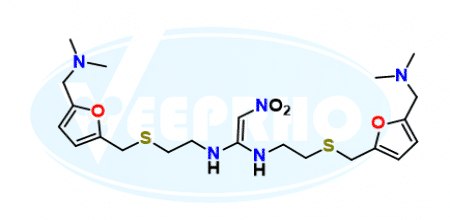
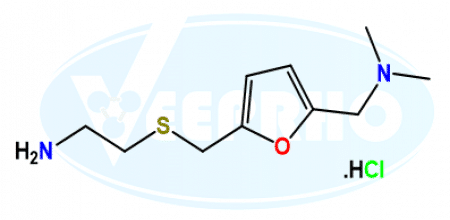
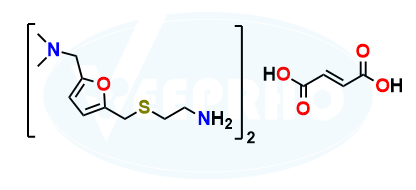
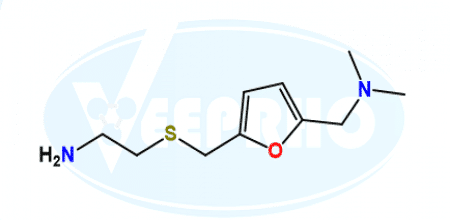


1–20 de 20 resultados17 em estoque
| Estrutura | Nome do produto |
|---|---|
| N-Nitroso Desmethyl RanitidineVE0015916 | |
| N-Nitroso Ranitidine-1VE0014169 | |
| N-Nitroso Ranitidine-2VE0027208 | |
![Estrutura de N,N-Dimethyl-5-[[[2-[[1-(methylthio)-2-nitroethenyl]amino]ethyl]thio]methyl]-2-furanmethanamine](https://veeprho.com/wp-content/uploads/2022/07/N-N-Dimethyl-5-5B5B5B2-5B5B1-methylthio-2-nitroethenyl5Damino5Dethyl5Dthio5Dmethyl5D-2-furanmethanamine.png) | N,N-Dimethyl-5-[[[2-[[1-(methylthio)-2-nitroethenyl]amino]ethyl]thio]methyl]-2-furanmethanamineNº CAS 72115-14-1 · VE008963 · Em estoque |
| Ranitidine 1,1-Bis(methylthio)-2-nitroethyleneNº CAS 13623-94-4 · VE006579 · Em estoque | |
| Ranitidine BP Impurity BNº CAS 66356-53-4 · VE006670 · Em estoque | |
| Ranitidine EP Impurity ANº CAS 72126-78-4 · VL220001 · Em estoque | |
| Ranitidine EP Impurity BNº CAS 72545-66-5 · VL220003 · Em estoque | |
| Ranitidine EP Impurity B(Fumarate Salt)Nº CAS 256948-32-0 · VE0022924 · Em estoque | |
| Ranitidine EP Impurity CNº CAS 73851-70-4 · VL220002 · Em estoque | |
| Ranitidine EP Impurity DNº CAS 117846-02-3 · VL220009 · Em estoque | |
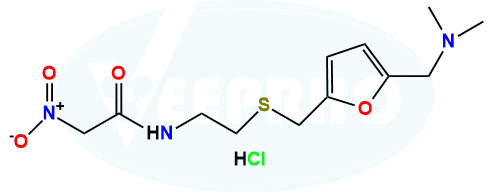 | Ranitidine EP Impurity D (HCl)VE0017882 · Em estoque |
| Ranitidine EP Impurity D (Sodium Salt)Nº CAS 112251-56-6 · VE0022806 · Em estoque | |
| Ranitidine EP Impurity ENº CAS 73857-20-2 · VL220008 · Em estoque | |
| Ranitidine EP Impurity FNº CAS 81074-81-9 · VL220010 · Em estoque | |
| Ranitidine EP Impurity GNº CAS 112233-23-5 · VL220011 · Em estoque | |
| Ranitidine EP Impurity HNº CAS 72078-82-1 · VL220012 · Em estoque | |
| Ranitidine EP impurity INº CAS 207592-21-0 · VL220013 · Em estoque | |
| Ranitidine EP Impurity JNº CAS 1331637-48-9 · VE006184 · Em estoque | |
| Ranitidine EP Impurity KNº CAS 61832-41-5 · VL220015 · Em estoque |
Ranitidine Related Compound
Concerns regarding ranitidine primarily stem from the discovery of impurities, specifically NDMA, which can form during manufacturing or storage under certain conditions. Regulatory agencies like the U.S. FDA and EMA have set stringent limits on such impurities to ensure drug safety.
Types of Impurities in Ranitidine
NDMA Contamination NDMA is a probable human carcinogen. It may form in ranitidine products due to instability under heat or during long-term storage. This impurity has led to the withdrawal of ranitidine from many markets worldwide. Related Substances These are chemically related compounds or byproducts formed during the synthesis of ranitidine. Monitoring and controlling these related substances are critical to ensuring product safety. Degradation Products Ranitidine is sensitive to heat and moisture, leading to degradation over time and the potential formation of harmful byproducts like NDMA. Proper storage conditions are essential to minimize degradation. Analytical Techniques for Monitoring Impurities Techniques such as Gas Chromatography-Mass Spectrometry (GC-MS) and High-Performance Liquid Chromatography (HPLC) are used to detect and quantify impurities, ensuring compliance with safety standards.
Perguntas frequentes
Why is ranitidine no longer used?
Ranitidine is no longer used because of concerns about contamination with NDMA, a probable human carcinogen. This impurity can form during manufacturing or storage, leading to safety risks. As a result, most ranitidine products have been withdrawn from the market.
Is ranitidine now safe to take?
Ranitidine is not considered safe due to the potential presence of NDMA. Safer alternatives, such as other H2 blockers (e.g., famotidine) or proton pump inhibitors (PPIs), are recommended for managing acid-related conditions. Consult your healthcare provider for the best treatment options.
What is medicine ranitidine used for?
Ranitidine was used to treat indigestion, heartburn, acid reflux, gastroesophageal reflux disease (GERD), and to prevent and manage stomach ulcers. It reduced stomach acid production by blocking histamine action in the stomach lining.
Is ranitidine a PPI or H2 blocker?
Ranitidine is an H2 blocker, not a proton pump inhibitor (PPI). H2 blockers work by blocking histamine receptors in the stomach, reducing acid production. PPIs, on the other hand, inhibit the proton pump, which directly controls acid secretion in the stomach.