
- 100 % Datengenauigkeit
- Wissenschaftlicher Support rund um die Uhr
- 0 % Toleranz bei der Produktqualität
Lagerstandorte
- New Jersey, USA
- Tschechien, EU
* Bestand vorbehaltlich Verfügbarkeit.
Dokumentation
Enthält: HPLC, MASS/LC-MS, 1H-NMR, FT-IR, Gehalt, Structure Elucidation Report (SER) sowie zusätzliche analytische Daten je nach Produkt.
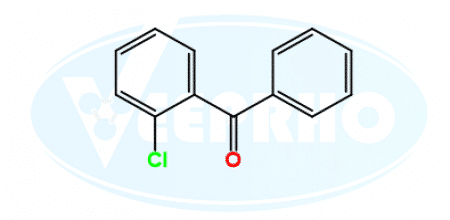
Clotrimazole EP Impurity E
● In Stock
| Katalog-Nr.: | VL164002 |
|---|---|
| CAS-Nr.: | N/A |
| Summenformel: | C13H9ClO |
| Molare Masse: | 216.66 g/mol |
For laboratory use only: analytical, development and regulatory purposes. Supplied in mg quantities. Not for human or veterinary use.
Angebot für ein Set anfordern
- Angebot für dieses Set anfragen
Alle EP-Verunreinigungen von Clotrimazole
6 ProdukteDie 6 Produkte ansehen
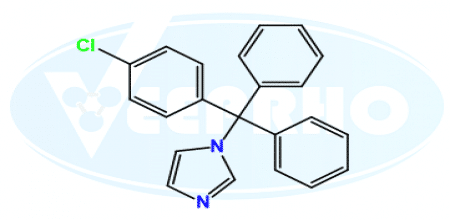
- Clotrimazole EP Impurity A (Free Base) VL164001
CAS 66774-02-5 - Clotrimazole EP Impurity B VL164004
CAS 23593-71-7 - Clotrimazole EP Impurity C VL164007
CAS 42074-68-0 - Clotrimazole EP Impurity E VL164002
- Clotrimazole EP Impurity F VL164003
CAS 15469-97-3 - Enalapril EP Impurity I VL1360009
CAS 288-32-4
- Clotrimazole EP Impurity A (Free Base) VL164001


Zusätzliche Informationen zu Clotrimazole EP Impurity E
| Wirkstoff | Clotrimazole |
|---|---|
| Produkttyp | Verunreinigungsstandards |
| IUPAC-Name | (2-Chlorophenyl)(phenyl)methanone |
| Name im EP | Clotrimazole EP Impurity E |
| CHNS-Verhältnis (%) (berechnet) | C 72.07 · H 4.19 · N 0.00 · S 0.00 |
| Referenzen | Lee | Tae-Kyung | et al. “A New Method for the Preparation of 2-Chlorotrityl Resin and Its Application to Solid-Phase Peptide Synthesis.â€Â Tetrahedron Letters | vol. 48 | no. 3 | Jan. 2007 | pp. 389–91 | https://doi.org/10.1016/j.tetlet.2006.11.071. |
| Beschreibung | Clotrimazol EP Verunreinigung E (CAS 5162-03-08) ist eine chlorierte, aromatische, abbauassoziierte Verunreinigung des Imidazol-Antimykotikums Clotrimazol. Mit der Summenformel C13H9ClO und einer Molmasse von 216,66 g/mol handelt es sich um ein wenig polares Aryl-Ether-Fragment, das aus Nebenreaktionen der Synthese oder aus oxidativer Spaltung des Trityl-Imidazol-Gerüsts entstehen kann. Die Strukturzuordnung erfordert orthogonale Verfahren wie LC-MS/MS, hochauflösende MS und idealerweise NMR, um Positionsisomerie und Spuren-Koelution zu unterscheiden. Im regulatorischen Kontext wird sie nach pharmakopöischen Verunreinigungsanforderungen sowie gemäß ICH Q3A/Q3B hinsichtlich Herkunft und Verunreinigungsprofil beurteilt. |
Angebot anfordern
"*" kennzeichnet Pflichtfelder
Weitere Produkte zu Clotrimazole Verunreinigungen
| Struktur der Verunreinigung | Name der Verunreinigung | Katalog-Nr. |
|---|---|---|
| Clotrimazole EP Impurity A (Free Base) | VL164001 | |
| Clotrimazole EP Impurity B | VL164004 | |
| Clotrimazole EP Impurity C | VL164007 | |
| Clotrimazole EP Impurity F | VL164003 | |
| (2-Chlorophenyl)diphenylmethane | VE0022433 | |
| (2-Chlorophenyl)diphenylmethyl Ethyl Ether | VE0022444 | |
| 1-((2-chlorophenyl)diphenylmethyl)-2-methyl-1H-imidazole | VE008713 | |
| 1-chloro-2-(dichloromethyl)benzene | VE008712 | |
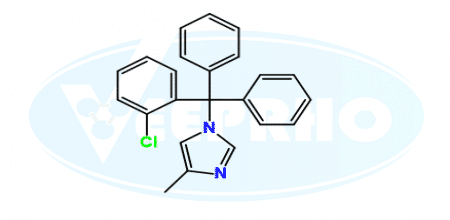 | 4-methyl-1H-imidazole Clotrimazole | VE009136 |
| Clotrimazole Impurity 1 | VE0013858 | |
| Clotrimazole Impurity 7 | VE0013857 | |
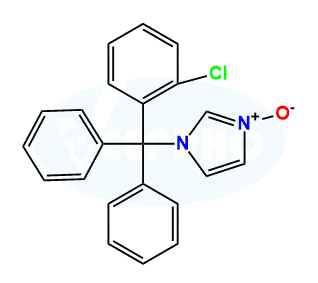 | Clotrimazole N-Oxide | VE0013859 |