
- 100 % Datengenauigkeit
- Wissenschaftlicher Support rund um die Uhr
- 0 % Toleranz bei der Produktqualität
Mutagenitätsbewertung (ICH M7)
Potenziell mutagene Verunreinigung (ICH M7, Klasse 1–3).
N-Nitroso-Verbindung: ICH-M7-Cohort of Concern.EMA18 ng/dayAppendix 1 Rev. 14
Lagerstandorte
- New Jersey, USA
- Tschechien, EU
* Bestand vorbehaltlich Verfügbarkeit.
Dokumentation
Enthält: HPLC, MASS/LC-MS, 1H-NMR, FT-IR, Gehalt, Structure Elucidation Report (SER) sowie zusätzliche analytische Daten je nach Produkt.
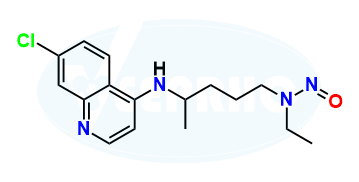
N-Nitroso Hydroxychloroquine EP Impurity D
● In Stock
| Katalog-Nr.: | VE0024783 |
|---|---|
| CAS-Nr.: | N/A |
| Summenformel: | C16H21ClN4O |
| Molare Masse: | 320.82 g/mol |
For laboratory use only: analytical, development and regulatory purposes. Supplied in mg quantities. Not for human or veterinary use.
Angebot für ein Set anfordern
- Angebot für dieses Set anfragen
Alle Nitrosamin-Verunreinigungen von Hydroxychloroquine
6 ProdukteDie 6 Produkte ansehen
- N-Nitroso Hydroxychloroquine VE007645
- N-Nitroso-Hydroxychloroquine; Synthesis Attempts and Failure Report (NAP Test) VE0027669
- N-Nitroso Hydroxychloroquine EP Impurity B VE0024797
- N-Nitroso Hydroxychloroquine EP Impurity C VE0024798
- N-Nitroso Hydroxychloroquine EP Impurity D VE0024783
- N-Nitroso Hydroxychloroquine-O-Acetate VE0024784

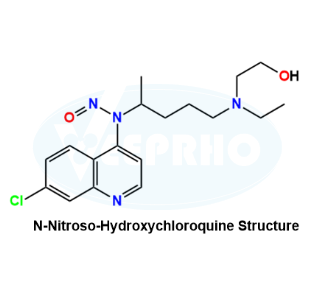
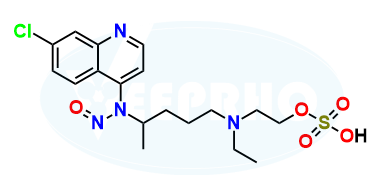
Zusätzliche Informationen zu N-Nitroso Hydroxychloroquine EP Impurity D
| Wirkstoff | Hydroxychloroquine |
|---|---|
| Produkttyp | Verunreinigungsstandards, Nitroso-Verunreinigungen |
| IUPAC-Name | N-(7-chloroquinolin-4-yl)-N-(5-(ethylamino)pentan-2-yl)nitrous amide |
| SMILES | CCN(CCCC(C)Nc1ccnc2cc(Cl)ccc12)N=O |
| InChIKey | BEPUZVKLGLGLQB-UHFFFAOYSA-N |
| CHNS-Verhältnis (%) (berechnet) | C 59.90 · H 6.60 · N 17.46 · S 0.00 |
| Beschreibung | N-Nitroso Hydroxychloroquine EP Impurity D ist eine nitrosaminbezogene Prozess- oder Abbauverunreinigung von Hydroxychloroquin, strukturell charakterisiert durch N-Nitrosierung der Seitenketten-Aminofunktion. Die Summenformel lautet C16H21ClN4O bei einer Molmasse von 320,82 g/mol. Verbindungen dieser Klasse werden nach aktuellen regulatorischen Anforderungen, einschließlich der Grundsätze von ICH M7, als potenziell genotoxisch betrachtet, da Nitrosierung durch Restnitrit, saure Bedingungen oder andere Herstellungsinteraktionen entstehen kann. Die Strukturzuordnung und Spurenquantifizierung erfordern in der Regel LC-MS/MS oder hochauflösende MS, ergänzt durch orthogonale Bestätigung mittels LC-UV oder, falls geeignet, GC-MS nach geeigneter Derivatisierung. |
Angebot anfordern
"*" kennzeichnet Pflichtfelder
Weitere Produkte zu Hydroxychloroquine und Nitroso Verunreinigungen
| Struktur der Verunreinigung | Name der Verunreinigung | Katalog-Nr. |
|---|---|---|
| Hydroxychloroquine EP Impurity A | VE005938 | |
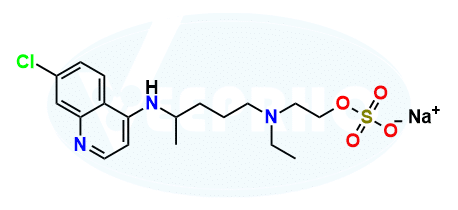 | Hydroxychloroquine EP Impurity B | VE0014930 |
| Hydroxychloroquine EP Impurity B (Free Base) | VE005945 | |
 | Hydroxychloroquine EP Impurity B (Na Salt) | VL3670002 |
| Hydroxychloroquine EP Impurity C | VE005939 | |
| Hydroxychloroquine EP Impurity D | VE005940 | |
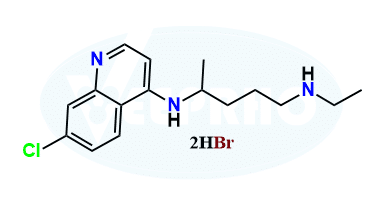 | Hydroxychloroquine EP Impurity D | VE0014931 |
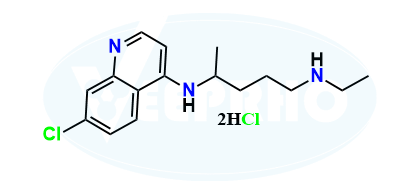 | Hydroxychloroquine EP Impurity D | VE0014934 |
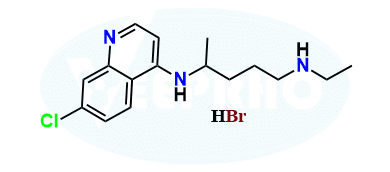 | Hydroxychloroquine EP Impurity D | VE0014935 |
| Hydroxychloroquine EP Impurity E | VE005942 | |
| Hydroxychloroquine EP Impurity F | VE005943 | |
| Hydroxychloroquine EP Impurity G | VE005944 |
Alle verwandten Produkte zeigen N-Nitroso-Hydroxychloroquine-Verunreinigungen (5)