Sapropterin-Verunreinigungen

Sapropterin, also known as tetrahydrobiopterin, is a cofactor for aromatic amino acid hydroxylase enzymes. It plays a critical role in the degradation of phenylalanine and the biosynthesis of neurotransmitters, such as dopamine and serotonin. Sapropterin is commonly used as an adjunctive treatment for phenylketonuria (PKU) to help lower blood phenylalanine levels in patients with hyperphenylalaninemia. It is sold under the brand name Kuvan.

Angebot für ein Set anfordern

1–25 von 25 Ergebnissen6 auf Lager
StrukturProduktnameCAS-Nr.Kat.-Nr.Verfügbarkeit
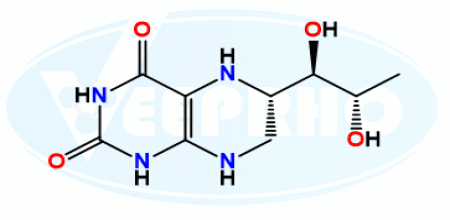
ONNNH2NHONHDeoxysepiapterinC9H11N5O2CAS-Nr. 1797-87-1 · VE0086661797-87-1VE008666Under Development
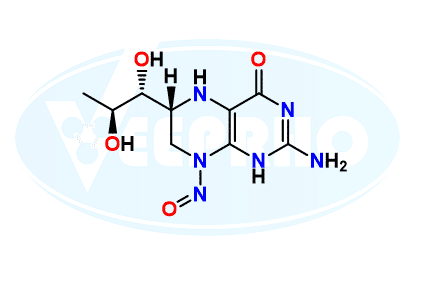
OHOHNHNHNH2NONNON-Nitroso Sapropterin Impurity 3C9H14N6O4VE008522VE008522Under Development
H2NNOHNNNONNON-Nitroso Sapropterin Impurity 4C6H7N7O3VE0011510VE0011510Under Development
H2NNOHNNHNNON-Nitroso Sapropterin Impurity 5C6H8N6O2VE0011511VE0011511Under Development
HNNOHNHNNONHN-Nitroso Sapropterin Impurity 6C6H8N6O2VE0011512VE0011512Under Development
OHOHNOHNNHNHNHN-Nitroso Sapropterin Impurity BC9H12N6O4VE0011513VE0011513Under Development
ONHNH2NNHNHClHClHSapropterin Dihydrochloride Impurity 3C6H11Cl2N5OCAS-Nr. 5752-25-0 · VE00106705752-25-0VE0010670Under Development
NH2NONNNHSapropterin Impurity DWirkstoff: Sapropterin DihydrochlorideC6H5N5OCAS-Nr. 2236-60-4 · VE0022050 · Auf Lager2236-60-4VE0022050Auf Lager
OOOONHNNH2NONSapropterin Impurity FC13H15N5O5CAS-Nr. 62933-57-7 · VE0024712 · Auf Lager62933-57-7VE0024712Auf Lager
OHOHNHNHNH2NONHSapropterin Impurity H (Sulfate Salt)C9H15N5O3.1/2H2SO4VE0023169 · Auf LagerVE0023169Auf Lager
OHOHNNNH2NHONSapropterin Inhouse Impurity CC9H11N5O3CAS-Nr. 22150-76-1 · VE00822322150-76-1VE008223Under Development
NH2HNSapropterin Inhouse Impurity GC6H8N2CAS-Nr. 100-63-0 · VE008222100-63-0VE008222Under Development
ONHNH2NNOHOHHONSapropterin Neopterin ImpurityWirkstoff: Sapropterin / BiopterinC9H11N5O4CAS-Nr. 2009-64-5 · VE0028590 · Auf Lager2009-64-5VE0028590Auf Lager
Struktur von Sapropterin Nitroso ImpuritySapropterin Nitroso ImpurityC9H15ClN6O4VE0012257VE0012257Under Development
Struktur von Sapropterin Nitroso Impurity 2Sapropterin Nitroso Impurity 2C9H14N6O4VE0012256VE0012256Under Development
H2NNOHNHNHNTetrahydrobiopterin Impurity 2C6H9N5OCAS-Nr. 1008-35-1 · VE0026126 · Auf Lager1008-35-1VE0026126Auf Lager
Struktur von (1R,2S)-1-(2-amino-4-oxo-7-(2-phenylhydrazineyl)-3,4,5,6,7,8-hexahydropteridin-6-yl)propane-1,2-diyl diacetate(1R,2S)-1-(2-amino-4-oxo-7-(2-phenylhydrazineyl)-3,4,5,6,7,8-hexahydropteridin-6-yl)propane-1,2-diyl diacetateC19H25N7O5VE008664VE008664Under Development
OHNNHNH2NON(S)-2-Amino-6-(1-hydroxyethyl)pteridin-4(1H)-oneWirkstoff: Sapropterin DihydrochlorideC8H9N5O2CAS-Nr. 70486-55-4 · VE0022049 · Auf Lager70486-55-4VE0022049Auf Lager
OHOHNNNH2NHONH5,6-DihydrobiopterinC9H13N5O3CAS-Nr. 251310-15-3 · VE008609251310-15-3VE008609Under Development
ONNNH2NHON6-PropionylpterinC9H9N5O2CAS-Nr. 71014-28-3 · VE00866871014-28-3VE008668Under Development
Struktur von 6R-Tetrahydrobiolumazine6R-TetrahydrobiolumazineC9H14N4O4VE008610VE008610Under Development
Struktur von 6S-Tetrahydrobilumazine6S-TetrahydrobilumazineC9H14N4O4VE008611VE008611Under Development
Struktur von 7-(Hydroxymethyl)tetrahydrobiopterin7-(Hydroxymethyl)tetrahydrobiopterinC10H19N5O4VE008665VE008665Under Development
NH2NONHNNH7,8-DihydropterinC6H7N5OCAS-Nr. 17838-80-1 · VE00866717838-80-1VE008667Under Development
NH2NONHNHONH7,8-DihydroxanthopterinC6H7N5O2CAS-Nr. 1131-35-7 · VE00231701131-35-7VE0023170Under Development

Sapropterin Related Compound

Impurities in sapropterin may arise during its synthesis, handling, or storage. Controlling these impurities is essential to ensure the medication’s efficacy, stability, and safety.

Types of Impurities in Sapropterin

Related Substances These are byproducts or intermediates formed during the synthesis of sapropterin. Regulatory authorities set strict limits on these impurities to ensure drug purity. Degradation Products Sapropterin can degrade when exposed to light, moisture, or heat, potentially reducing its effectiveness. Proper storage in a cool, dry place is essential to maintain stability. Residual Solvents Trace amounts of solvents used during manufacturing may remain in the final product. These are regulated to ensure they are within permissible safety limits. Analytical Techniques for Monitoring Impurities Techniques like High-Performance Liquid Chromatography (HPLC) and Mass Spectrometry (LC-MS) are used to identify and quantify impurities in sapropterin formulations.

Häufige Fragen

How does sapropterin work?

Sapropterin works as a cofactor for the enzyme phenylalanine hydroxylase (PAH) , which converts phenylalanine into tyrosine. By enhancing PAH activity, sapropterin helps lower blood phenylalanine levels in patients with phenylketonuria (PKU) .

Is sapropterin treatment for phenylketonuria?

Yes, sapropterin is approved as a treatment for phenylketonuria (PKU) . It is used in patients with a deficiency or reduced activity of phenylalanine hydroxylase to help lower phenylalanine levels in the blood.

What class of drug is sapropterin?

Sapropterin belongs to the class of enzyme cofactors . It is a synthetic form of tetrahydrobiopterin (BH4) , which is required for proper enzyme function in the metabolism of phenylalanine.

What is the mechanism of action of sapropterin (Kuvan)?

Sapropterin acts as a pharmacologic chaperone for phenylalanine hydroxylase, stabilizing and enhancing its activity. This allows for improved conversion of phenylalanine to tyrosine, thereby reducing blood phenylalanine levels in patients with PKU.