Impurezas de Enzalutamide

La enzalutamida, comercializada con el nombre de marca Xtandi, es un medicamento antiandrógeno no esteroideo utilizado en el tratamiento del cáncer de próstata. Actúa inhibiendo los receptores de andrógenos, bloqueando los efectos de la testosterona y de otros andrógenos que estimulan el crecimiento de las células del cáncer de próstata. La enzalutamida se prescribe habitualmente para el cáncer de próstata resistente a la castración (CPRC) metastásico y no metastásico y con frecuencia forma parte de un tratamiento combinado.

Solicitar cotización de un conjunto

1–36 de 36 resultados34 en stock

EstructuraNombre del productoN.º CASN.º de cat.Disponibilidad
ONNFFFSNOHOFEnzalutamide Carboxylic AcidC20H13F4N3O3SN.º CAS 1242137-15-0 · VE006365 · En stock1242137-15-0VE006365En stock
NHONSNNFFFOEnzalutamide Desfluoro ImpurityC21H17F3N4O2SN.º CAS 915087-16-0 · VE0010715 · En stock915087-16-0VE0010715En stock
SNNHONHONFFFN+C−Enzalutamide Desfluoro N-Methyl ImpurityC22H20F3N5O2SVE0028848 · En stockVE0028848En stock
Estructura de Enzalutamide Impurity 2Enzalutamide Impurity 2C9H36F3N2SN.º CAS 143782-23-4 · VE006366 · En stock143782-23-4VE006366En stock
NHNH2OFOOHEnzalutamide Impurity 5C11H13FN2O3N.º CAS 1242137-20-7 · VE0015001 · En stock1242137-20-7VE0015001En stock
NNHSNHNFFFFFFEnzalutamide Impurity 7C17H8F6N4SN.º CAS 1839619-50-9 · VE006573 · En stock1839619-50-9VE006573En stock
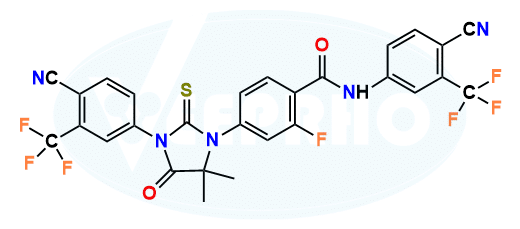
Estructura de Enzalutamide Impurity 10Enzalutamide Impurity 10C28H16F7N5O2SN.º CAS 3035510-32-5 · VE0015003 · En stock3035510-32-5VE0015003En stock
OOHBrFEnzalutamide Impurity 11C7H4BrFO2N.º CAS 112704-79-7 · VE0027618 · En stock112704-79-7VE0027618En stock
OONSNNFFFOFEnzalutamide Impurity 12C21H15F4N3O3SN.º CAS 1802242-43-8 · VE0015007 · En stock1802242-43-8VE0015007En stock
NHONHONHNFFFFEnzalutamide Impurity 14C20H18F4N4O2N.º CAS 1289942-55-7 · VE0010439 · En stock1289942-55-7VE0010439En stock
ONNFFFONOHOFEnzalutamide Impurity 20C20H13F4N3O4N.º CAS 1242137-19-4 · VE0015008 · En stock1242137-19-4VE0015008En stock
NHOOHFOOHEnzalutamide Impurity 21C11H12FNO4N.º CAS 1332524-02-3 · VE0015010 · En stock1332524-02-3VE0015010En stock
NHONHONNFFFOFEnzalutamide Impurity 66C21H18F4N4O3N.º CAS 2029195-97-7 · VE0023865 · En stock2029195-97-7VE0023865En stock
NONSNNFFFONNFFFSEnzalutamide Impurity FC30H18F6N6O2S2N.º CAS 2810090-73-2 · VE00117152810090-73-2VE0011715Under Development
NHONSNH2NOFFFOFEnzalutamide Inhouse Impurity LC21H18F4N4O3SN.º CAS 2030242-21-6 · VE008226 · En stock2030242-21-6VE008226En stock
NHONOONHNFFFFEnzalutamide Inhouse Impurity OC21H18F4N4O3N.º CAS 3035510-40-5 · VE008225 · En stock3035510-40-5VE008225En stock
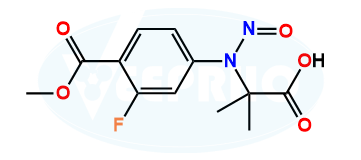
OONNOOOHFEnzalutamide Mono Nitroso Methyl EsterC12H13FN2O5VE0025432 · En stockVE0025432En stock
NHONONNFFFOFEnzalutamide Oxo ImpurityC21H16F4N4O3N.º CAS 1242137-18-3 · VE006364 · En stock1242137-18-3VE006364En stock
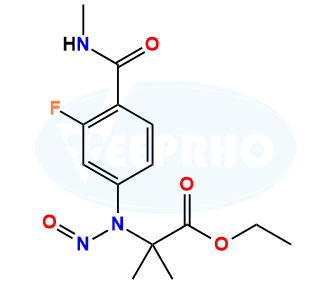
OONNOONHFEthyl 2-((3-fluoro-4-(methylcarbamoyl)phenyl)(nitroso)amino)-2-methylpropanoateC14H18FN3O4VE0024026 · En stockVE0024026En stock
OONHONHFEthyl 2-(4- (Methylcarbamoyl)-3-Fluoro Phenylamino)-2-Methyl propanoateC14H19FN2O3N.º CAS 1258638-92-4 · VE006574 · En stock1258638-92-4VE006574En stock
Estructura de Methyl (4-cyano-3-(trifluoromethyl)phenyl)carbamodithioateMethyl (4-cyano-3-(trifluoromethyl)phenyl)carbamodithioateC10H7F3N2S2VE009236 · En stockVE009236En stock
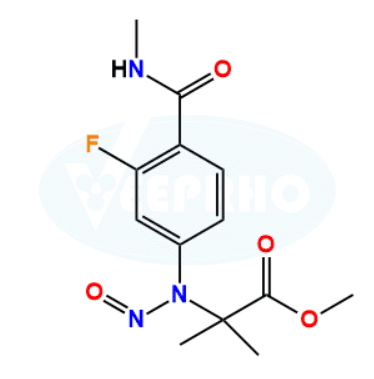
NHONNOOOFMethyl 2-((3-fluoro-4-(methylcarbamoyl)phenyl)(nitroso)amino)-2-methylpropanoateC13H16FN3O4VE0016455 · En stockVE0016455En stock
NHONHOOFMethyl 2-((3-fluoro-4-(methylcarbamoyl)phenyl)amino)-2-methylpropanoateC13H17FN2O3N.º CAS 1332524-01-2 · VE0016352 · En stock1332524-01-2VE0016352En stock
ONNFFFSNH2NOFN-Desmethyl EnzalutamideC20H14F4N4O2SN.º CAS 1242137-16-1 · VE006572 · En stock1242137-16-1VE006572En stock
NNOONSNNFFFOFN-Nitroso EnzalutamideC21H15F4N5O3SVE0022274VE0022274Under Development
NNHNOFFFN-Nitroso Enzalutamide Impurity 1C8H4F3N3OVE0024073 · En stockVE0024073En stock
Estructura de 1-(4-(methylcarbamoyl)-3-fluorophenyl)-3-(4-cyano-3-(trifluoromethyl)phenyl)thiourea1-(4-(methylcarbamoyl)-3-fluorophenyl)-3-(4-cyano-3-(trifluoromethyl)phenyl)thioureaC17H12F4N4OSVE006575 · En stockVE006575En stock
Estructura de 2-((3-fluoro-4-(methylcarbamoyl)phenyl)(nitroso)amino)-2-methylpropanoic acid2-((3-fluoro-4-(methylcarbamoyl)phenyl)(nitroso)amino)-2-methylpropanoic acidC12H14FN3O4VE0016456 · En stockVE0016456En stock
NHONHOOHF2-((3-Fluoro-4-(methylcarbamoyl)phenyl)amino)-2-methylpropanoic acidC12H15FN2O3N.º CAS 1289942-66-0 · VE008224 · En stock1289942-66-0VE008224En stock
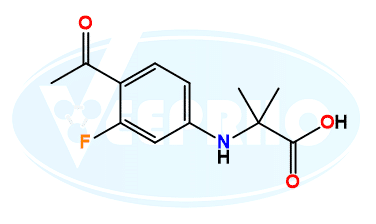
Estructura de 2-[3-Fluoro-4-(methyl carbonyl) phenyl amino]-2-methyl propanoic acid2-[3-Fluoro-4-(methyl carbonyl) phenyl amino]-2-methyl propanoic acidC12H14FNO3VE0011809 · En stockVE0011809En stock
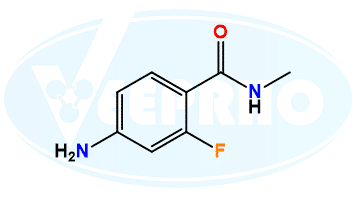
Estructura de 2-Fluoro-4-amino-N-methylbenzamide2-Fluoro-4-amino-N-methylbenzamideC8H9FN2ON.º CAS 915087-25-1 · VE0011808 · En stock915087-25-1VE0011808En stock
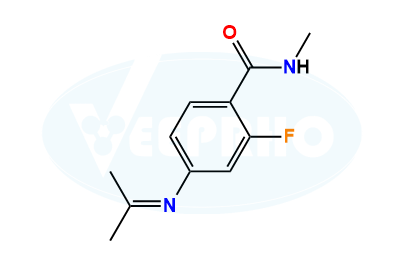
Estructura de 2-fluoro-N-methyl-4-(propan-2-ylideneamino)benzamide2-fluoro-N-methyl-4-(propan-2-ylideneamino)benzamideC11H13FN2OVE0019943 · En stockVE0019943En stock
OOHNNOOHO4-((2-carboxypropan-2-yl)(nitroso)amino)benzoic acidC11H12N2O5VE0024897 · En stockVE0024897En stock
NHONNON4-((2-cyanopropan-2-yl)(nitroso)amino)-N-methylbenzamideC12H14N4O2VE0024873 · En stockVE0024873En stock
OH2NNNNFFFOOF4-(3-(4-Cyano-3-(trifluoromethyl)phenyl)-5,5-dimethyl-2,4-dioxoimidazolidin-1-yl)-2-fluorobenzamideC20H14F4N4O3N.º CAS 1242137-17-2 · VE0027129 · En stock1242137-17-2VE0027129En stock
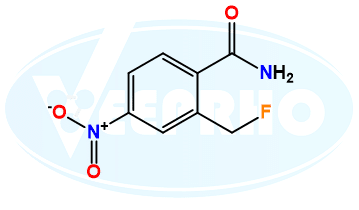
Estructura de 4-Nitro-2-fluoro methyl benzamide4-Nitro-2-fluoro methyl benzamideC8H7FN2O3VE0011807 · En stockVE0011807En stock

Enzalutamide Related Compound

During the production and storage of Enzalutamide, related compounds and impurities may form, which must be controlled to ensure the drug’s safety and efficacy. Regulatory authorities, such as the U.S. Food and Drug Administration (FDA), provide strict guidelines on permissible impurity levels in Enzalutamide formulations. Key aspects of Enzalutamide-related compounds and impurities include:

  1. Related Substances: These are chemically similar compounds that may form during the synthesis of Enzalutamide. Monitoring these related substances is critical to maintain the medication’s safety and effectiveness.
  2. Degradation Products: Enzalutamide may degrade over time due to exposure to environmental factors such as heat, light, or moisture. These degradation products can affect the drug’s stability and therapeutic potential.
  3. Residual Solvents: Trace amounts of solvents used during manufacturing may remain in the final product. Regulatory standards ensure these are within permissible limits to guarantee patient safety.

Advanced analytical methods, such as High-Performance Liquid Chromatography (HPLC), are used to detect and quantify Enzalutamide-related compounds and impurities, ensuring compliance with stringent quality standards.

Preguntas frecuentes

Is Enzalutamide a form of chemotherapy?

No, Enzalutamide is not a form of chemotherapy. It is a nonsteroidal antiandrogen medication that works by blocking androgen receptors, inhibiting the growth of prostate cancer cells. Unlike chemotherapy, it does not target rapidly dividing cells throughout the body.

What is the drug Enzalutamide used for?

Enzalutamide is used to treat metastatic and non-metastatic castration-resistant prostate cancer (CRPC). It is also prescribed for metastatic hormone-sensitive prostate cancer (mHSPC) as part of a combination therapy.

What is the success rate of Enzalutamide?

The success rate of Enzalutamide varies based on individual cases and stages of prostate cancer. Clinical trials have shown that it significantly delays disease progression and extends overall survival in patients with castration-resistant prostate cancer.

What is the difference between Abiraterone and Enzalutamide?

Both Abiraterone and Enzalutamide are used to treat prostate cancer but work differently. Abiraterone inhibits androgen production by blocking the enzyme CYP17A1, while Enzalutamide blocks androgen receptors directly, preventing androgens from stimulating cancer cell growth. The choice between the two depends on the patient’s condition and treatment goals.