
- 100% accuracy of data
- 24/7 scientific support
- 0% tolerance in quality of product
Mutagenicity assessment (ICH M7)
Potentially mutagenic impurity (ICH M7 Class 1–3).
N-nitroso compound: ICH M7 cohort of concern.Stock Locations
- New Jersey, USA
- Czech Republic, EU
* Stock subject to availability.
Documentation
Includes: HPLC, MASS/LC-MS, 1H NMR, FT-IR, Potency, Structure Elucidation Report (SER), and additional analytical data depending on the product.
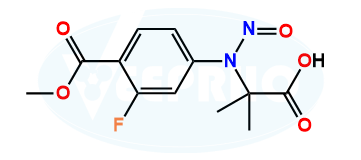
Enzalutamide Mono Nitroso Methyl Ester
● In Stock
| Catalogue No.: | VE0025432 |
|---|---|
| CAS No.: | N/A |
| Mol. Formula: | C12H13FN2O5 |
| Mol. Weight: | 284.24 g/mol |
For laboratory use only: analytical, development and regulatory purposes. Supplied in mg quantities. Not for human or veterinary use.
Request a quote for a set
- Request quote for this set
All nitrosamine impurities of Enzalutamide
8 productsSee the 8 products
- Enzalutamide Mono Nitroso Methyl Ester VE0025432
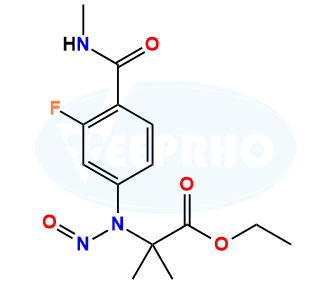
- Ethyl 2-((3-fluoro-4-(methylcarbamoyl)phenyl)(nitroso)amino)-2-methylpropanoate VE0024026
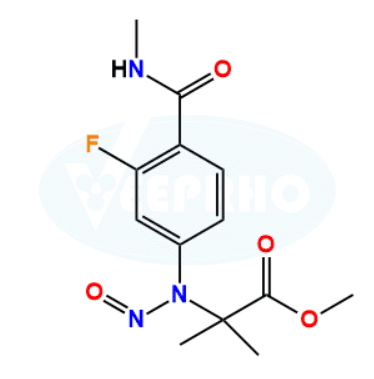
- Methyl 2-((3-fluoro-4-(methylcarbamoyl)phenyl)(nitroso)amino)-2-methylpropanoate VE0016455
- N-Nitroso Enzalutamide VE0022274
- N-Nitroso Enzalutamide Impurity 1 VE0024073
- 2-((3-fluoro-4-(methylcarbamoyl)phenyl)(nitroso)amino)-2-methylpropanoic acid VE0016456
- 4-((2-carboxypropan-2-yl)(nitroso)amino)benzoic acid VE0024897
- 4-((2-cyanopropan-2-yl)(nitroso)amino)-N-methylbenzamide VE0024873
Additional information on Enzalutamide Mono Nitroso Methyl Ester
| Parent drug | Enzalutamide |
|---|---|
| Product type | Impurity standards, Nitroso impurities |
| IUPAC name | 2-((3-fluoro-4-(methoxycarbonyl)phenyl)(nitroso)amino)-2-methylpropanoic acid |
| SMILES | COC(=O)c1ccc(N(N=O)C(C)(C)C(=O)O)cc1F |
| InChIKey | NUMLIQTXCQRGCV-UHFFFAOYSA-N |
| CHNS Ratio (%) (calculated) | C 50.71 · H 4.61 · N 9.86 · S 0.00 |
| Description | Enzalutamide Mono Nitroso Methyl Ester is a process-related impurity identified in enzalutamide manufacture that requires targeted analytical characterization and control. The impurity arises from nitrosation of methylated intermediates under oxidative or acidic conditions and can be monitored by HPLC with UV detection and confirmed by LC-MS and NMR for mass and structural assignment. Quantitative limits should be established within a stability and control strategy to meet regulatory thresholds, and degradation studies help define formation pathways. Robust purification and in-process controls minimize its presence, while validated analytical methods ensure sensitive detection, identification and routine release testing of the active pharmaceutical ingredient. |
Request a Quote
"*" indicates required fields
Other products related to Enzalutamide and Nitroso impurities


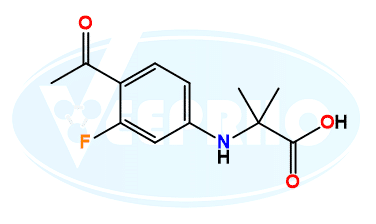
Show all related products N-Nitroso Enzalutamide impurities (5)