
Azaerythromycin A 11 12 hydrogen bora
Parent: Azithromycin


Azithromycin 3-Deoxy N-Desmethyl
Parent: Azithromycin


Azithromycin EP Impurity A
Parent: Azithromycin/ Erythromycin


Azithromycin EP Impurity D
Parent: Azithromycin


Azithromycin EP Impurity G
Parent: Azithromycin

Azithromycin EP Impurity H
Parent: Azithromycin


Azithromycin EP Impurity K
Parent: Azithromycin


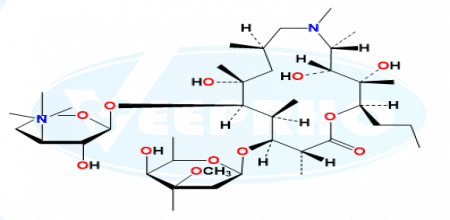
Azithromycin EP Impurity O
Parent: Azithromycin

Azithromycin EP Impurity Q
Parent: Azithromycin

Azithromycin EP Impurity R
Parent: Azithromycin

Azithromycin for peak identification CRS (Y0000637)
Parent: Azithromycin

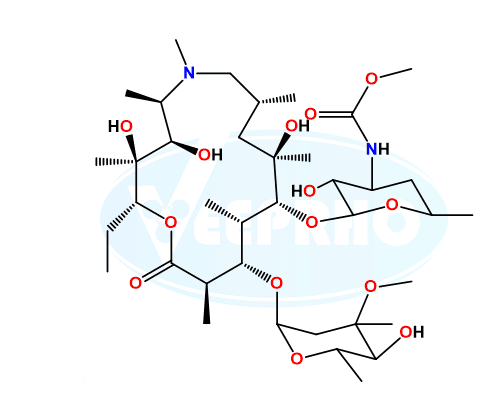


Azithromycin Impurity 3 (Sodium Salt)
Parent: Azithromycin


Azithromycin Impurity A CRS (Y0000307)
Parent: Azithromycin


Azithromycin N-Desmethyl 4-Oxime
Parent: Azithromycin
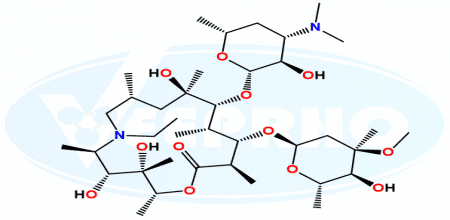

Azithromycin Working Standard (Secondary Reference Standard)
Parent: Azithromycin


N-Nitroso Azithromycin EP impurity A
Parent: Azithromycin

N-Nitroso Azithromycin EP Impurity I
Parent: Azithromycin

N-Nitroso Azithromycin EP Impurity M
Parent: Azithromycin

N-Nitroso of Azithromycin Impurity I
Parent: Azithromycin
Azithromycin Related Compound
Like many pharmaceuticals, azithromycin can contain impurities resulting from its manufacturing process. These impurities can originate from the raw materials, synthesis processes, or degradation over time. Ensuring the purity of azithromycin is crucial for its safety and effectiveness. Regulatory agencies like the U.S. Food and Drug Administration (FDA) and the European Medicines Agency (EMA)have strict guidelines for the acceptable levels of impurities in medications to ensure patient safety.
FAQ
Azithromycin is used to treat a variety of bacterial infections. It is commonly prescribed for respiratory tract infections like bronchitis, pneumonia, and sinusitis. It is also effective in treating skin infections, ear infections, and certain sexually transmitted infections (STIs) such as chlamydia. Its broad-spectrum activity makes it a versatile antibiotic for many common infections.
Yes, azithromycin is considered a strong antibiotic, especially against a wide range of bacteria. Its ability to inhibit bacterial protein synthesis effectively makes it a potent option for treating various infections. However, like all antibiotics, it should be used as prescribed by a healthcare professional to avoid antibiotic resistance and ensure the best outcomes.
Azithromycin is often given for a shorter duration, like 3 days, due to its long half-life and sustained concentration in the body. This allows the drug to continue working even after the last dose is taken. This shorter course improves patient compliance and is usually sufficient to clear the infection in many cases. However, the exact duration of treatment may vary depending on the type and severity of the infection.
The most common side effects of azithromycin include gastrointestinal symptoms such as nausea, vomiting, diarrhea, and stomach pain. Some people may also experience headaches, dizziness, or a rash. While these side effects are generally mild and temporary, it’s important to consult a healthcare provider if they persist or become bothersome. Serious side effects are rare but can include allergic reactions, liver problems, or heart rhythm disturbances. If you experience severe side effects, seek medical attention immediately.