
- 100% accuracy of data
- 24/7 scientific support
- 0% tolerance in quality of product
Stock Locations
- New Jersey, USA
- Czech Republic, EUIn stock
* Stock subject to availability.
Documentation
Batch COA on file. The batch COA includes HPLC, MASS/LC-MS, 1H NMR, FT-IR, Potency, and Structure Elucidation Report (SER)..
1131-01-7
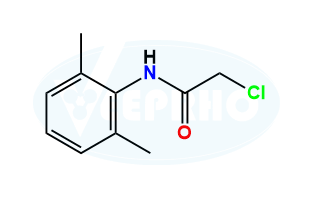
Lidocaine EP Impurity H
● In Stock
| Catalogue No.: | VL1040006 |
|---|---|
| CAS No.: | 1131-01-7 |
| Mol. Formula: | C10H12ClNO |
| Mol. Weight: | 197.66 g/mol |
For laboratory use only: analytical, development and regulatory purposes. Supplied in mg quantities. Not for human or veterinary use.
Request a quote for a set
- Request quote for this set
All EP impurities of Lidocaine
18 productsSee the 18 products
- Lidocaine BP Impurity D VL1040004
CAS 7728-40-7 - Lidocaine BP Impurity F VL1040020
CAS 142713-08-4 - Lidocaine BP Impurity G VL1040007
CAS 35891-87-3 - Lidocaine BP Impurity K VL1040019
CAS 74634-66-5 - Lidocaine EP Impurity A VL1040001
CAS 87-62-7 - Lidocaine EP Impurity B VL1040002
CAS 2903-45-9 - Lidocaine EP Impurity C VL1040003
CAS 2198-53-0 - Lidocaine EP Impurity D (HCl Salt) VE0010174
CAS 7729-94-4 - Lidocaine EP Impurity E VL1040005
CAS 745798-07-6 - Lidocaine EP Impurity E (HCl Salt) VE0022727
CAS 1135231-62-7 - Lidocaine EP Impurity F VE0016064
CAS 857170-72-0 - Lidocaine EP Impurity G VE0016063
CAS 42459-30-3 - Lidocaine EP Impurity H VL1040006
CAS 1131-01-7 - Lidocaine EP Impurity I (Free Base) VE006719
CAS 17289-53-1 - Lidocaine EP Impurity I (HCl salt) VL1040008
CAS 17289-54-2 - Lidocaine EP Impurity J VL1040016
CAS 1012864-23-1 - Lidocaine EP Impurity K (HCl Salt) VE008079
CAS 50295-20-0 - Ropivacaine Related Compound A (HCl salt) VE006435
CAS 21436-98-6
- Lidocaine BP Impurity D VL1040004
- Request quote for this set
All USP impurities of Lidocaine
5 productsSee the 5 products
- Lidocaine Dimer N-Oxide VE0016054
CAS 2725395-82-2 - Lidocaine EP Impurity A VL1040001
CAS 87-62-7 - Lidocaine EP Impurity B VL1040002
CAS 2903-45-9 - Lidocaine EP Impurity H VL1040006
CAS 1131-01-7 - Ropivacaine Related Compound A (HCl salt) VE006435
CAS 21436-98-6
- Lidocaine Dimer N-Oxide VE0016054


Additional information on CAS 1131-01-7
| Parent drug | Lidocaine |
|---|---|
| Product type | Impurity standards |
| IUPAC name | 2-Chloro-N-(2,6-dimethylphenyl)acetamide |
| EP name | Lidocaine EP Impurity H |
| USP name | Lidocaine Related Compound H |
| Pharmacopeial synonyms | Lidocaine BP Impurity H; Lidocaine Related Compound H |
| Other Synonyms | 2-Chloro-2′,6′-acetoxylidide; N-Chloroacetyl-2,6-dimethylaniline; 1-Chloroacetylamino-2,6-dimethylbenzene; Ranolazine Monoamide Impurity |
| SMILES | O=C(NC1=C(C)C=CC=C1C)CCl |
| InChI | InChI=1S/C10H12ClNO/c1-7-4-3-5-8(2)10(7)12-9(13)6-11/h3-5H,6H2,1-2H3,(H,12,13) |
| InChIKey | FPQQSNUTBWFFLB-UHFFFAOYSA-N |
| CHNS Ratio (%) (calculated) | C 60.77 · H 6.12 · N 7.09 · S 0.00 |
| Shipping condition | Ambient Temperature |
| References | - |
| Additional characterisation data | QNMR, D2O Exchange, 13C NMR, 13C APT, COSY NMR, NOESY NMR, 15N NMR, HSQC NMR, HMQC NMR, and HMBC NMR. These are available upon request and may be free or subject to additional charges. |
| Description | Lidocaine EP Impurity H, CAS 1131-01-7, corresponds to 2-chloro-2',6'-acetoxylidide, also described as N-chloroacetyl-2,6-dimethylaniline and Ranolazine Monoamide Impurity. This chloroacetamide derivative, formula C10H12ClNO and molecular weight 197.66 g/mol, is consistent with a synthetic intermediate or process-related byproduct arising during acylation of 2,6-dimethylaniline with chloroacetyl reagents. Its electrophilic haloacetamide motif warrants attention under impurity control frameworks because related species may show alkylating reactivity. Characterization typically relies on LC-MS/MS, LC-UV, and confirmatory NMR, with GC-MS sometimes applicable after derivatization. |
Request a Quote
"*" indicates required fields
Other products related to Lidocaine impurities
| Impurity structure | Name of Impurity | Catalogue No. |
|---|---|---|
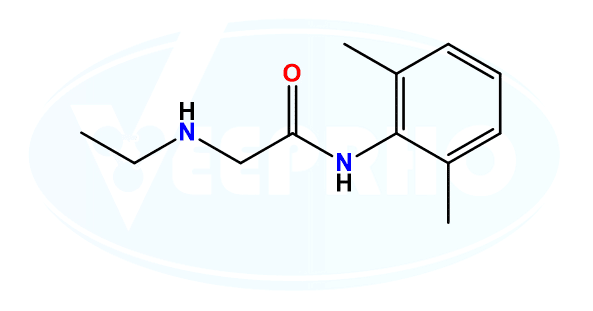 | Lidocaine BP Impurity D | VL1040004 |
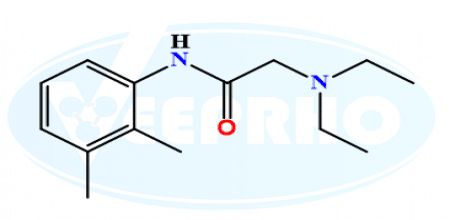 | Lidocaine BP Impurity F | VL1040020 |
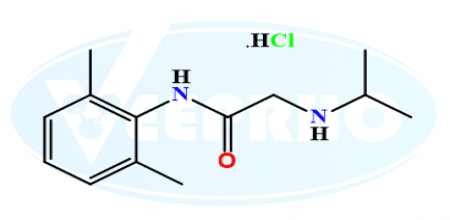 | Lidocaine BP Impurity G | VL1040007 |
| Lidocaine BP Impurity K | VL1040019 | |
| Lidocaine EP Impurity A | VL1040001 | |
| Lidocaine EP Impurity B | VL1040002 | |
| Lidocaine EP Impurity C | VL1040003 | |
| Lidocaine EP Impurity D (HCl Salt) | VE0010174 | |
| Lidocaine EP Impurity E | VL1040005 | |
| Lidocaine EP Impurity E (HCl Salt) | VE0022727 | |
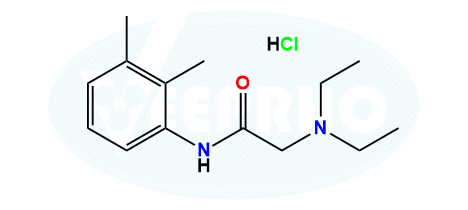 | Lidocaine EP Impurity F | VE0016064 |
| Lidocaine EP Impurity G | VE0016063 |
Show all related products N-Nitroso Lidocaine impurities (7)