

- 100% accuracy of data
- 24/7 scientific support
- 0% tolerance in quality of product
Stock Locations
- New Jersey, USA
- Czech Republic, EUIn stock
* Stock subject to availability.
Documentation
Includes: HPLC, MASS/LC-MS, 1H NMR, FT-IR, Potency, Structure Elucidation Report (SER), and additional analytical data depending on the product.
87-62-7
Lidocaine EP Impurity A
● In Stock
| Catalogue No.: | VL1040001 |
|---|---|
| CAS No.: | 87-62-7 |
| Mol. Formula: | C8H11N |
| Mol. Weight: | 121.18 g/mol |
For laboratory use only: analytical, development and regulatory purposes. Supplied in mg quantities. Not for human or veterinary use.
Request a quote for a set
- Request quote for this set
All EP impurities of Bupivacaine
9 productsSee the 9 products
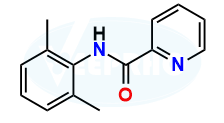
- Bupivacaine EP Impurity A VE0013084
CAS 39627-98-0 - Bupivacaine EP Impurity B VE009447
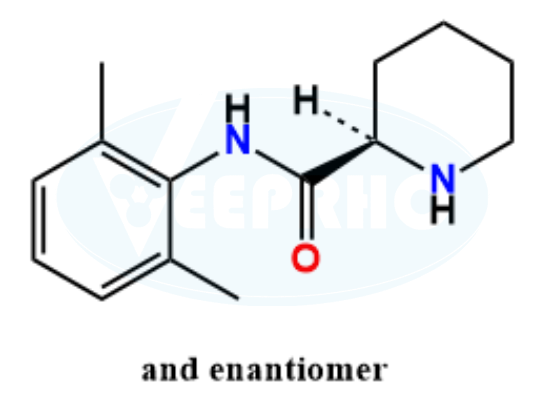
CAS 15883-20-2 - Bupivacaine EP Impurity B (HCl Salt) VE0021397
CAS 65797-42-4 - Bupivacaine EP Impurity C (Free Base) VE0025180
CAS 1797894-80-4 - Bupivacaine EP Impurity D VE0013101
CAS 1037184-07-8 - Bupivacaine EP Impurity E VE0013102
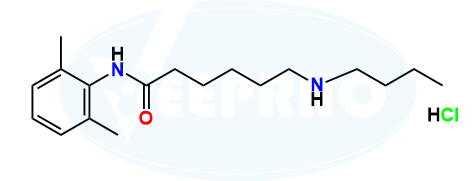
CAS 1330172-81-0 - Bupivacaine EP Impurity E (HCl Salt) VE0022534
- Lidocaine EP Impurity A VL1040001
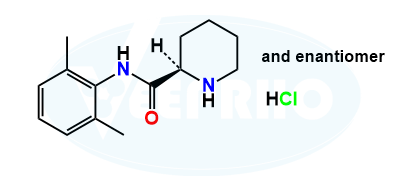
CAS 87-62-7 - Ropivacaine Related Compound A (HCl salt) VE006435
CAS 21436-98-6
- Bupivacaine EP Impurity A VE0013084
- Request quote for this set
All USP impurities of Bupivacaine
5 productsSee the 5 products
- Bupivacaine EP Impurity B VE009447
CAS 15883-20-2 - Bupivacaine EP Impurity B (HCl Salt) VE0021397
CAS 65797-42-4 - Bupivacaine EP Impurity E (HCl Salt) VE0022534
- Lidocaine EP Impurity A VL1040001
CAS 87-62-7 - Ropivacaine Related Compound A (HCl salt) VE006435
CAS 21436-98-6
- Bupivacaine EP Impurity B VE009447
Additional information on CAS 87-62-7
| Parent drug | Lidocaine / Ropivacaine / Mepivacaine / Bupivacaine |
|---|---|
| Product type | Impurity standards |
| IUPAC name | 2,6-Dimethylaniline |
| EP name | Lidocaine EP Impurity A/ Ropivacaine EP Impurity H/ Mepivacaine EP Impurity A (Free Base) |
| USP name | Lidocaine Related Compound A/ Ropivacaine Related Compound A/ |
| Pharmacopeial synonyms | Ropivacaine EP Impurity H; Mepivacaine EP Impurity A; Lidocaine Related Compound A; Ropivacaine Related Compound A; Xylazine EP Impurity A; 2,6-Xylidine |
| Other Synonyms | 2-Amino-1,3-dimethylbenzene;2-Amino-1,3-xylene;1-Amino-2,6-dimethylbenzene |
| SMILES | NC1=C(C)C=CC=C1C |
| InChI | InChI=1S/C8H11N/c1-6-4-3-5-7(2)8(6)9/h3-5H,9H2,1-2H3 |
| InChIKey | UFFBMTHBGFGIHF-UHFFFAOYSA-N |
| CHNS Ratio (%) (calculated) | C 79.29 · H 9.15 · N 11.56 · S 0.00 |
| Shipping condition | Ambient Temperature |
| References | - |
| Description | 2,6-Xylidine, CAS 87-62-7, is an aromatic amine of formula C8H11N and molecular weight 121.18 g/mol, structurally defined as 1-amino-2,6-dimethylbenzene. It is a recognized process-related impurity and potential degradation or synthetic intermediate marker in local anesthetic chemistry, appearing in relation to lidocaine, mepivacaine, bupivacaine, ropivacaine, and xylazine derivatives. Because aromatic amines may undergo metabolic activation to reactive species, its presence is assessed under impurity control frameworks with attention to toxicological qualification. Trace-level determination commonly relies on GC-MS, LC-MS/MS, and, where needed, derivatization-enhanced HPLC for selectivity and sensitivity. |
Request a Quote
"*" indicates required fields