
- 100% accuracy of data
- 24/7 scientific support
- 0% tolerance in quality of product
Mutagenicity assessment (ICH M7)
Treated as a potentially non-mutagenic impurity (ICH M7 Class 4–5).
Computational (in silico) assessmentStock Locations
- New Jersey, USA
- Czech Republic, EU
* Stock subject to availability.
Documentation
Includes: HPLC, MASS/LC-MS, 1H NMR, FT-IR, Potency, Structure Elucidation Report (SER), and additional analytical data depending on the product.
3891-07-4
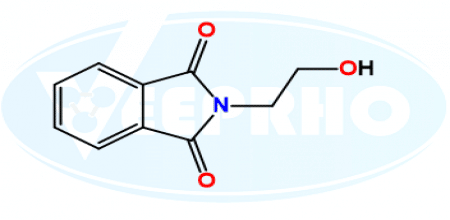
2-(2-Hydroxyethyl)isoindoline-1,3-dione
● In Stock
| Catalogue No.: | VL19019 |
|---|---|
| CAS No.: | 3891-07-4 |
| Mol. Formula: | C10H9NO3 |
| Mol. Weight: | 191.18 |
For laboratory use only: analytical, development and regulatory purposes. Supplied in mg quantities. Not for human or veterinary use.
Additional information on CAS 3891-07-4
| Parent drug | Amlodipine |
|---|---|
| Product type | Impurity standards |
| IUPAC name | N-(2-Hydroxyethyl)phthalimide |
| SMILES | O=C1c2ccccc2C(=O)N1CCO |
| InChIKey | MWFLUYFYHANMCM-UHFFFAOYSA-N |
| CHNS Ratio (%) (calculated) | C 62.82 · H 4.75 · N 7.33 · S 0.00 |
| References | Bulsara | Kishen G. | and Manouchkathe Cassagnol. Amlodipine.†Nih.gov | StatPearls Publishing | 13 Oct. 2019 | www.ncbi.nlm.nih.gov/books/NBK519508/. |
| Description | 2-(2-Hydroxyethyl)isoindoline-1,3-dione, also designated amlodipine impurity 6, is a phthalimide-type heterocyclic impurity with CAS 3891-07-4, molecular formula C10H9NO3, and molecular weight 191.18. The structure is consistent with a synthetic intermediate or process-related byproduct arising from phthalic anhydride chemistry and subsequent hydroxyethylation or ring-forming side reactions during amlodipine-associated manufacturing routes. Because of its aromatic imide functionality, its occurrence is typically monitored at trace level by LC-MS/MS and, where volatility or derivatization permits, by GC-MS. In regulatory impurity profiling, it serves as a structurally defined process impurity rather than a classical genotoxic alert, yet its presence requires characterization under ICH impurity control expectations. |
Request a Quote
"*" indicates required fields
Other products related to Amlodipine impurities
| Impurity structure | Name of Impurity | Catalogue No. |
|---|---|---|
| Amlodipine EP Impurity A | VL19004 | |
| Amlodipine EP Impurity B | VL19002 | |
| Amlodipine EP Impurity C | VL19030 | |
| Amlodipine EP Impurity D (Besylate Salt) | VL19001 | |
| Amlodipine EP Impurity D (Free Base) | VL19023 | |
| Amlodipine EP Impurity D (Fumarate salt) | VL19024 | |
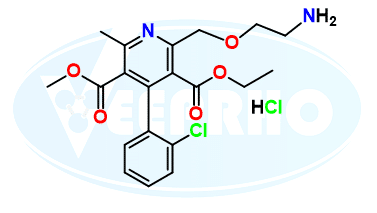 | Amlodipine EP Impurity D (HCl Salt) | VE0012177 |
| Amlodipine EP Impurity D (Mesylate salt) | VE006056 | |
| Amlodipine EP Impurity D (Oxalate Salt) | VL19015 | |
| Amlodipine EP Impurity E | VL19005 | |
 | Amlodipine EP Impurity E (Oxalate Salt) | VE006552 |
| Amlodipine EP Impurity F | VL19026 |
Show all related products N-Nitroso Amlodipine impurities (13)