
- 100% accuracy of data
- 24/7 scientific support
- 0% tolerance in quality of product
Stock Locations
- New Jersey, USA
- Czech Republic, EUIn stock
* Stock subject to availability.
Documentation
Includes: HPLC, MASS/LC-MS, 1H NMR, FT-IR, Potency, Structure Elucidation Report (SER), and additional analytical data depending on the product.
113994-41-5
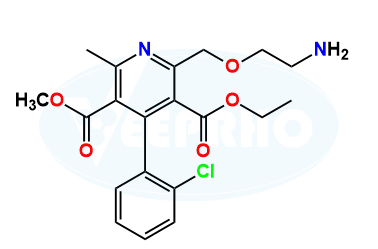
Amlodipine EP Impurity D (Free Base)
● In Stock
| Catalogue No.: | VL19023 |
|---|---|
| CAS No.: | 113994-41-5 |
| Mol. Formula: | C20H23ClN2O5 |
| Mol. Weight: | 406.86 g/mol |
For laboratory use only: analytical, development and regulatory purposes. Supplied in mg quantities. Not for human or veterinary use.
Request a quote for a set
- Request quote for this set
All EP impurities of Amlodipine
17 productsSee the 17 products
- Amlodipine EP Impurity A VL19004
CAS 88150-62-3 - Amlodipine EP Impurity B VL19002
CAS 721958-72-1 - Amlodipine EP Impurity C VL19030
CAS 721958-74-3 - Amlodipine EP Impurity D (Besylate Salt) VL19001
CAS 2733700-89-3 - Amlodipine EP Impurity D (Free Base) VL19023
CAS 113994-41-5 - Amlodipine EP Impurity D (Fumarate salt) VL19024
CAS 2138811-33-1 - Amlodipine EP Impurity D (HCl Salt) VE0012177
CAS 2414962-06-2 - Amlodipine EP Impurity D (Mesylate salt) VE006056
- Amlodipine EP Impurity D (Oxalate Salt) VL19015
CAS 1216406-90-4 (oxalate) - Amlodipine EP Impurity E VL19005
CAS 140171-65-9 - Amlodipine EP Impurity E (Maleate Salt) VE006591
CAS 400024-12-6 - Amlodipine EP Impurity E (Oxalate Salt) VE006552
- Amlodipine EP Impurity F VL19026
CAS 140171-66-0 - Amlodipine EP Impurity F (Maleate Salt) VE0012174
CAS 400024-11-5 - Amlodipine EP Impurity G VL19003
CAS 43067-01-2 - Amlodipine EP Impurity H VL19007
CAS 318465-73-5 - Amlodipine EP Impurity I VE0019561
- Amlodipine EP Impurity A VL19004
- Request quote for this set
All USP impurities of Amlodipine
17 productsSee the 17 products
- Amlodipine EP Impurity A VL19004
CAS 88150-62-3 - Amlodipine EP Impurity B VL19002
CAS 721958-72-1 - Amlodipine EP Impurity D (Besylate Salt) VL19001
CAS 2733700-89-3 - Amlodipine EP Impurity D (Free Base) VL19023
CAS 113994-41-5 - Amlodipine EP Impurity D (Fumarate salt) VL19024
CAS 2138811-33-1 - Amlodipine EP Impurity D (HCl Salt) VE0012177
CAS 2414962-06-2 - Amlodipine EP Impurity D (Mesylate salt) VE006056
- Amlodipine EP Impurity D (Oxalate Salt) VL19015
CAS 1216406-90-4 (oxalate) - Amlodipine EP Impurity E VL19005
CAS 140171-65-9 - Amlodipine EP Impurity E (Maleate Salt) VE006591
CAS 400024-12-6 - Amlodipine EP Impurity E (Oxalate Salt) VE006552
- Amlodipine EP Impurity F VL19026
CAS 140171-66-0 - Amlodipine EP Impurity F (Maleate Salt) VE0012174
CAS 400024-11-5 - Amlodipine EP Impurity G VL19003
CAS 43067-01-2 - Amlodipine EP Impurity H VL19007
CAS 318465-73-5 - Amlodipine Related Compound K VL19048
CAS 1621516-91-3 - Hydroxyethyl Phthalyl Amlodipine VE0011837
CAS 3079028-35-3
- Amlodipine EP Impurity A VL19004


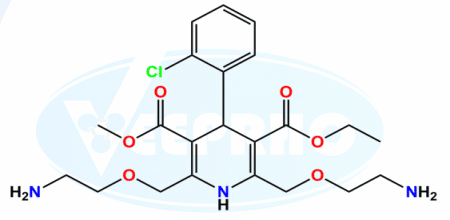

Additional information on CAS 113994-41-5
| Parent drug | Amlodipine |
|---|---|
| Product type | Impurity standards |
| IUPAC name | 3-ethyl 5-methyl 2-[(2-aminoethoxy)methyl]-4-(2- chlorophenyl)-6-methylpyridine-3,5-dicarboxylate |
| EP name | Amlodipine EP Impurity D |
| USP name | Amlodipine Related Compound A |
| SMILES | CCOC(=O)c1c(COCCN)nc(C)c(C(=O)OC)c1-c1ccccc1Cl |
| InChIKey | APZSGEHAFPIYQZ-UHFFFAOYSA-N |
| CHNS Ratio (%) (calculated) | C 59.04 · H 5.70 · N 6.89 · S 0.00 |
| References | Sudhakar | P. | et Stoiljkovic | Zora | et al. Investigation of Forced and Total Degradation Products of Amlodipine Besylate by Liquid Chromatography and Liquid Chromatography-Mass Spectrometry.â€Â Chemical Industry and Chemical Engineering Quarterly | vol. 20 | no. 2 | 2014 | pp. 295–304 | https://doi.org/10.2298/ciceq121226011s al. Identification and Characterization of Potential Impurities of Amlodipine Maleate.†Journal of Pharmaceutical and Biomedical Analysis | vol. 40 | no. 3 | Feb. 2006 | pp. 605–13 |
| Description | Amlodipine EP Impurity D, also designated Amlodipine Related Compound A or Dehydro Amlodipine (Free Base), CAS 113994-41-5, is an oxidized dihydropyridine-related process impurity of the calcium channel blocker amlodipine. It has molecular formula C20H23ClN2O5 and molecular weight 406.86 g/mol. The structure reflects aromatization of the 1,4-dihydropyridine ring to the corresponding pyridine analogue, a transformation associated with oxidative degradation during synthesis or storage. Quantification typically requires chromatographic selectivity by stability-indicating HPLC coupled with diode array detection, and confirmation by LC-MS or LC-MS/MS. Its characterization is relevant to impurity profiling, forced degradation studies, and pharmacopeial compliance. |
Request a Quote
"*" indicates required fields
Other products related to Amlodipine impurities
| Impurity structure | Name of Impurity | Catalogue No. |
|---|---|---|
| Amlodipine EP Impurity A | VL19004 | |
| Amlodipine EP Impurity B | VL19002 | |
| Amlodipine EP Impurity C | VL19030 | |
| Amlodipine EP Impurity D (Besylate Salt) | VL19001 | |
| Amlodipine EP Impurity D (Fumarate salt) | VL19024 | |
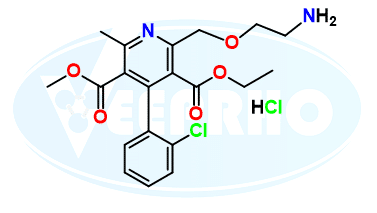 | Amlodipine EP Impurity D (HCl Salt) | VE0012177 |
| Amlodipine EP Impurity D (Mesylate salt) | VE006056 | |
| Amlodipine EP Impurity D (Oxalate Salt) | VL19015 | |
| Amlodipine EP Impurity E | VL19005 | |
 | Amlodipine EP Impurity E (Oxalate Salt) | VE006552 |
| Amlodipine EP Impurity F | VL19026 | |
| Amlodipine EP Impurity F (Maleate Salt) | VE0012174 |
Show all related products N-Nitroso Amlodipine impurities (13)