

- 100% accuracy of data
- 24/7 scientific support
- 0% tolerance in quality of product
Mutagenicity assessment (ICH M7)
Treated as a potentially non-mutagenic impurity (ICH M7 Class 4–5).
Computational (in silico) assessmentStock Locations
- New Jersey, USA
- Czech Republic, EU
* Stock subject to availability.
Documentation
Includes: HPLC, MASS/LC-MS, 1H NMR, FT-IR, Potency, Structure Elucidation Report (SER), and additional analytical data depending on the product.
58509-24-3
Amlodipine ( N-(2-hydroxyethyl)-phthalamic acid
● In Stock
| Catalogue No.: | VL19033 |
|---|---|
| CAS No.: | 58509-24-3 |
| Mol. Formula: | C10H11NO4 |
| Mol. Weight: | 209.2 g/mol |
For laboratory use only: analytical, development and regulatory purposes. Supplied in mg quantities. Not for human or veterinary use.
Additional information on CAS 58509-24-3
| Parent drug | Amlodipine |
|---|---|
| Product type | Impurity standards |
| IUPAC name | N-(2-hydroxyethyl)-phthalamic acid |
| SMILES | O=C(O)c1ccccc1C(=O)NCCO |
| InChIKey | IRNHGPPDXYUKFY-UHFFFAOYSA-N |
| CHNS Ratio (%) (calculated) | C 57.41 · H 5.30 · N 6.70 · S 0.00 |
| References | Synthesis and Properties of Renewable Environment-Friendly Epoxy Resins for Surface Coatings.” Journal of Dispersion Science and Technology | 2021 | www.tandfonline.com/doi/abs/10.1080/01932690701718800. |
| Description | Amlodipine (N-(2-hydroxyethyl)-phthalamic acid is a well-characterized reference material that meets stringent regulatory standards set by USP, EMA, JP, and BP. It plays a key role in Abbreviated New Drug Applications (ANDA), New Drug Applications (NDA), and the commercial production of Amlodipine. Amlodipine (N-(2-hydroxyethyl)-phthalamic acid (CAS No: 58509-24-3) or N-(2-hydroxyethyl)-phthalamic acid belongs to the group of epoxy resins that is used in industrial applications due to their unique chemical and solvent resistance, good thermal and electrical characteristics, high durability and modulus, good adhesion feature, and high-grade processability. |
Request a Quote
"*" indicates required fields
Other products related to Amlodipine impurities
| Impurity structure | Name of Impurity | Catalogue No. |
|---|---|---|
| Amlodipine EP Impurity A | VL19004 | |
| Amlodipine EP Impurity B | VL19002 | |
| Amlodipine EP Impurity C | VL19030 | |
| Amlodipine EP Impurity D (Besylate Salt) | VL19001 | |
| Amlodipine EP Impurity D (Free Base) | VL19023 | |
| Amlodipine EP Impurity D (Fumarate salt) | VL19024 | |
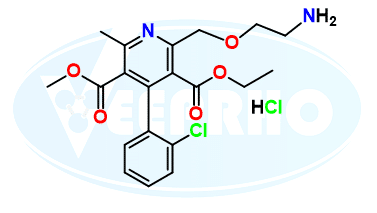 | Amlodipine EP Impurity D (HCl Salt) | VE0012177 |
| Amlodipine EP Impurity D (Mesylate salt) | VE006056 | |
| Amlodipine EP Impurity D (Oxalate Salt) | VL19015 | |
| Amlodipine EP Impurity E | VL19005 | |
 | Amlodipine EP Impurity E (Oxalate Salt) | VE006552 |
| Amlodipine EP Impurity F | VL19026 |
Show all related products N-Nitroso Amlodipine impurities (13)