
- 100% accuracy of data
- 24/7 scientific support
- 0% tolerance in quality of product
Stock Locations
- New Jersey, USA
- Czech Republic, EUIn stock
* Stock subject to availability.
Documentation
Includes: HPLC, MASS/LC-MS, 1H NMR, FT-IR, Potency, Structure Elucidation Report (SER), and additional analytical data depending on the product.
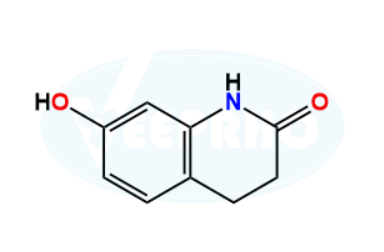
22246-18-0
Aripiprazole EP Impurity A
● In Stock
| Catalogue No.: | VL197010 |
|---|---|
| CAS No.: | 22246-18-0 |
| Mol. Formula: | C₉H₉NO₂ |
| Mol. Weight: | 163.17 g/mol |
For laboratory use only: analytical, development and regulatory purposes. Supplied in mg quantities. Not for human or veterinary use.
Request a quote for a set
- Request quote for this set
All EP impurities of Aripiprazole
9 productsSee the 9 products
- Aripiprazole EP Impurity A VL197010
CAS 22246-18-0 - Aripiprazole EP Impurity B VL197013
CAS 119532-26-2 - Aripiprazole EP Impurity B (Free Base) VE006771
CAS 41202-77-1 - Aripiprazole EP Impurity C VL197012
CAS 203395-81-7 - Aripiprazole EP Impurity D VL197009
CAS 203395-82-8 - Aripiprazole EP Impurity E VL197007
CAS 129722-25-4 - Aripiprazole EP Impurity E (HCl Salt) VE006772
CAS 1008531-60-9 - Aripiprazole EP Impurity F VL197008
CAS 573691-09-5 - Aripiprazole EP Impurity G (Free Base) VL197001
CAS 1797986-18-5
- Aripiprazole EP Impurity A VL197010
- Request quote for this set
All USP impurities of Aripiprazole
12 productsSee the 12 products
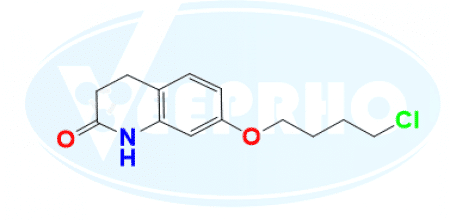
- Aripiprazole Chlorobutoxy Quinoline VL197018
- Aripiprazole Diquinoline Butanediol Impurity VL197011
CAS 882880-12-8 - Aripiprazole EP Impurity A VL197010
CAS 22246-18-0 - Aripiprazole EP Impurity B VL197013
CAS 119532-26-2 - Aripiprazole EP Impurity B (Free Base) VE006771
CAS 41202-77-1 - Aripiprazole EP Impurity E VL197007
CAS 129722-25-4 - Aripiprazole EP Impurity E (HCl Salt) VE006772
CAS 1008531-60-9 - Aripiprazole EP Impurity F VL197008
CAS 573691-09-5 - Aripiprazole EP Impurity G (Free Base) VL197001
CAS 1797986-18-5 - Aripiprazole Impurity 7 (HCl Salt) VE0012334
- Aripiprazole Related Compound B VL197014
CAS 889443-20-3 - Aripiprazole Related Compound H VL197015
CAS 1796928-63-6



Additional information on CAS 22246-18-0
| Parent drug | Aripiprazole |
|---|---|
| Product type | Impurity standards |
| IUPAC name | 7-Hydroxy-3,4-dihydroquinolin-2(1H)-one |
| EP name | Aripiprazole EP Impurity A |
| USP name | Aripiprazole Dihydro Quinolinone Impurity (USP) |
| Pharmacopeial synonyms | Aripiprazole Dihydro Quinolinone Impurity |
| Other Synonyms | 3,4-Dihydro-7-hydroxy-2(1H)-quinolinone; 3,4-dihydroquinoline-2,7-diol |
| SMILES | O=C1NC2=C(C=CC(O)=C2)CC1 |
| InChI | InChI=1S/C9H9NO2/c11-7-3-1-6-2-4-9(12)10-8(6)5-7/h1,3,5,11H,2,4H2,(H,10,12) |
| InChIKey | LKLSFDWYIBUGNT-UHFFFAOYSA-N |
| CHNS Ratio (%) (calculated) | C 66.25 · H 5.56 · N 8.58 · S 0.00 |
| Shipping condition | Ambient Temperature |
| References | - |
| Description | Aripiprazole EP Impurity A, CAS 22246-18-0, is a quinolinone-related process impurity identified as 3,4-dihydro-7-hydroxy-2(1H)-quinolinone, also described as 3,4-dihydroquinoline-2,7-diol. With molecular formula C9H9NO2 and molecular weight 163.17 g/mol, it represents a heteroaromatic lactam phenol consistent with intermediates arising during synthetic construction or oxidative/tautomeric transformation of quinolinone motifs. Its polar, weakly acidic character supports strong chromatographic retention behavior distinct from aripiprazole. Trace determination typically requires LC-MS/MS for specificity, often complemented by HPLC with UV or diode-array detection and confirmatory LC-HRMS; GC-MS may be used after derivatization where volatility is needed. It is monitored as a process-related impurity within impurity profiling and control strategy assessments. |
Request a Quote
"*" indicates required fields