
- 100% accuracy of data
- 24/7 scientific support
- 0% tolerance in quality of product
Stock Locations
- New Jersey, USA
- Czech Republic, EUIn stock
* Stock subject to availability.
Documentation
Includes: HPLC, MASS/LC-MS, 1H NMR, FT-IR, Potency, Structure Elucidation Report (SER), and additional analytical data depending on the product.
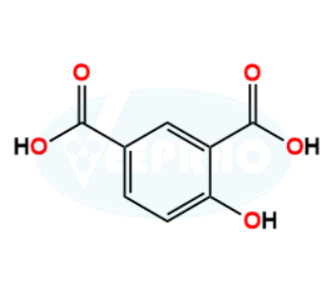
636-46-4
Aspirin EP Impurity B
● In Stock
| Catalogue No.: | VL530005 |
|---|---|
| CAS No.: | 636-46-4 |
| Mol. Formula: | C8H6O5 |
| Mol. Weight: | 182.13 g/mol |
For laboratory use only: analytical, development and regulatory purposes. Supplied in mg quantities. Not for human or veterinary use.
Request a quote for a set
- Request quote for this set
All EP impurities of Aspirin
7 productsSee the 7 products
- Acetylsalicylic Acid Impurity 14 VE0012390
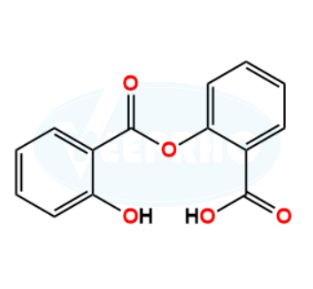
CAS 606-45-1 - Acetylsalicylsalicylic Acid VL530003
CAS 530-75-6 - Aspirin EP Impurity B VL530005
CAS 636-46-4 - Aspirin EP Impurity C VL530006
CAS 69-72-7 - Aspirin EP Impurity E VL530004
CAS 552-94-3 - Aspirin EP Impurity F VL530002
CAS 1466-82-6 - 4-hydroxybenzoic acid VL530001
CAS 99-96-7
- Acetylsalicylic Acid Impurity 14 VE0012390
- Request quote for this set
All USP impurities of Aspirin
5 productsSee the 5 products
- Acetylsalicylsalicylic Acid VL530003
CAS 530-75-6 - Aspirin EP Impurity B VL530005
CAS 636-46-4 - Aspirin EP Impurity E VL530004
CAS 552-94-3 - Aspirin EP Impurity F VL530002
CAS 1466-82-6 - 4-hydroxybenzoic acid VL530001
CAS 99-96-7
- Acetylsalicylsalicylic Acid VL530003


Additional information on CAS 636-46-4
| Parent drug | Aspirin / Salicylic Acid |
|---|---|
| Product type | Impurity standards |
| IUPAC name | 4-hydroxybenzene-1,3-dicarboxylic acid |
| EP name | Aspirin EP Impurity B ; Acetylsalicylic Acid EP Impurity B |
| USP name | Salicylic Acid Related Compound B |
| Pharmacopeial synonyms | Salicylic Acid Related Compound B , Acetylsalicylic Acid EP Impurity B |
| Other Synonyms | 4-Hydroxyisophthalic acid |
| SMILES | O=C(C1=CC=C(O)C(C(O)=O)=C1)O |
| InChI | InChI=1S/C8H6O5/c9-6-2-1-4(7(10)11)3-5(6)8(12)13/h1-3,9H,(H,10,11)(H,12,13) |
| InChIKey | BCEQKAQCUWUNML-UHFFFAOYSA-N |
| CHNS Ratio (%) (calculated) | C 52.76 · H 3.32 · N 0.00 · S 0.00 |
| References | Arif | Tasleem. “Salicylic Acid as a Peeling Agent: A Comprehensive Review.†Clinical | Cosmetic and Investigational Dermatology | vol. 8 | Aug. 2015 | p. 455 | https://doi.org/10.2147/ccid.s84765. Srivastava | Anup | et al. “A Novel Cytoprotective Antioxidant: 4-Hydroxyisophthalic Acid.†Food Chemistry | vol. 132 | no. 4 | June 2012 | pp. 1959–65 | https://doi.org/10.1016/j.foodchem.2011.12.032. |
| Description | Aspirin EP Impurity B, also designated Salicylic Acid Related Compound B or 4-Hydroxyisophthalic acid, is a dicarboxylic aromatic hydroxy acid with CAS 636-46-4, molecular formula C8H6O5, and molecular weight 182.13 g/mol. Structurally, it is an oxygenated isophthalic acid derivative rather than a reactive genotoxic species, and it is encountered as a related substance associated with aspirin and salicylate chemistry through oxidative or synthetic side pathways. Its presence is typically characterized at trace level by reversed-phase HPLC with diode array detection, LC-MS/MS for identity confirmation, and, where needed, capillary electrophoresis or NMR for structural assignment. |
Request a Quote
"*" indicates required fields