
- 100% accuracy of data
- 24/7 scientific support
- 0% tolerance in quality of product
Stock Locations
- New Jersey, USA
- Czech Republic, EUIn stock
* Stock subject to availability.
Documentation
Includes: HPLC, MASS/LC-MS, 1H NMR, FT-IR, Potency, Structure Elucidation Report (SER), and additional analytical data depending on the product.
101948-60-1
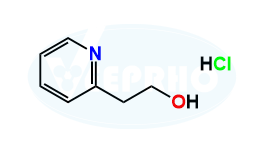
Betahistine EP Impurity B (HCl Salt)
● In Stock
| Catalogue No.: | VE0020572 |
|---|---|
| CAS No.: | 101948-60-1 |
| Mol. Formula: | C7H10ClNO |
| Mol. Weight: | 159.61 g/mol |
For laboratory use only: analytical, development and regulatory purposes. Supplied in mg quantities. Not for human or veterinary use.
Request a quote for a set
- Request quote for this set
All EP impurities of Betahistine
4 productsSee the 4 products
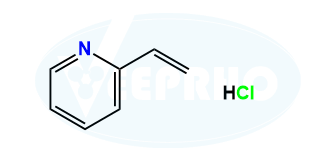
- Betahistine EP Impurity A (HCl Salt) VE0019992
CAS 2479-59-6 - Betahistine EP Impurity B (HCl Salt) VE0020572
CAS 101948-60-1 - Betahistine EP Impurity C VL178001
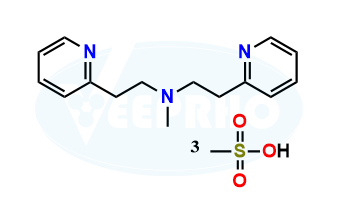
CAS 2095467-43-7 - Betahistine EP Impurity C Trimesilate VE0012720
CAS 2731369-07-4
- Betahistine EP Impurity A (HCl Salt) VE0019992
- Request quote for this set
All USP impurities of Betahistine
3 productsSee the 3 products
- Betahistine EP Impurity A (HCl Salt) VE0019992
CAS 2479-59-6 - Betahistine EP Impurity B (HCl Salt) VE0020572
CAS 101948-60-1 - Betahistine EP Impurity C Trimesilate VE0012720
CAS 2731369-07-4
- Betahistine EP Impurity A (HCl Salt) VE0019992
Additional information on CAS 101948-60-1
| Parent drug | Betahistine |
|---|---|
| Product type | Impurity standards |
| IUPAC name | 2-(pyridin-2-yl)ethanol hydrochloride |
| EP name | Betahistine EP Impurity B |
| USP name | 2-(2-Hydroxyethyl)pyridine (HCl Salt) |
| SMILES | Cl.OCCc1ccccn1 |
| InChIKey | LYFVKJPPHXWXSA-UHFFFAOYSA-N |
| CHNS Ratio (%) (calculated) | C 52.68 · H 6.32 · N 8.78 · S 0.00 |
| References | - |
| Description | Betahistine EP Impurity B, identified as 2-(2-Hydroxyethyl)pyridine hydrochloride (CAS 101948-60-1), is a pyridine-derived process-related impurity associated with the betahistine synthesis route, typically arising from side-reaction chemistry or incomplete quaternization. Its molecular formula is C7H10ClNO and molecular weight is 159.61 g/mol. As a protonated heteroaromatic salt, it may affect impurity profiling through ionic interactions and chromatographic tailing. Quantification generally requires orthogonal characterization by LC-MS, LC-MS/MS, and, where volatile or derivatized forms are feasible, GC-MS, with HPLC-UV used for routine separation. It is not classified as a nitrosamine, but remains relevant to impurity specification and pharmacopeial control. |
Request a Quote
"*" indicates required fields
Other products related to Betahistine impurities
| Impurity structure | Name of Impurity | Catalogue No. |
|---|---|---|
| Betahistine EP Impurity A | VL178002 | |
| Betahistine EP Impurity A (HCl Salt) | VE0019992 | |
| Betahistine EP Impurity B | VL178003 | |
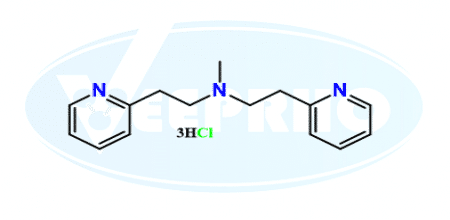 | Betahistine EP Impurity C | VL178001 |
| Betahistine EP Impurity C Trimesilate | VE0012720 | |
| N-Nitroso Betahistine EP Impurity C | VE0010864 | |
| Betahistine Impurity 3 | VE0012721 | |
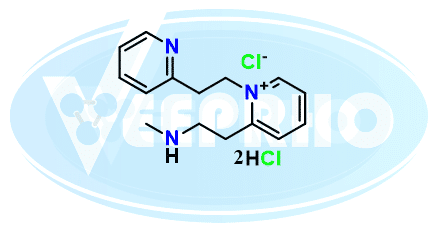 | Betahistine Impurity 6 Chloride (2HCl Salt) | VE0012712 |
| Betahistine Impurity 8 | VE0012719 | |
| Betahistine Impurity 9 | VE0012176 | |
| Betahistine Lactose adduct Impurity | VE0028995 | |
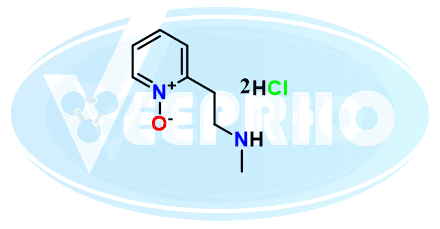 | Betahistine N-Oxide (2HCl Salt) | VE0012711 |
Show all related products N-Nitroso Betahistine impurities (2)