
- 100% accuracy of data
- 24/7 scientific support
- 0% tolerance in quality of product
Stock Locations
- New Jersey, USA
- Czech Republic, EUIn stock
* Stock subject to availability.
Documentation
Includes: HPLC, MASS/LC-MS, 1H NMR, FT-IR, Potency, Structure Elucidation Report (SER), and additional analytical data depending on the product.
2095467-43-7
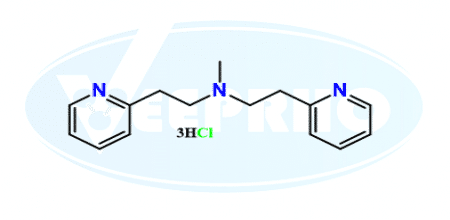
Betahistine EP Impurity C
● In Stock
| Catalogue No.: | VL178001 |
|---|---|
| CAS No.: | 2095467-43-7 |
| Mol. Formula: | C15H22Cl3N3 |
| Mol. Weight: | 350.71 g/mol |
For laboratory use only: analytical, development and regulatory purposes. Supplied in mg quantities. Not for human or veterinary use.
Request a quote for a set
- Request quote for this set
All EP impurities of Betahistine
4 productsSee the 4 products
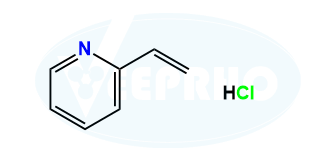
- Betahistine EP Impurity A (HCl Salt) VE0019992
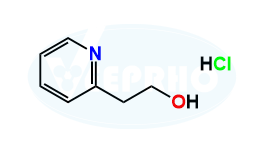
CAS 2479-59-6 - Betahistine EP Impurity B (HCl Salt) VE0020572
CAS 101948-60-1 - Betahistine EP Impurity C VL178001
CAS 2095467-43-7 - Betahistine EP Impurity C Trimesilate VE0012720
CAS 2731369-07-4
- Betahistine EP Impurity A (HCl Salt) VE0019992
Additional information on CAS 2095467-43-7
| Parent drug | Betahistine |
|---|---|
| Product type | Impurity standards |
| IUPAC name | N-Methyl-N-[2-(2-pyridinyl)ethyl]-2-pyridineethanamine trihydrochloride |
| EP name | Betahistine EP Impurity C |
| CHNS Ratio (%) (calculated) | C 51.37 · H 6.32 · N 11.98 · S 0.00 |
| Description | Betahistine EP Impurity C (Trihydrochloride Salt), CAS 2095467-43-7, is a protonated pyridyl ethylamine-related impurity associated with the betahistine synthetic space rather than a classical mutagenic substructure. The molecular formula C15H22Cl3N3 and molecular weight 350.71 g/mol indicate a tricationic salt form with elevated polarity and distinct chromatographic behavior versus the free base. It is generally traced to process-related alkylation or quaternization events during manufacture or salt formation. Trace level assignment commonly requires LC-MS/MS, LC-UV with orthogonal confirmation, and, where volatility permits, GC-MS. Its characterization supports impurity profiling under pharmacopoeial and ICH impurity-control expectations. |
Request a Quote
"*" indicates required fields
Other products related to Betahistine impurities
| Impurity structure | Name of Impurity | Catalogue No. |
|---|---|---|
| Betahistine EP Impurity A | VL178002 | |
| Betahistine EP Impurity A (HCl Salt) | VE0019992 | |
| Betahistine EP Impurity B | VL178003 | |
| Betahistine EP Impurity B (HCl Salt) | VE0020572 | |
| Betahistine EP Impurity C Trimesilate | VE0012720 | |
| N-Nitroso Betahistine EP Impurity C | VE0010864 | |
| Betahistine Impurity 3 | VE0012721 | |
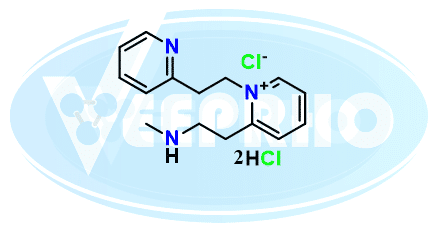 | Betahistine Impurity 6 Chloride (2HCl Salt) | VE0012712 |
| Betahistine Impurity 8 | VE0012719 | |
| Betahistine Impurity 9 | VE0012176 | |
| Betahistine Lactose adduct Impurity | VE0028995 | |
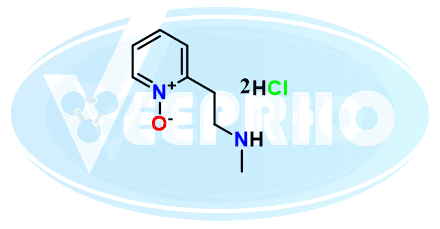 | Betahistine N-Oxide (2HCl Salt) | VE0012711 |
Show all related products N-Nitroso Betahistine impurities (2)